
Omen AI secures $31 million to monitor the water within AI data centers.
The less glamorous reality of the AI boom is that some of its most significant challenges are infrastructural. As data centers increase the number of GPUs in each rack and operate them at higher temperatures, the liquid that cools the chips has started to occasionally grow bacteria. This is the issue that Omen AI has centered its business around, and on June 29, it announced that it had secured a $31 million Series A funding round to address it. The round was led by Nava Ventures, with participation from CRV, Vanderbilt University, Mann+Hummel, Starhill Holdings, and Hard Launch Capital, as well as personal investments from executives at Bridgestone, GM, Johnson Controls, and Tensorwave.
The mechanics of the situation are quite specific. Liquid-cooled chips operate on a blend of water and a bacteriostatic additive. To enhance performance, operators can increase the water content, which improves heat absorption; however, this wetter mixture risks contamination that can obstruct the flow. When things go awry, the solution involves flushing the system, which may require taking a rack offline for five to six hours, resulting in millions in costs. Omen's solution is a small spectrometer that continuously monitors the health of the fluid and detects potential issues before they necessitate a flush. “You’re not risking huge amounts of downtime because you have no insight into what’s going on chemically,” stated chief executive and founder Zach Laberge to TechCrunch.
Laberge is an atypical founder for an infrastructure company. He launched his first business in 2020 at the age of 14, raised $3 million to install sensors on construction machinery, and left high school to manage it, with support from his parents, one of whom was a former Ontario education minister. After that venture folded, he founded Omen in 2024, initially focusing on fluid systems in heavy machinery—essentially applying the concept of replacing lab samples with real-time data to engines rather than servers.
The shift to data centers was an unexpected development. Caterpillar dealerships were among the initial clients for the machinery business, and Caterpillar also provides the turbines and generators powering on-site data centers. Around six months ago, Laberge mentioned that these dealers began inquiring if Omen could also monitor the buildings. It turned out these facilities contained a significant amount of fluid, from HVAC systems to chip cooling, leading to a rapidly expanding customer base.
Omen is currently collaborating with approximately a dozen data center clients, including Tensorwave, which is developing an AI computing cloud utilizing AMD chips. The investment underlying this funding round is based on the same premise driving all cooling startups: that liquid cooling is becoming indispensable. Rack densities have surpassed what air can effectively handle, which is the same threshold that attracted $26 million into the liquid-cooling company Iceotope as operators rush to retrofit.
Omen is not the only company attempting to move fluid analysis from the lab into practical applications. Pyxis, a well-established water monitoring firm, launched its own data center coolant product earlier this month, and the market is rapidly becoming crowded as the environmental impact of water-intensive data centers gains regulatory scrutiny.
What Laberge asserts differentiates Omen is the timing: optical hardware has become affordable enough for widespread deployment, and advancements in signal processing have reached a level sufficient to interpret the readings. It is a compact device targeting a seemingly minor issue—monitoring the chemistry of coolant—that sits at the center of one of the most costly expansions in computing. As one client remarked, the fluid circulating through these systems represents a critical variable that much of the industry is still navigating without sufficient insight.
Other articles
 Omen AI secures $31 million to monitor the water in AI data centers.
Omen AI secured $31 million in a Series A funding round for a spectrometer designed to monitor liquid-cooling fluid in real-time, detecting bacterial growth before an expensive flush is needed.
Omen AI secures $31 million to monitor the water in AI data centers.
Omen AI secured $31 million in a Series A funding round for a spectrometer designed to monitor liquid-cooling fluid in real-time, detecting bacterial growth before an expensive flush is needed.
 AI has enhanced individual capabilities while causing teams to become more fragmented. Yimao Zhou is developing the operating system aimed at reversing this trend.
Yimao Zhou, the founder of Emagen AI, contends that the AI agent industry is focusing on the incorrect unit of optimization. His solution is Cagen, an organizational operating system that utilizes AI to manage tasks while reaching out to humans when necessary.
AI has enhanced individual capabilities while causing teams to become more fragmented. Yimao Zhou is developing the operating system aimed at reversing this trend.
Yimao Zhou, the founder of Emagen AI, contends that the AI agent industry is focusing on the incorrect unit of optimization. His solution is Cagen, an organizational operating system that utilizes AI to manage tasks while reaching out to humans when necessary.
 I just played Ghost of Tsushima on my phone. I never imagined this day would come, and I'm not regretting this unexpected experience.
By utilizing GameHub on the RedMagic 11S Pro, I was able to play Ghost of Tsushima Director’s Cut on a phone with surprisingly good results after making some adjustments.
I just played Ghost of Tsushima on my phone. I never imagined this day would come, and I'm not regretting this unexpected experience.
By utilizing GameHub on the RedMagic 11S Pro, I was able to play Ghost of Tsushima Director’s Cut on a phone with surprisingly good results after making some adjustments.
 A former Tesla Optimus engineer has resolved a trade secret lawsuit and secured $11 million to develop robotic hands.
Proception's founder, Jay Li, has reached a settlement in a lawsuit regarding Tesla's trade secrets and has secured $11 million from First Round Capital to deliver dexterous robotic hands to companies focused on humanoid robotics.
A former Tesla Optimus engineer has resolved a trade secret lawsuit and secured $11 million to develop robotic hands.
Proception's founder, Jay Li, has reached a settlement in a lawsuit regarding Tesla's trade secrets and has secured $11 million from First Round Capital to deliver dexterous robotic hands to companies focused on humanoid robotics.
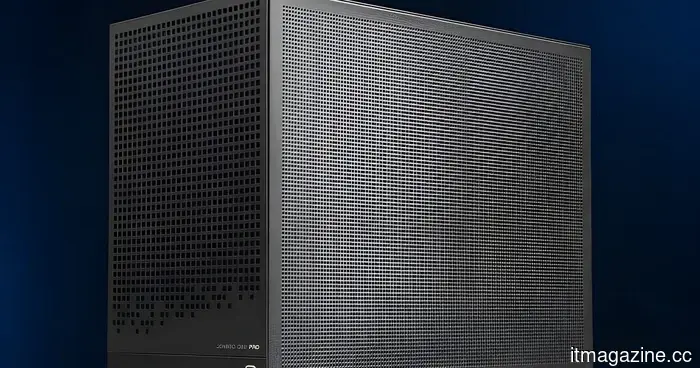 This $1,299 gaming PC aims to become a Steam Machine without having to wait for Valve.
MetaPCs has begun taking preorders for Steamroller, a $1,299 gaming desktop running SteamOS, constructed using standard PC components rather than a custom console-like design.
This $1,299 gaming PC aims to become a Steam Machine without having to wait for Valve.
MetaPCs has begun taking preorders for Steamroller, a $1,299 gaming desktop running SteamOS, constructed using standard PC components rather than a custom console-like design.
 RELX announces an additional £100M buyback as its 2026 repurchase program continues.
RELX is set to initiate a £100m share buyback in July, marking the most recent phase of a £2.25bn plan, as the data company continues to distribute cash to its shareholders.
RELX announces an additional £100M buyback as its 2026 repurchase program continues.
RELX is set to initiate a £100m share buyback in July, marking the most recent phase of a £2.25bn plan, as the data company continues to distribute cash to its shareholders.
Omen AI secures $31 million to monitor the water within AI data centers.
Omen AI secured $31 million in a Series A funding round for a spectrometer that tracks liquid-cooling fluid in real time, detecting bacterial growth before an expensive flush is necessary.