
Omen AI secures $31 million to monitor the water in AI data centers.
The less glamorous reality of the AI surge is that some of its most challenging issues are related to infrastructure. As data centers increase the number of GPUs per rack and operate them at higher temperatures, the fluid used to prevent the chips from overheating has begun, occasionally, to foster bacteria growth.
This is the challenge that Omen AI has centered its business around, and on June 29, it announced it had secured a $31 million Series A funding round to tackle it. The round was led by Nava Ventures, with participation from CRV, Vanderbilt University, Mann+Hummel, Starhill Holdings, and Hard Launch Capital, as well as personal investments from executives at Bridgestone, GM, Johnson Controls, and Tensorwave.
The technical aspects are quite detailed. Liquid-cooled chips operate using a combination of water and a bacteriostatic additive. To push the chips to operate more efficiently, operators can increase the water content, which enhances heat absorption, but this wetter mixture increases the risk of contamination that can obstruct the flow.
When issues arise, the solution requires flushing the system, which often necessitates taking a rack offline for five to six hours, resulting in costs that may reach millions. Omen’s solution is a compact spectrometer that continuously monitors the health of the fluid and alerts users to potential problems before a system flush is required.
"You minimize the risk of significant downtime because you gain insight into the chemical conditions," Omen's CEO and founder, Zach Laberge, told TechCrunch.
Laberge is an atypical founder for an infrastructure-focused company. He launched his first business in 2020 at the age of 14, raising $3 million to equip construction machinery with sensors, and he left high school to manage it, with support from his parents, one of whom served as a former Ontario education minister.
After that venture ceased operations, he founded Omen in 2024, initially targeting fluid systems in heavy machinery—applying the concept of replacing lab samples with real-time data to engines instead of servers.
The shift towards data centers occurred unexpectedly. Caterpillar dealerships were among the early clients for his machinery business, and Caterpillar also provides the turbines and generators that operate on-site data centers.
Approximately six months ago, Laberge noted, those dealerships began inquiring if Omen could also monitor the buildings. It turned out that these facilities contained considerable amounts of fluid, spanning HVAC systems to chip cooling, leading to a rapidly expanding customer base.
Omen currently collaborates with about a dozen data center clients, including Tensorwave, which is establishing an AI computing cloud powered by AMD chips. The underlying assumption driving this funding round mirrors the belief propelling all cooling startups: liquid cooling has become essential.
Rack densities have exceeded the limits of air cooling, the same threshold that attracted $26 million in investment to the liquid-cooling firm Iceotope as operators rush to retrofit their systems.
Omen is not the sole player attempting to transition fluid analysis from the lab to practical applications. Pyxis, a well-established water-monitoring firm, recently launched its own coolant product for data centers, and the sector is quickly becoming crowded as regulatory scrutiny grows regarding the environmental impact of water-intensive data centers.
Laberge contends that Omen’s differentiating factor is its timing: optical hardware has become affordable enough for widespread use, and signal processing technology has advanced sufficiently to accurately interpret the readings.
It’s a compact device addressing what may seem like a minor issue—monitoring coolant chemistry—that is strategically positioned within the context of one of the most significant expansions in computing. The fluid circulating in these systems, as one customer noted, is a crucial element, yet most of the industry remains unaware of its condition.
Other articles
 AI has enhanced individual capabilities while causing teams to become more fragmented. Yimao Zhou is developing the operating system aimed at reversing this trend.
Yimao Zhou, the founder of Emagen AI, contends that the AI agent industry is focusing on the incorrect unit of optimization. His solution is Cagen, an organizational operating system that utilizes AI to manage tasks while reaching out to humans when necessary.
AI has enhanced individual capabilities while causing teams to become more fragmented. Yimao Zhou is developing the operating system aimed at reversing this trend.
Yimao Zhou, the founder of Emagen AI, contends that the AI agent industry is focusing on the incorrect unit of optimization. His solution is Cagen, an organizational operating system that utilizes AI to manage tasks while reaching out to humans when necessary.
 The annoyingly loud streaming ads that disrupt your show are finally being reduced.
A new law in California prohibits streaming services from airing advertisements that are louder than the shows they disrupt, effective July 1.
The annoyingly loud streaming ads that disrupt your show are finally being reduced.
A new law in California prohibits streaming services from airing advertisements that are louder than the shows they disrupt, effective July 1.
 It seems that Samsung is developing a rollable phone. Let's hope it doesn't end up the same way as LG.
The speculated rollable Galaxy from Samsung may reach 10 inches by 2028. However, LG's withdrawal, Oppo's prototype, and the challenging engineering requirements illustrate why this phone design still requires validation prior to its release.
It seems that Samsung is developing a rollable phone. Let's hope it doesn't end up the same way as LG.
The speculated rollable Galaxy from Samsung may reach 10 inches by 2028. However, LG's withdrawal, Oppo's prototype, and the challenging engineering requirements illustrate why this phone design still requires validation prior to its release.
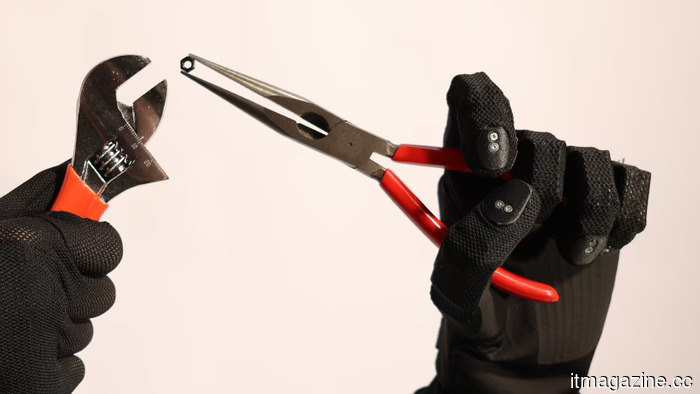 Former Tesla Optimus engineer resolves trade secret litigation and secures $11 million to develop robotic hands.
Proception's founder, Jay Li, has resolved the Tesla trade secret lawsuit and secured $11 million in funding from First Round Capital to deliver dexterous robotic hands to companies working with humanoids.
Former Tesla Optimus engineer resolves trade secret litigation and secures $11 million to develop robotic hands.
Proception's founder, Jay Li, has resolved the Tesla trade secret lawsuit and secured $11 million in funding from First Round Capital to deliver dexterous robotic hands to companies working with humanoids.
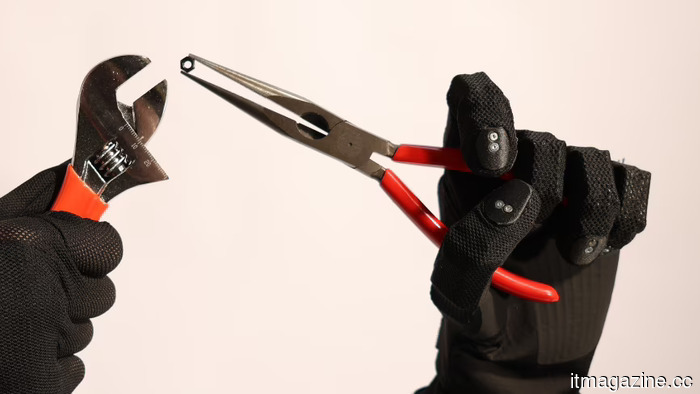 A former Tesla Optimus engineer has resolved a trade secret lawsuit and secured $11 million to develop robotic hands.
Proception's founder, Jay Li, has reached a settlement in a lawsuit regarding Tesla's trade secrets and has secured $11 million from First Round Capital to deliver dexterous robotic hands to companies focused on humanoid robotics.
A former Tesla Optimus engineer has resolved a trade secret lawsuit and secured $11 million to develop robotic hands.
Proception's founder, Jay Li, has reached a settlement in a lawsuit regarding Tesla's trade secrets and has secured $11 million from First Round Capital to deliver dexterous robotic hands to companies focused on humanoid robotics.
 As a severe heatwave affects Europe, Rome relies on a bracelet to monitor its elderly population.
Rome has distributed approximately 700 elderly residents a bracelet that monitors heart rate, sleep patterns, and falls, along with daily check-in calls from social workers, amid an unprecedented heatwave.
As a severe heatwave affects Europe, Rome relies on a bracelet to monitor its elderly population.
Rome has distributed approximately 700 elderly residents a bracelet that monitors heart rate, sleep patterns, and falls, along with daily check-in calls from social workers, amid an unprecedented heatwave.
Omen AI secures $31 million to monitor the water in AI data centers.
Omen AI secured $31 million in a Series A funding round for a spectrometer designed to monitor liquid-cooling fluid in real-time, detecting bacterial growth before an expensive flush is needed.