
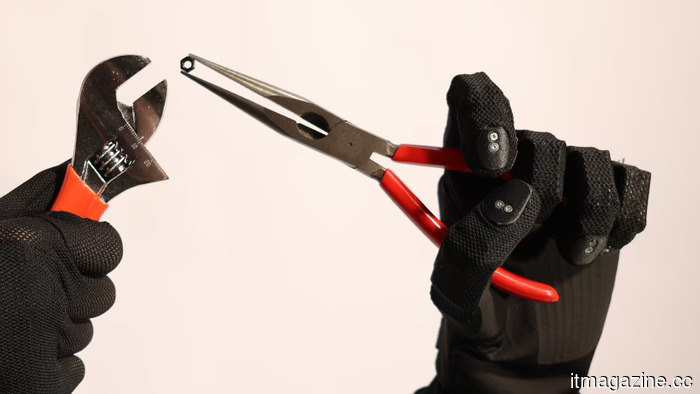
Former Tesla Optimus engineer resolves trade secret litigation and secures $11 million to develop robotic hands.
Jay Li, the former head of Tesla's Optimus project, has settled a trade secret lawsuit with Tesla and raised $11 million to deliver dexterous robotic hands through his startup, Proception. Proception, a robotics firm initiated by Li, has concluded a year-long legal battle with Tesla and secured a seed round of funding led by First Round Capital to develop advanced robotic hands. The company has informed TechCrunch that it is now shipping its initial batch of high-dexterity hands to research entities and robotics firms while opening up for more orders. Y Combinator and early-stage investment firm BoxGroup also participated in this funding round.
Tesla filed a lawsuit against Li and Proception in June 2025, alleging that Li had downloaded confidential files related to robotic hand actuation to personal devices before resigning and subsequently launching his startup just six days later. The suit claimed that Proception's hands bore “striking similarities” to Tesla's proprietary designs. After several months of legal discussions, a settlement was reached, and Tesla dismissed the lawsuit earlier this month.
Li characterized the experience as “a resilience test” and believes that the company has emerged more robust as a result. He mentioned that he wouldn't be surprised if Tesla eventually sought Proception's assistance regarding its own challenges with robotic hands. Tesla did not comment on the situation.
The challenge of dexterous manipulation—grasping, rotating, and manipulating objects with human-like precision—remains one of robotics' toughest issues. Elon Musk has described robotic hands as one of the major engineering challenges still unresolved. Kevin Lynch, from Northwestern University's Center for Robotics and Biosystems, indicated in the Wall Street Journal last year that his team predicts it may take a decade for robotic hands to become sufficiently functional and practical to match human capabilities.
Li believes Proception can expedite the process, mainly due to its method of collecting training data. Many firms use teleoperators—where a human in a virtual reality headset remotely controls a robot—for training humanoid robots, which, according to Li, has significant limitations since operators do not receive tactile feedback from the objects touched by the robot.
Proception utilizes a sensor-equipped glove that captures data on human hand interactions without needing a robot involved. This glove also acts as the sensor-rich “skin” for the robotic hand being developed by Proception, which boasts 22 degrees of freedom and multiple joints per finger. Li contends that this integration of scalable data collection with high-dexterity hardware is a crucial market need.
This year has seen substantial investment in the dexterous hand market. China's Linkerbot, dominating 80% of the global market for high-degree-of-freedom hands, aims for a six billion dollar valuation after producing over 1,000 units monthly. Genesis AI, a European startup, raised $105 million for a wheeled robot equipped with dexterous hands, while Chinese rivals like Xynova have secured nearly one billion yuan.
Proception is betting that most companies focused on humanoid robots will prefer purchasing hands rather than developing them internally, similar to practices in the automotive industry for specialized components. First Round partner Bill Trenchard, who led the investment, stated that dexterous manipulation represents “the last mile of achieving true performance in these robots.” He lauded Li’s leadership under the stress of the Tesla lawsuit.
Tesla has considered manufacturing Optimus at its Gigafactory in Shanghai and has deployed over 1,000 Gen 3 units across its facilities, but the robot's hands are its weakest aspect. Musk has set a target price of $20,000 to $30,000 per unit, with ambitions to scale production to tens of thousands by 2028. Whether Tesla will produce its hands in-house or eventually source them from companies like Proception remains an unresolved question in the humanoid robot supply chain.
Over 150 companies are currently competing in the humanoid robot market, with billion-dollar valuations becoming commonplace, yet only 23 percent of enterprise buyers express satisfaction with available products. In this context, a startup offering the critically needed component due to its complexity presents a compelling proposition, even at the seed stage. The success of Proception, transitioning from its initial shipment phase to a position that influences how a whole category of machines employs its hands, is the calculated risk taken by First Round Capital.
Other articles
 It seems that Samsung is developing a rollable phone. Let's hope it doesn't end up the same way as LG.
The speculated rollable Galaxy from Samsung may reach 10 inches by 2028. However, LG's withdrawal, Oppo's prototype, and the challenging engineering requirements illustrate why this phone design still requires validation prior to its release.
It seems that Samsung is developing a rollable phone. Let's hope it doesn't end up the same way as LG.
The speculated rollable Galaxy from Samsung may reach 10 inches by 2028. However, LG's withdrawal, Oppo's prototype, and the challenging engineering requirements illustrate why this phone design still requires validation prior to its release.
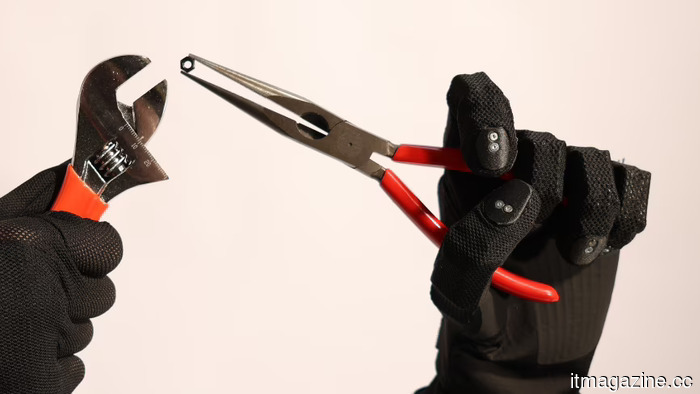 A former Tesla Optimus engineer has resolved a trade secret lawsuit and secured $11 million to develop robotic hands.
Proception's founder, Jay Li, has reached a settlement in a lawsuit regarding Tesla's trade secrets and has secured $11 million from First Round Capital to deliver dexterous robotic hands to companies focused on humanoid robotics.
A former Tesla Optimus engineer has resolved a trade secret lawsuit and secured $11 million to develop robotic hands.
Proception's founder, Jay Li, has reached a settlement in a lawsuit regarding Tesla's trade secrets and has secured $11 million from First Round Capital to deliver dexterous robotic hands to companies focused on humanoid robotics.
 RELX announces an additional £100M buyback as its repurchase program for 2026 continues.
RELX will initiate a £100 million share buyback in July, which is part of a £2.25 billion program, as the data company continues to distribute cash to its shareholders.
RELX announces an additional £100M buyback as its repurchase program for 2026 continues.
RELX will initiate a £100 million share buyback in July, which is part of a £2.25 billion program, as the data company continues to distribute cash to its shareholders.
 As a severe heatwave envelops Europe, Rome utilizes a bracelet to monitor its senior citizens.
Rome has provided approximately 700 elderly residents with a bracelet that monitors heart rate, sleep, and falls, supported by daily calls from social workers, amid an unprecedented heatwave.
TIDAL will stop paying royalties for music created by AI and will label every track it identifies as such.
TIDAL will label completely AI-generated songs with an AI badge and prevent them from generating royalties, as part of an increasing crackdown in the music streaming industry.
As a severe heatwave envelops Europe, Rome utilizes a bracelet to monitor its senior citizens.
Rome has provided approximately 700 elderly residents with a bracelet that monitors heart rate, sleep, and falls, supported by daily calls from social workers, amid an unprecedented heatwave.
TIDAL will stop paying royalties for music created by AI and will label every track it identifies as such.
TIDAL will label completely AI-generated songs with an AI badge and prevent them from generating royalties, as part of an increasing crackdown in the music streaming industry.
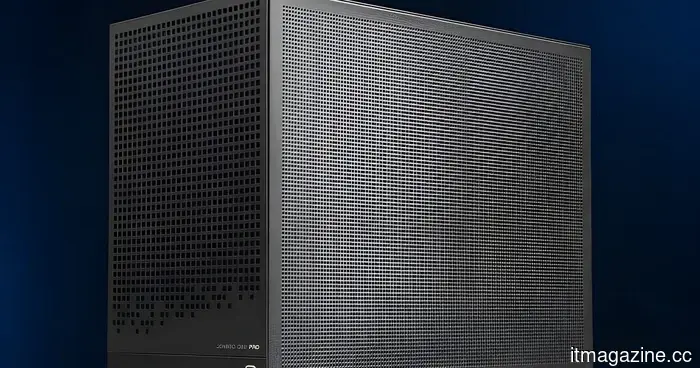 This $1,299 gaming PC aims to become a Steam Machine without having to wait for Valve.
MetaPCs has begun taking preorders for Steamroller, a $1,299 gaming desktop running SteamOS, constructed using standard PC components rather than a custom console-like design.
This $1,299 gaming PC aims to become a Steam Machine without having to wait for Valve.
MetaPCs has begun taking preorders for Steamroller, a $1,299 gaming desktop running SteamOS, constructed using standard PC components rather than a custom console-like design.
Former Tesla Optimus engineer resolves trade secret litigation and secures $11 million to develop robotic hands.
Proception's founder, Jay Li, has resolved the Tesla trade secret lawsuit and secured $11 million in funding from First Round Capital to deliver dexterous robotic hands to companies working with humanoids.