

As a severe heatwave affects Europe, Rome relies on a bracelet to monitor its elderly population.
Dina Gazzella, age 85, wears a small black band on her wrist that resembles a watch but serves more functions than merely telling time. “This is a lifesaver if I feel unwell,” she shared with Reuters.
In a summer that has become deadly across Europe, this is truly serious. The bracelet is part of a program implemented by the municipality of Rome, which has provided around 700 elderly residents with a device that tracks heart rate, monitors sleep patterns, detects falls through motion sensors, and allows the wearer to request help in emergencies.
A team of social workers keeps a remote eye on users, while the device monitors their movements both indoors and outdoors. The city markets it as a preventive health measure, and the timing is deliberate.
Rome has experienced temperatures soaring into the upper 30s Celsius this past week, which has led it to be included among 16 Italian cities under the highest red heat alert issued by the health ministry, alongside Milan, Turin, and Verona.
The situation is even worse on a larger scale. The World Health Organization has attributed over 1,300 deaths to the severe heat wave that began on June 21, France has reported around a thousand additional deaths in just one week, and Germany reached a high of 41.7C.
The elderly are often the first to perish in extreme heat, succumbing quietly at home, which is precisely the environment the bracelet aims to monitor.
This device is part of a broader support program the municipality launched last year, financed through EU post-Covid funds, which has been allocated approximately €400 million for elder care.
While the wearable is the visible aspect, the human component is arguably more significant. Social workers reach out daily to recipients to confirm they have taken their medication, inquire about their coping with the heat, and sometimes simply to provide companionship to those who might otherwise spend the day isolated.
This approach, combining a sensor with a phone call, distinguishes the Rome initiative from consumer fitness trackers. The technology identifies emergencies, while the person on the other end addresses loneliness and medication lapses that often lead to such emergencies. It serves as a reminder that the most beneficial health wearables are often integrated into a service rather than left to just vibrate on a wrist.
However, this raises concerns about privacy. A device that constantly tracks an elderly individual’s movements inside and outside their home functions as a surveillance tool as much as a safety device, leading some participants to leave the program due to privacy anxieties. This concern is not unfounded.
Health data is among the most sensitive personal information, and the growing trend toward continuous monitoring has made even the most well-meaning tracking efforts seem less innocuous. Rome’s challenge lies in assuring residents that this monitoring is intended for care, not control.
Beneath the individual narratives lies a systemic issue that cities across Europe are only beginning to address. With an aging population, intensifying summers, and heat becoming one of the deadliest climate-related risks, enhancing cooling and heat resilience have shifted from lesser concerns to significant civic priorities.
While a bracelet cannot cool a home or adapt a city designed for milder climates, it does ensure that the most vulnerable residents are visible to someone who can intervene before a hot afternoon leads to tragedy.
For Gazzella, the situation is more straightforward. The band on her wrist means that if she falls, her heart races, or she's struggling with the heat, someone will be aware. In a Roman summer that has already demonstrated how quickly circumstances can change, this modest piece of technology plays an essential role in addressing her well-being.
Other articles
 I just played Ghost of Tsushima on my phone. I never imagined this day would come, and I'm not regretting this unexpected experience.
By utilizing GameHub on the RedMagic 11S Pro, I was able to play Ghost of Tsushima Director’s Cut on a phone with surprisingly good results after making some adjustments.
I just played Ghost of Tsushima on my phone. I never imagined this day would come, and I'm not regretting this unexpected experience.
By utilizing GameHub on the RedMagic 11S Pro, I was able to play Ghost of Tsushima Director’s Cut on a phone with surprisingly good results after making some adjustments.
 It seems that Samsung is developing a rollable phone. Let's hope it doesn't end up the same way as LG.
The speculated rollable Galaxy from Samsung may reach 10 inches by 2028. However, LG's withdrawal, Oppo's prototype, and the challenging engineering requirements illustrate why this phone design still requires validation prior to its release.
It seems that Samsung is developing a rollable phone. Let's hope it doesn't end up the same way as LG.
The speculated rollable Galaxy from Samsung may reach 10 inches by 2028. However, LG's withdrawal, Oppo's prototype, and the challenging engineering requirements illustrate why this phone design still requires validation prior to its release.
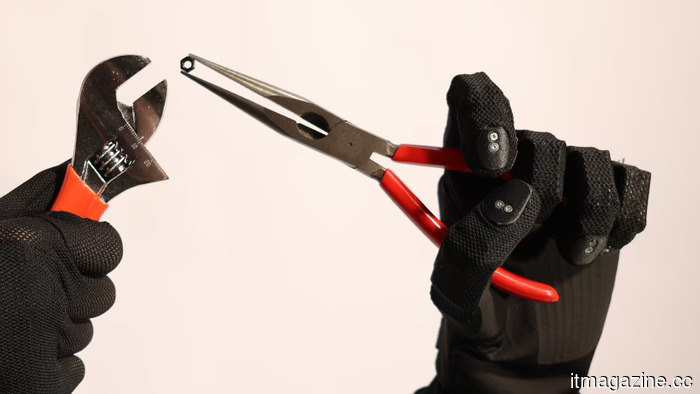 Former Tesla Optimus engineer resolves trade secret litigation and secures $11 million to develop robotic hands.
Proception's founder, Jay Li, has resolved the Tesla trade secret lawsuit and secured $11 million in funding from First Round Capital to deliver dexterous robotic hands to companies working with humanoids.
Former Tesla Optimus engineer resolves trade secret litigation and secures $11 million to develop robotic hands.
Proception's founder, Jay Li, has resolved the Tesla trade secret lawsuit and secured $11 million in funding from First Round Capital to deliver dexterous robotic hands to companies working with humanoids.
 AI has enhanced individual capabilities while causing teams to become more fragmented. Yimao Zhou is developing the operating system aimed at reversing this trend.
Yimao Zhou, the founder of Emagen AI, contends that the AI agent industry is focusing on the incorrect unit of optimization. His solution is Cagen, an organizational operating system that utilizes AI to manage tasks while reaching out to humans when necessary.
AI has enhanced individual capabilities while causing teams to become more fragmented. Yimao Zhou is developing the operating system aimed at reversing this trend.
Yimao Zhou, the founder of Emagen AI, contends that the AI agent industry is focusing on the incorrect unit of optimization. His solution is Cagen, an organizational operating system that utilizes AI to manage tasks while reaching out to humans when necessary.
 Google Cloud will offer specialized AI models designed for scientific purposes.
Google Cloud will provide SandboxAQ's extensive quantitative models for drug discovery, materials science, and chip manufacturing, along with Gemini for Science.
Google Cloud will offer specialized AI models designed for scientific purposes.
Google Cloud will provide SandboxAQ's extensive quantitative models for drug discovery, materials science, and chip manufacturing, along with Gemini for Science.
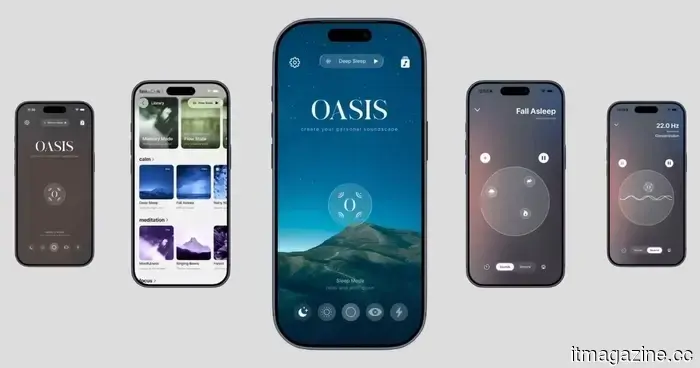 A free soundscape application has just introduced the kinds of controls that paid relaxation apps tend to keep hidden.
Oasis version 2.2 introduces presets, new audio sounds, mixed background audio, and session memory, enhancing the free soundscape application for improved focus, sleep, meditation, and relaxation routines.
A free soundscape application has just introduced the kinds of controls that paid relaxation apps tend to keep hidden.
Oasis version 2.2 introduces presets, new audio sounds, mixed background audio, and session memory, enhancing the free soundscape application for improved focus, sleep, meditation, and relaxation routines.
As a severe heatwave affects Europe, Rome relies on a bracelet to monitor its elderly population.
Rome has distributed approximately 700 elderly residents a bracelet that monitors heart rate, sleep patterns, and falls, along with daily check-in calls from social workers, amid an unprecedented heatwave.