

onsemi's Synaptics agreement: a $7 billion investment in physical AI
Onsemi is acquiring Synaptics in an all-stock transaction valued at approximately $7 billion. This deal reflects Onsemi's belief that the next phase of AI will thrive not in the cloud, but within vehicles, factories, and robotics.
The semiconductor industry has spent the last three years focusing on AI designed for large data centers. In contrast, Onsemi is investing in a different direction by agreeing to purchase Synaptics, a company specializing in chips for intelligent devices. The deal, valued at about $6.2 billion, will have a total enterprise value of roughly $7 billion, including debt. Both companies announced the agreement in a joint statement, with unanimous approval from their boards. The deal is expected to finalize by mid-2027, pending a vote from Synaptics' shareholders and regulatory approvals.
The rationale behind this acquisition can be encapsulated in a concept that Onsemi frequently mentions: physical AI. CEO Hassane El-Khoury describes this vision as a way to infuse intelligence into the devices around us, focusing on the device rather than the data storage.
According to El-Khoury, the upcoming phase of AI will rely on “systems that can sense, decide, act and adapt in real time,” encompassing four key components: power, sensing, connected computing, and control.
Understanding the compatibility of the two companies becomes clearer when considering their respective products. Onsemi, headquartered in Scottsdale, Arizona, manufactures power and sensing chips that manage electricity and perceive the environment in vehicles, factories, and AI data centers. While Onsemi excels in silicon used for power management and sensing, it is less equipped in silicon focused on computation.
Synaptics addresses this deficiency. Based in San Jose, Synaptics produces chips for touchscreens, fingerprint sensors, and wireless communication. Its Astra platform integrates specialized AI processors and NPUs with Wi-Fi, Bluetooth, and GPS capabilities, along with an open-source software stack. This acquisition brings Onsemi what it describes as “connected computing” to complement its power and sensing products. The company is particularly interested in the added value from software and embedded intellectual property, which allows for increased earnings on each platform with improved margins—goals Onsemi has pursued for years.
Synaptics' CEO, Rahul Patel, views this merger as a growth opportunity for his company as well. The partnership touches “every layer of the Edge AI stack,” and the all-stock structure enables his shareholders to partake in potential benefits.
As for the agreement's specifics, Synaptics' shareholders will receive 1.350 shares of Onsemi for each Synaptics share they own, translating to a nearly 19% premium based on the average share prices over the preceding ten trading days. This arrangement will provide Synaptics' shareholders with about 12% ownership of the merged entity. Additionally, one director from Synaptics will join Onsemi’s board.
Onsemi anticipates that the acquisition will enhance adjusted earnings within 18 months after closing, driven by approximately $200 million in annual savings. The deal is also expected to expand its addressable market by $30 billion, projecting a total market value of $243 billion by 2030. Both companies reiterated their existing financial outlooks alongside the announcement.
Onsemi framed its rationale in familiar terms: complementary product lines, enhanced customer relationships, and a broader range of system-level offerings. Morgan Stanley led the advisory team for Onsemi, with J.P. Morgan and Skadden also providing assistance. Qatalyst and Baker McKenzie advised Synaptics.
However, investors were skeptical at first. After the announcement, Onsemi shares dropped 8.2% in after-hours trading, while Synaptics, the company being acquired at a premium, rose 12%. This divergence suggests that the market is questioning whether Onsemi is overpaying for growth that it has yet to demonstrate.
Doubt stems from history; a year ago, Onsemi abandoned a $6.9 billion bid for Allegro MicroSystems, citing a lack of a clear path forward. A second large acquisition attempt in such close succession raises the question of whether this endeavor will succeed where the last one failed.
Job cuts will likely accompany the savings from the merger, as El-Khoury indicated that most of the reductions would occur in operational expenses, though the company will endeavor to protect research and development positions. Additionally, plaintiff law firms are beginning to investigate the fairness of the deal for Synaptics' shareholders.
Onsemi is not the only company betting on a shift in the AI landscape. The focus is increasingly moving from data centers to applications in autonomous vehicles, robotics, and wearable technology. With this shift, value is gravitating toward chips that can efficiently process intelligence in a localized manner, known as “the edge,” which is becoming increasingly crowded.
This evolution is redefining ownership in the industry, with major companies like Intel and Qualcomm opting to acquire smaller chip designers rather than develop competing architectures independently. Startups are also presenting
Other articles
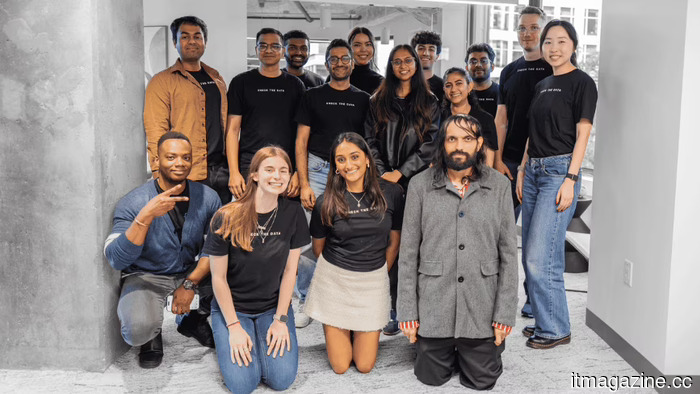 Patronus AI secures $50 million to conduct stress tests on AI agents.
Patronus AI has secured $50 million to develop simulated digital environments that assess AI agents under stress before they are deployed. Investors describe the demand as insatiable.
Patronus AI secures $50 million to conduct stress tests on AI agents.
Patronus AI has secured $50 million to develop simulated digital environments that assess AI agents under stress before they are deployed. Investors describe the demand as insatiable.
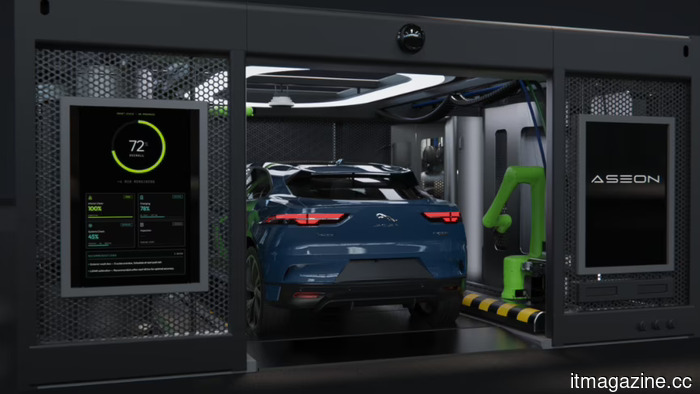 Aseon Labs secures ten million dollars to develop pods the size of parking spaces designed for charging and cleaning robotaxis.
Aseon Labs, supported by Y Combinator, secured $10 million to develop automated pods designed for charging, cleaning, and inspecting robotaxis, reducing the deadhead miles that drain fleet resources.
Aseon Labs secures ten million dollars to develop pods the size of parking spaces designed for charging and cleaning robotaxis.
Aseon Labs, supported by Y Combinator, secured $10 million to develop automated pods designed for charging, cleaning, and inspecting robotaxis, reducing the deadhead miles that drain fleet resources.
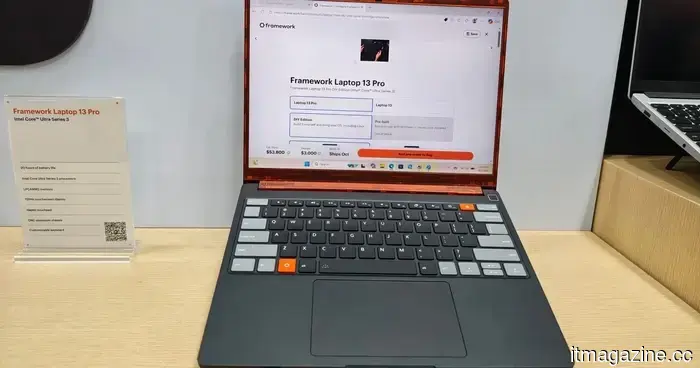 Framework has discovered a method to reduce the cost of its new laptop, but hold off on celebrating just yet.
Certain purchasers of the Framework Laptop 13 Pro will receive an upgrade from 500GB to 1TB SSD storage, along with a reduction in their order price.
Framework has discovered a method to reduce the cost of its new laptop, but hold off on celebrating just yet.
Certain purchasers of the Framework Laptop 13 Pro will receive an upgrade from 500GB to 1TB SSD storage, along with a reduction in their order price.
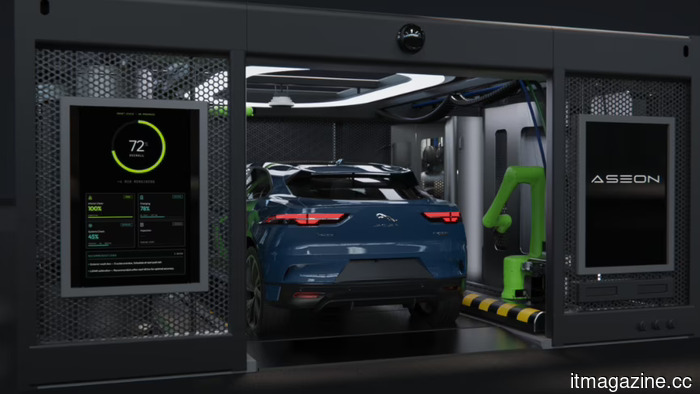 Aseon Labs secures ten million dollars to develop pods the size of parking spaces designed to recharge and clean robotaxis.
Aseon Labs, supported by Y Combinator, secured $10 million to develop automated pods designed to charge, clean, and inspect robotaxis, thereby reducing the unnecessary miles that are draining fleet resources.
Aseon Labs secures ten million dollars to develop pods the size of parking spaces designed to recharge and clean robotaxis.
Aseon Labs, supported by Y Combinator, secured $10 million to develop automated pods designed to charge, clean, and inspect robotaxis, thereby reducing the unnecessary miles that are draining fleet resources.
 As AI voices become increasingly difficult to detect, ElevenLabs is incorporating Google's SynthID to assist you in identifying the fakes.
Voices generated by AI are becoming extremely difficult to detect. ElevenLabs is now incorporating invisible watermarks into its audio, allowing you to recognize when you're hearing AI-generated content.
As AI voices become increasingly difficult to detect, ElevenLabs is incorporating Google's SynthID to assist you in identifying the fakes.
Voices generated by AI are becoming extremely difficult to detect. ElevenLabs is now incorporating invisible watermarks into its audio, allowing you to recognize when you're hearing AI-generated content.
 Starlink, owned by Elon Musk, might soon provide mobile services as a carrier in the United States.
SpaceX might be gearing up for its most ambitious Starlink expansion to date. Rather than merely assisting mobile carriers, it could soon transition into being one itself, which could disrupt the entire wireless sector.
Starlink, owned by Elon Musk, might soon provide mobile services as a carrier in the United States.
SpaceX might be gearing up for its most ambitious Starlink expansion to date. Rather than merely assisting mobile carriers, it could soon transition into being one itself, which could disrupt the entire wireless sector.
onsemi's Synaptics agreement: a $7 billion investment in physical AI
The onsemi Synaptics agreement, valued at approximately $7 billion, anticipates that the next advancement in AI will occur in vehicles, manufacturing facilities, and robots, rather than in the cloud.