
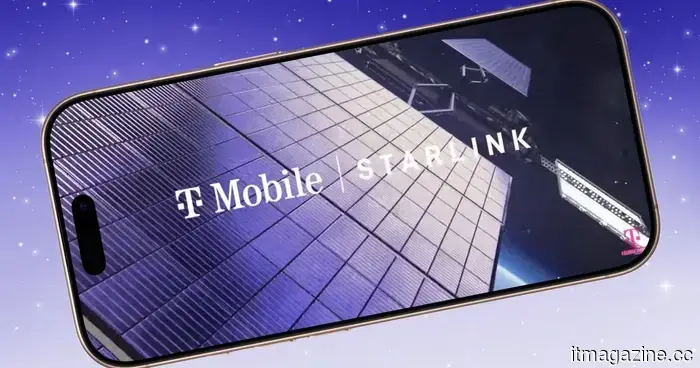
Starlink, owned by Elon Musk, might soon provide mobile services as a carrier in the United States.
T-Mobile
Elon Musk’s Starlink has transformed internet access for millions, especially in areas where conventional broadband is inadequate. Now, the satellite internet service might be gearing up for a significant advancement — potentially becoming a mobile carrier.
As reported by the Financial Times, SpaceX has informed investors about its consideration to launch a retail Starlink mobile service in the US. Instead of merely collaborating with existing wireless carriers, the company may begin offering mobile plans directly to consumers, placing it in competition with Verizon, AT&T, and T-Mobile.
Starlink’s Role May Shift
Up to this point, Starlink has primarily operated behind the scenes. In the US, its satellite network supplements current carriers by addressing coverage gaps in rural and remote areas. Customers still subscribe to conventional mobile operators while Starlink provides connectivity in regions where cell towers are inadequate. A direct-to-consumer service would completely alter this model.
Rather than depending on telecom companies as intermediaries, SpaceX could create its own customer relationships via Starlink-branded mobile plans. This would significantly broaden its market, extending beyond satellite broadband, which already serves over 10 million customers globally. This initiative wouldn’t be entirely unexpected; last year, SpaceX acquired wireless spectrum assets from EchoStar in a multibillion-dollar transaction, prompting speculation about establishing a mobile network.
Ambitious Idea with Numerous Challenges
Although this concept is intriguing, becoming a nationwide mobile carrier poses considerable challenges. The US wireless market is highly competitive, dominated by Verizon, AT&T, and T-Mobile, which control extensive network infrastructure and possess significantly more radio spectrum than SpaceX currently holds. Beyond satellite technology, SpaceX would need to develop customer support, billing systems, retail operations, and an extensive terrestrial network to compete effectively.
That’s why some analysts are doubtful. They believe that the potential for a Starlink mobile service could merely strengthen SpaceX’s negotiating leverage with existing telecom partners, enabling the company to obtain better revenue-sharing agreements rather than immediately launching a full-fledged carrier. Nevertheless, SpaceX’s long-term aspirations seem to reach far beyond merely connecting remote locations. Company documents reportedly indicate that Starlink ultimately intends to provide an optimal connectivity experience, regardless of whether users are in rural areas, suburbs, or bustling cities. Currently, SpaceX has not officially announced plans to introduce a retail mobile service. However, if it proceeds, the company, known for its rockets and satellites, might soon find itself competing in the more local arena of your monthly phone bill.
Shimul is a contributor at Digital Trends, bringing over five years of experience in the technology sector.
Lightsails Encounter Another Hurdle on the Path to Interstellar Travel
The most intriguing interstellar travel concept may face challenges from the very light meant to propel it.
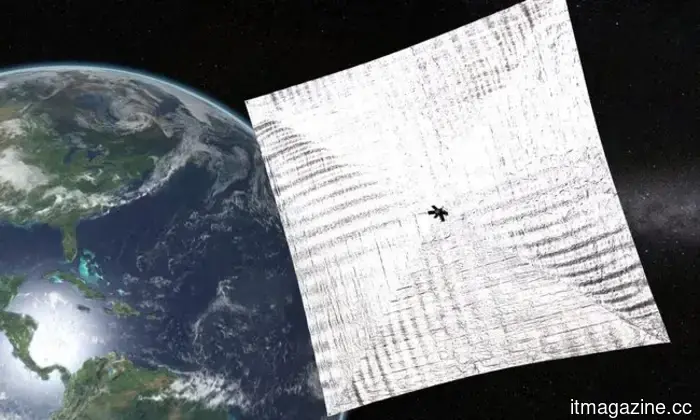
Laser-powered lightsails are among the most innovative solutions for space travel. While it may not sound as futuristic as a warp drive, its practical application is now being questioned. Utilizing lightsails, a spacecraft could deploy an ultra-thin reflective sail and allow a powerful laser to propel it towards a distant star without the need for fuel. The technology was straightforward and elegant — but it's also more complex than it appears. A recent preprint by researchers Chao Shen and Jiaze Li from the Harbin Institute of Technology suggests that relativistic lightsails may encounter an unforeseen propulsion issue as they reach extreme speeds.
The galaxy presents a mystery surrounding exoplanet sizes, and NASA’s EVE mission aims to unravel it.
Human exploration of space has raised more questions than answers, particularly regarding planet sizes. Astrophysicists have discovered various rocky super-Earths and numerous puffier sub-Neptunes, but significantly fewer planets with a radius approximately 1.8 times that of Earth. This gap is referred to as the radius valley, and a proposed mission, the Early eVolution Explorer (EVE), seeks to understand its existence. NASA's plan is straightforward: observe planets while they are still in their youth. The mission concept, outlined in a new arXiv preprint and reported by Phys.org, would concentrate on newly formed star clusters to examine what small planets resemble before billions of years of evolution.
Recent discussions indicate that a Tesla and SpaceX merger could be on the horizon.
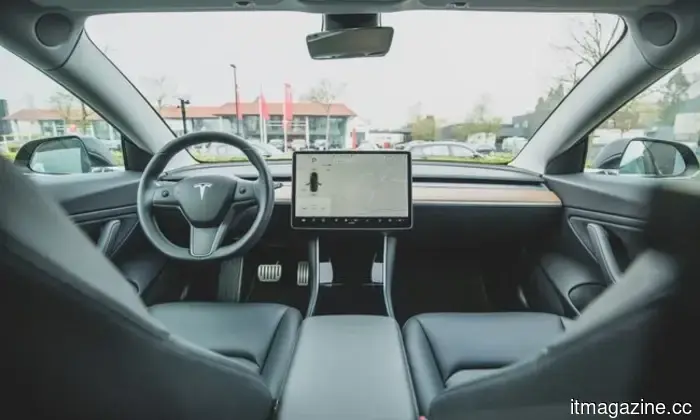
For years, the notion of Tesla and SpaceX merging has oscillated between ambitious business strategy and Elon Musk fan fiction. The two companies already share underlying connections, leadership influence, engineering talent, and long-term objectives. However, whenever the topic arose, it seemed more like an intriguing thought experiment than a feasible reality. Recently, a key figure at SpaceX has reignited the conversation.
In a recent interview with CNBC, SpaceX President and COO Gwynne Shotwell was asked about the potential for closer integration between Tesla and SpaceX. Her response was not a definitive denial. In fact, she hinted that merging the two companies might simplify things for Musk. While this may sound like a casual remark, it carries weight coming from Shotwell, who


Other articles
 onsemi's Synaptics agreement: a $7 billion wager on tangible AI
The onsemi Synaptics agreement, valued at approximately $7 billion, is based on the belief that the next phase of AI development will occur in automobiles, manufacturing facilities, and robotics rather than in the cloud.
onsemi's Synaptics agreement: a $7 billion wager on tangible AI
The onsemi Synaptics agreement, valued at approximately $7 billion, is based on the belief that the next phase of AI development will occur in automobiles, manufacturing facilities, and robotics rather than in the cloud.
 OpenAI presents ChatGPT advertisements at Cannes amid a drop in CPM.
OpenAI made its first appearance at the Cannes Lions with a large number of advertisers, yet its ad pricing fell from $60 to $25 CPM within a matter of weeks. Is it possible for ChatGPT to achieve $100 billion in advertising revenue by 2030?
OpenAI presents ChatGPT advertisements at Cannes amid a drop in CPM.
OpenAI made its first appearance at the Cannes Lions with a large number of advertisers, yet its ad pricing fell from $60 to $25 CPM within a matter of weeks. Is it possible for ChatGPT to achieve $100 billion in advertising revenue by 2030?
 Your Windows 10 computer has received an additional year of security updates; here's how to obtain them at no cost.
Millions of Windows 10 PCs that aren't able to run Windows 11 have received some relief, as Microsoft has extended its free security update program until October 2027.
Your Windows 10 computer has received an additional year of security updates; here's how to obtain them at no cost.
Millions of Windows 10 PCs that aren't able to run Windows 11 have received some relief, as Microsoft has extended its free security update program until October 2027.
 onsemi's Synaptics agreement: a $7 billion investment in physical AI
The onsemi Synaptics agreement, valued at approximately $7 billion, anticipates that the next advancement in AI will occur in vehicles, manufacturing facilities, and robots, rather than in the cloud.
onsemi's Synaptics agreement: a $7 billion investment in physical AI
The onsemi Synaptics agreement, valued at approximately $7 billion, anticipates that the next advancement in AI will occur in vehicles, manufacturing facilities, and robots, rather than in the cloud.
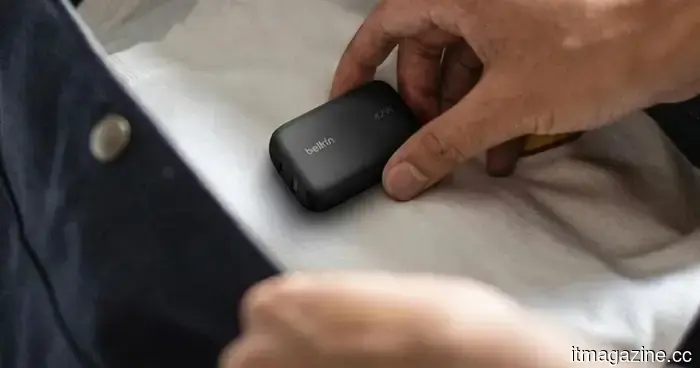 I discovered two budget charger deals for Prime Day that don’t seem like the usual cable-drawer clutter.
These Anker and Belkin charger deals for Prime Day are affordable, functional, and from brands I would trust more than taking chances with random wall chargers.
I discovered two budget charger deals for Prime Day that don’t seem like the usual cable-drawer clutter.
These Anker and Belkin charger deals for Prime Day are affordable, functional, and from brands I would trust more than taking chances with random wall chargers.
 We finally got a glimpse of Android 17's gaming technique reminiscent of the Nintendo DS.
Android 17's foldable gaming mode divides the screen into areas for gameplay and virtual controls, giving folding phones a feel similar to that of portable gaming devices.
We finally got a glimpse of Android 17's gaming technique reminiscent of the Nintendo DS.
Android 17's foldable gaming mode divides the screen into areas for gameplay and virtual controls, giving folding phones a feel similar to that of portable gaming devices.
Starlink, owned by Elon Musk, might soon provide mobile services as a carrier in the United States.
SpaceX might be gearing up for its most ambitious Starlink expansion to date. Rather than merely assisting mobile carriers, it could soon transition into being one itself, which could disrupt the entire wireless sector.