
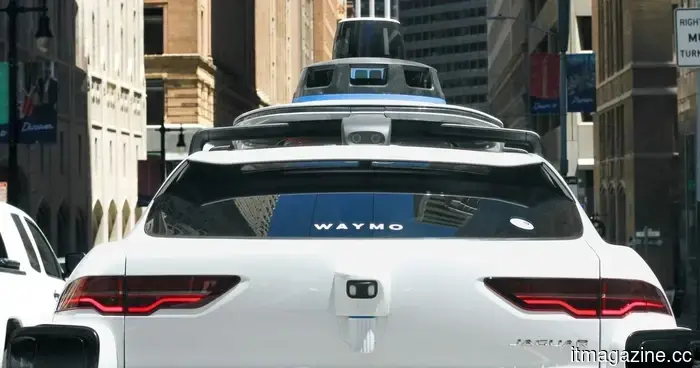
The chaotic era of robotaxis is beginning to conclude.
New global regulations might unify the inconsistent patchwork of rules, establishing stricter safety standards for autonomous vehicle fleets.
The rules for robotaxis have entered their initial global phase as a UN vehicle standards forum has established the first international guidelines for fully autonomous vehicles, providing driverless fleets with a shared safety baseline across key markets.
This development occurs as robotaxis progress from trial programs to larger commercial operations. In the US and China, private fleets more than doubled in 2025 to reach 8,000 vehicles operating in over two dozen major cities.
Automakers and technology firms have advocated for a cohesive regulatory framework, as vehicles designed for one country can face challenges in another. While a common set of regulations does not eliminate local approvals, it offers companies a clearer objective prior to wider implementation.
The reason for the regulators' timely action
The framework targets vehicles that are outfitted with fully autonomous driving systems, distinguishing them from driver-assistance technologies that still require a human to intervene. This distinction is vital for robotaxis, which are intended to function without a safety driver.
The anticipated scale is far greater than the current fleets suggest. The International Energy Agency forecasts a future of 700,000 to 3 million robotaxis operating in 40 to 80 major cities by 2035, which clarifies why regulators took action before the category expands to a size that is difficult to manage effectively.
Evidence of safety from companies
For manufacturers, adhering to this framework translates safety into a matter of documentation as much as technical engineering. They will need reliable testing, verified safety governance, lifecycle management, ongoing performance evaluations, and records relevant to autonomous driving safety.
This raises the standards beyond polished demonstrations and carefully established launch zones. Regulators will require proof that an autonomous system does not present unreasonable risks, a criterion that could hinder less capable players while allowing more robust ones to navigate across borders with fewer challenges.
Upcoming changes before 2027
This framework is set to become effective in January 2027, with major automotive markets endorsing it, including the US, China, the European Union, Japan, and the UK.
However, driverless rides will not instantly become available everywhere. Individual cities will make their own decisions, companies must be adequately prepared, and local regulations may still influence access. Nevertheless, the next steps are now more defined. Companies able to validate their systems against the shared standards will likely have the best chance of scaling up quickly.
Paulo Vargas has transitioned from being an English major to a reporter and technical writer, continually returning to his core interests.
Google Meet finally rolls out on Android Auto, eliminating one more reason to miss a meeting.
Android users can now participate in scheduled meetings and audio calls directly from their car's dashboard, aligning with features that iPhone users have enjoyed for months.
Android Auto is now incorporating Google Meet, several months after the app's launch on Apple CarPlay. Android users can access scheduled meetings and recent contacts straight from their vehicle's display instead of needing to grab their phone.
How it functions while driving
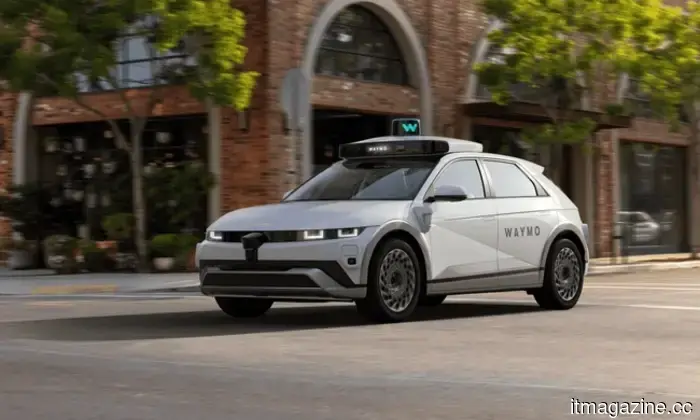
Waymo’s robotaxis continue to encounter new obstacles, with construction zones being the latest challenge.
The company has recalled its entire fleet of nearly 4,000 robotaxis to prevent them from operating on highways after discovering at least 13 incidents where vehicles drove into highway sections closed for construction.
This marks the company's sixth recall in under a year, following previous incidents involving flooded roads, telephone poles, gates, towed trucks, and school buses.
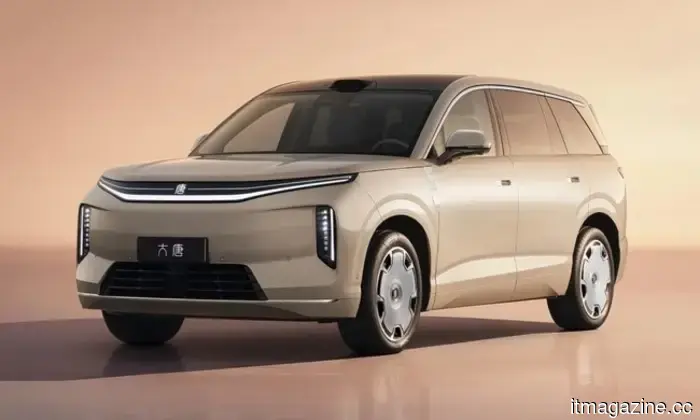
BYD launches Great Tang eSUV with 10-minute charging and a 590-mile range starting at $40,000.
With impressive specifications, record preorders, and none heading to the US.
BYD has unveiled the Great Tang, a full-size electric SUV that offers the range of a typical gasoline vehicle and takes just a bit longer to recharge.
Starting at approximately $35,500, the company's leading electric SUV poses a serious challenge to many American electric vehicles.


Other articles
 The iPhone 18 Pro may not be overly expensive, but I would still advise exercising caution.
Increasing costs of RAM and storage continue to pose a challenge for Apple; however, J.P. Morgan suggests that the price hike for the iPhone 18 Pro may be more modest.
The iPhone 18 Pro may not be overly expensive, but I would still advise exercising caution.
Increasing costs of RAM and storage continue to pose a challenge for Apple; however, J.P. Morgan suggests that the price hike for the iPhone 18 Pro may be more modest.
 The iPhone 18 Pro may not be excessively priced, but I would still advise caution.
Increasing costs for RAM and storage continue to pose a challenge for Apple; however, J.P. Morgan thinks that the price hike for the iPhone 18 Pro might be less significant.
The iPhone 18 Pro may not be excessively priced, but I would still advise caution.
Increasing costs for RAM and storage continue to pose a challenge for Apple; however, J.P. Morgan thinks that the price hike for the iPhone 18 Pro might be less significant.
 China aims to connect its renewable energy directly to the data center.
Beijing aims to connect renewable energy sources directly to data centres. A solar project in Ningxia serves as the first significant trial to determine if this approach is effective.
China aims to connect its renewable energy directly to the data center.
Beijing aims to connect renewable energy sources directly to data centres. A solar project in Ningxia serves as the first significant trial to determine if this approach is effective.
 Canadian employees have limited protections against monitoring in the workplace.
TD's decision to monitor certain employees has revealed that Canada's legal safeguards against workplace surveillance are much weaker in comparison to those in the EU.
Canadian employees have limited protections against monitoring in the workplace.
TD's decision to monitor certain employees has revealed that Canada's legal safeguards against workplace surveillance are much weaker in comparison to those in the EU.
 Gotion files lawsuit against Michigan township regarding the abandoned $2.4 billion battery facility.
Green Charter Township recalled its board in an effort to prevent Gotion's $2.36 billion electric vehicle battery plant. The Chinese company is now filing a lawsuit seeking hundreds of millions in damages.
Gotion files lawsuit against Michigan township regarding the abandoned $2.4 billion battery facility.
Green Charter Township recalled its board in an effort to prevent Gotion's $2.36 billion electric vehicle battery plant. The Chinese company is now filing a lawsuit seeking hundreds of millions in damages.
 Anthropic recruits Orange's AI leader as it speeds up its expansion in Europe.
Steve Jarrett, who has served as Orange's chief AI officer since 2019, will be joining Anthropic in Paris on August 25 to modify its products for the European and African markets.
Anthropic recruits Orange's AI leader as it speeds up its expansion in Europe.
Steve Jarrett, who has served as Orange's chief AI officer since 2019, will be joining Anthropic in Paris on August 25 to modify its products for the European and African markets.
The chaotic era of robotaxis is beginning to conclude.
The initial worldwide regulations for robotaxis establish unified safety standards for completely autonomous vehicles, providing manufacturers with a more defined objective, while still facing significant obstacles related to city approvals, local regulations, and readiness for implementation.