
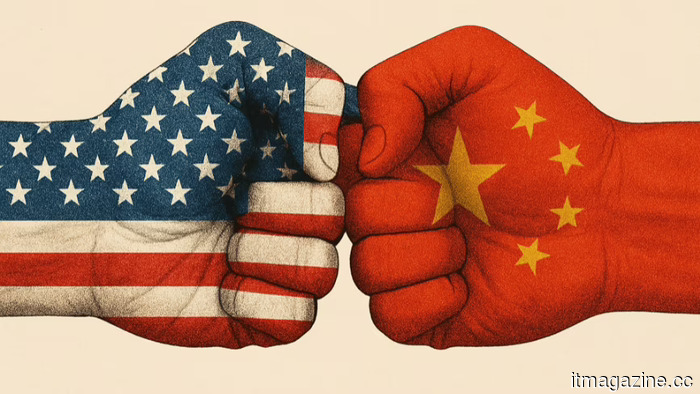
Gotion files lawsuit against Michigan township regarding the abandoned $2.4 billion battery facility.
Summary: A Michigan township with a population of 3,000 is facing a lawsuit for hundreds of millions of dollars after it thwarted a proposed $2.36 billion battery plant by the Chinese company Gotion. This case is now a critical test of America's ability to establish supply-chain independence amid local community rejections of factories.
Less than three years ago, the residents of Green Charter Township, a rural area in central Michigan, gathered to celebrate what they believed was a triumph for local democracy. They successfully recalled all members of their town board and replaced them with new leaders who swiftly blocked a $2.36 billion electric vehicle battery plant proposed by Gotion, a subsidiary of the Chinese manufacturer Gotion High-Tech.
This victory may come at a steep price for the community. Gotion is now suing Green Charter for hundreds of millions in damages, and the township has already incurred a budget deficit of nearly $400,000 due to legal costs.
What the township rejected
Supported by Michigan Governor Gretchen Whitmer and nearly $175 million in state incentives, the proposed Gotion facility would have spanned 109 acres, including over 24 acres of protected wetlands, to produce lithium iron phosphate batteries and electric vehicle components. It was expected to create around 2,500 jobs and bolster U.S. efforts to domesticate critical battery supply chains.
However, residents viewed the project differently. They perceived it as a “Trojan horse” that could introduce Chinese Communist Party influence into their community, jeopardize the Muskegon River system that feeds into Lake Michigan, and permanently alter their lifestyle. In November 2023, voters removed the five board members who initially approved the plan. The new board revoked the agreements, including a crucial water-access permit necessary for Gotion's operations, causing the project to stall.
The lawsuit
Gotion filed a lawsuit against Green Charter in March 2024 and obtained a preliminary injunction against the township’s decision to rescind the agreements, which would have allowed construction to continue. However, Gotion opted not to proceed, citing ongoing local opposition and the new board's unwillingness to cooperate.
By October 2025, the Michigan Strategic Fund declared the project in default and sought to recover $50 million in subsidies. The state is also pursuing $23.6 million that Gotion spent on land acquisitions. Gotion’s amended lawsuit, submitted on June 12, seeks a minimum of $23 million in damages associated with the state funds it was ordered to return, in addition to claims for lost profits, legal expenses, and project costs. The township contends that Gotion “sat idly by, injunction in hand, while its project withered.”
A town that cannot afford to lose
“A multibillion-dollar multinational corporation is trying to sue a township of 3,000 people for hundreds of millions of dollars in damages,” stated local activist Marjorie Steele, who leads the Economic Development Responsibility Alliance of Michigan. The state Treasury Department has flagged the township for three consecutive years for overspending its authorized budget, attributing the deficit to legal fees.
During a town hall meeting on June 9, residents expressed concerns that if property taxes were raised to cover the shortfall, housing could become unaffordable, forcing families to leave. Township supervisor Jason Kruse acknowledged the difficulty, indicating to local news outlet 13 On Your Side that a $23 million payout “would not be very easy to navigate.”
The political flashpoint
The conflict has extended beyond Green Charter. Republican Congressman John Moolenaar, chair of the House Select Committee on China, has described Gotion’s damages claim as “further example of CCP lawfare” and reportedly secured the passage of his NO GOTION Act, aimed at prohibiting federal grants to companies linked to the CCP, although the bill’s current status could not be independently confirmed.
During the 2024 presidential campaign, Donald Trump opposed the project amid broader concerns about Chinese components in American supply chains, and his running mate JD Vance held a rally near the site along with Moolenaar. Critics in Congress point to federal filings where Gotion admitted to being “wholly owned and controlled” by its parent company in China and receiving subsidies from the Chinese government.
The contradiction
The Gotion conflict highlights a fundamental tension in American industrial policy. The U.S. government is striving to establish more factories, battery plants, and semiconductor facilities on American soil, insisting that essential supply chains must be separated from China. Yet the communities where these facilities are intended to be built are increasingly opposing such developments.
China controls 94% of the global lithium iron phosphate battery production, the very type of batteries Gotion planned to manufacture in Michigan. American manufacturers struggle to compete with the scale, cost structure, and speed of iteration of their Chinese counterparts, which underscores the need for technology transfer from companies like Gotion to establish a domestic supply chain.
Denis Simon of the Quincy Institute, a Washington think tank, noted that
Other articles
 China aims to connect its renewable energy directly to the data center.
Beijing aims to connect renewable energy sources directly to data centres. A solar project in Ningxia serves as the first significant trial to determine if this approach is effective.
China aims to connect its renewable energy directly to the data center.
Beijing aims to connect renewable energy sources directly to data centres. A solar project in Ningxia serves as the first significant trial to determine if this approach is effective.
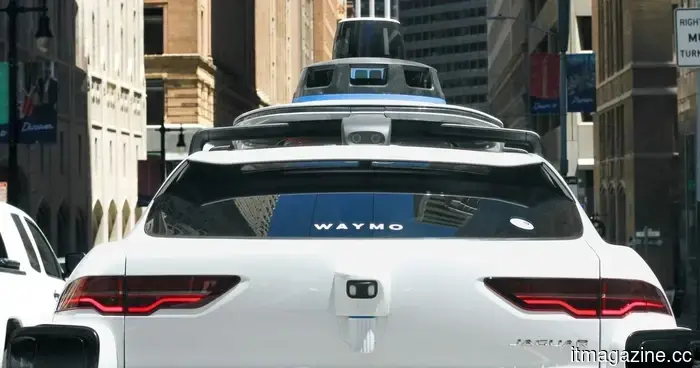 The chaotic era of robotaxis is beginning to conclude.
The initial worldwide regulations for robotaxis establish unified safety standards for completely autonomous vehicles, providing manufacturers with a more defined objective, while still facing significant obstacles related to city approvals, local regulations, and readiness for implementation.
The chaotic era of robotaxis is beginning to conclude.
The initial worldwide regulations for robotaxis establish unified safety standards for completely autonomous vehicles, providing manufacturers with a more defined objective, while still facing significant obstacles related to city approvals, local regulations, and readiness for implementation.
 TensorX and Solstice secure $1 billion to fund Europe’s sovereign AI development.
TensorX and Solstice will support EU AI hardware and data centers, and introduce aiUSX, a yield asset that transforms companies' unused AI cash into infrastructure lending.
TensorX and Solstice secure $1 billion to fund Europe’s sovereign AI development.
TensorX and Solstice will support EU AI hardware and data centers, and introduce aiUSX, a yield asset that transforms companies' unused AI cash into infrastructure lending.
 An innovative Mac application allows you to experience vibrations via the trackpad whenever you click on a link or button.
HapticPad utilizes your Mac's Force Touch trackpad to provide vibrations on links, buttons, and web inputs as you hover over them in Chrome.
An innovative Mac application allows you to experience vibrations via the trackpad whenever you click on a link or button.
HapticPad utilizes your Mac's Force Touch trackpad to provide vibrations on links, buttons, and web inputs as you hover over them in Chrome.
 Anthropic recruits Orange's AI leader as it speeds up its expansion in Europe.
Steve Jarrett, who has served as Orange's chief AI officer since 2019, will be joining Anthropic in Paris on August 25 to modify its products for the European and African markets.
Anthropic recruits Orange's AI leader as it speeds up its expansion in Europe.
Steve Jarrett, who has served as Orange's chief AI officer since 2019, will be joining Anthropic in Paris on August 25 to modify its products for the European and African markets.
 The iPhone 18 Pro may not be excessively priced, but I would still advise caution.
Increasing costs for RAM and storage continue to pose a challenge for Apple; however, J.P. Morgan thinks that the price hike for the iPhone 18 Pro might be less significant.
The iPhone 18 Pro may not be excessively priced, but I would still advise caution.
Increasing costs for RAM and storage continue to pose a challenge for Apple; however, J.P. Morgan thinks that the price hike for the iPhone 18 Pro might be less significant.
Gotion files lawsuit against Michigan township regarding the abandoned $2.4 billion battery facility.
Green Charter Township recalled its board in an effort to prevent Gotion's $2.36 billion electric vehicle battery plant. The Chinese company is now filing a lawsuit seeking hundreds of millions in damages.