
China aims to connect its renewable energy directly to the data center.
In the desert near Zhongwei, located in the northwestern area of Ningxia, four dedicated power lines connect a solar panel field to a group of computers. These lines do not connect to the public grid, and that seemingly unremarkable point is crucial. China is urging its extensive data center industry to directly connect to wind and solar power generation instead of relying on a grid that is still significantly powered by coal. This initiative is driven by policy and serves as a demonstration.
Beijing’s work report for 2026 highlights the need for closer integration of computing infrastructure with electricity supply, and a national green data center plan mandates that new projects in the country’s designated computing areas obtain most of their energy from renewable sources.
The Zhongwei plant exemplifies this effort. China Datang Corp has established a 500-megawatt solar farm there, which is described as the nation's first large-scale green power project designed to supply a data center cluster directly. It officially began operation in early May, following the start of green power supply in February, as reported by Chinese state media.
What sets this project apart is its delivery method. The site utilizes what Datang refers to as a dual-track system: four dedicated 110-kilovolt lines deliver electricity directly to the computing facilities, with any extra demand met through bilateral market trades. Daytime solar output is prioritized, while wind energy is anticipated to meet evening needs, with energy storage helping to fill the gaps.
The solar facility is expected to generate approximately 970 gigawatt-hours annually, which constitutes around half of the projected demand for the cloud base. Once the wind component is operational, these figures are expected to increase. The 500 MW solar array is the initial part of a larger 2-gigawatt phase that will also include a 1.5 GW wind farm and energy storage, with a planned investment of about 8.7 billion yuan, or roughly $1.27 billion. The construction of the wind farm is currently underway, with plans for it to be fully connected to the grid in September.
Upon the completion of the first phase, annual energy generation is projected to total 4.3 terawatt-hours, exceeding the cloud base's estimated consumption of 2.29 terawatt-hours. A second phase may increase the total capacity to 4.6 GW. This initiative aligns with China's "east data, west computing" strategy, which directs energy-intensive processing to western regions where wind and solar resources are abundant and land is inexpensive. The increasing demand drives this entire effort.
The surge in AI has led to a significant rise in computing power and electricity consumption, coinciding with Beijing's goal to reach peak carbon emissions by 2030. This ambition is quite ambitious; authorities aim for renewables to provide about 80% of power for the AI data center sector by 2030, a significant jump from around 10% in 2023.
However, there remains a considerable gap between a solitary operational project in the desert and this national objective. Challenges such as curtailment, grid bottlenecks, and the variability of wind and solar energy persist, and China’s ambitions for green power in AI have previously encountered limitations with the grid.
For the moment, Zhongwei stands as the experimental model. If the blend of desert wind and solar energy can successfully meet digital demands without relying on the traditional grid, the model could be replicated elsewhere. If not, it may remain a striking showcase in Ningxia. The completion of the wind turbines in September will provide clarity on these projections.
Other articles
 The Kremlin is seeking clarification from Apple following the removal of VK applications from the App Store.
Apple removed VK's applications in Russia, referencing sanctions. VK claims it has not been sanctioned. The Kremlin is seeking clarification and is considering an alternative operating system.
The Kremlin is seeking clarification from Apple following the removal of VK applications from the App Store.
Apple removed VK's applications in Russia, referencing sanctions. VK claims it has not been sanctioned. The Kremlin is seeking clarification and is considering an alternative operating system.
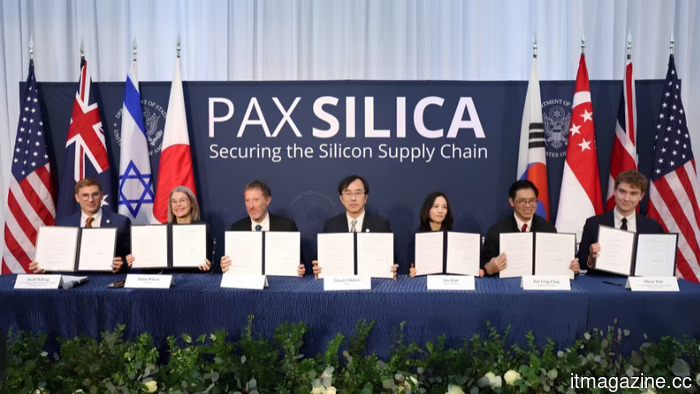 The EU agrees to Pax Silica, the US-led semiconductor agreement that France described as colonization.
Brussels is participating in the US-led Pax Silica initiative concerning AI chip supply chains, despite French concerns that it compromises Europe’s technological sovereignty.
The EU agrees to Pax Silica, the US-led semiconductor agreement that France described as colonization.
Brussels is participating in the US-led Pax Silica initiative concerning AI chip supply chains, despite French concerns that it compromises Europe’s technological sovereignty.
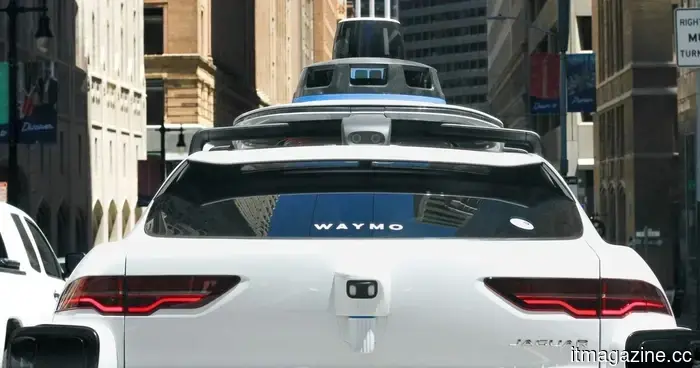 The Wild West period of robotaxis is beginning to come to a close.
The initial global regulations for robotaxis establish uniform safety standards for completely autonomous vehicles, providing clear objectives for manufacturers, while still facing significant challenges with city approvals, local legislation, and preparedness for widespread implementation.
The Wild West period of robotaxis is beginning to come to a close.
The initial global regulations for robotaxis establish uniform safety standards for completely autonomous vehicles, providing clear objectives for manufacturers, while still facing significant challenges with city approvals, local legislation, and preparedness for widespread implementation.
 Gotion files lawsuit against Michigan township regarding the abandoned $2.4 billion battery facility.
Green Charter Township recalled its board in an effort to prevent Gotion's $2.36 billion electric vehicle battery plant. The Chinese company is now filing a lawsuit seeking hundreds of millions in damages.
Gotion files lawsuit against Michigan township regarding the abandoned $2.4 billion battery facility.
Green Charter Township recalled its board in an effort to prevent Gotion's $2.36 billion electric vehicle battery plant. The Chinese company is now filing a lawsuit seeking hundreds of millions in damages.
 The iPhone 18 Pro may not be excessively priced, but I would still advise caution.
Increasing costs for RAM and storage continue to pose a challenge for Apple; however, J.P. Morgan thinks that the price hike for the iPhone 18 Pro might be less significant.
The iPhone 18 Pro may not be excessively priced, but I would still advise caution.
Increasing costs for RAM and storage continue to pose a challenge for Apple; however, J.P. Morgan thinks that the price hike for the iPhone 18 Pro might be less significant.
 An innovative Mac application allows you to experience vibrations via the trackpad whenever you click on a link or button.
HapticPad utilizes your Mac's Force Touch trackpad to provide vibrations on links, buttons, and web inputs as you hover over them in Chrome.
An innovative Mac application allows you to experience vibrations via the trackpad whenever you click on a link or button.
HapticPad utilizes your Mac's Force Touch trackpad to provide vibrations on links, buttons, and web inputs as you hover over them in Chrome.
China aims to connect its renewable energy directly to the data center.
Beijing aims to connect renewable energy sources directly to data centres. A solar project in Ningxia serves as the first significant trial to determine if this approach is effective.