
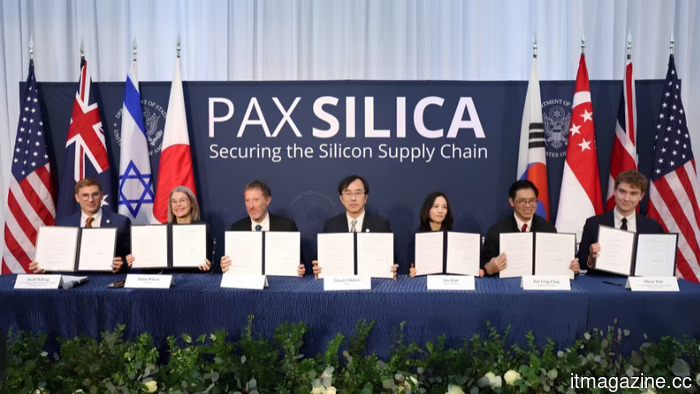
The EU agrees to Pax Silica, the US-led semiconductor agreement that France described as colonization.
Brussels is participating in a Washington-led initiative to secure AI chip supply chains, just two weeks after revealing a tech-sovereignty agenda that is fundamentally opposed to such involvement.
The European Union is preparing to join Pax Silica, the initiative spearheaded by the US to align AI chip supply chains and establish export controls against China. This decision comes at an awkward time.
It coincides with Brussels' promotion of a tech-sovereignty agenda aimed at decreasing Europe’s reliance on foreign suppliers, including those from the United States.
Pax Silica was initiated by Washington in December 2025 with the goal of securing global supply chains for AI semiconductors, essential minerals, and advanced technologies, while also uniting a select group of partners in a cohesive approach to export controls.
The UK, Japan, South Korea, India, and Australia are already participants. Additionally, three EU member states—Greece, Finland, and Sweden—have individually joined.
Italy has also been reported to be considering involvement in the arrangement, indicating the pact is gaining traction within the bloc ahead of any collective agreement.
The procedural steps followed the usual processes within the bloc. Member states' permanent representatives were expected to authorize the European Commission to represent the EU as a whole in joining, according to Agence Europe.
The Commission encouraged governments to commit as a bloc rather than individually, arguing that collaborating with like-minded partners on supply chains would create opportunities for European companies.
Not all have viewed it positively. France has been the most prominent critic, portraying Pax Silica as an attempt to dominate Europe and as a direct contradiction to the sovereignty agenda the EU was promoting simultaneously.
Paris has contested claims that it was solely responsible for stalling the Commission’s negotiation mandate but has not concealed its unease. The disagreement is not truly about chips, but rather who dictates the terms of the technology landscape that Europe operates within.
This tension is structural rather than merely rhetorical. The same Brussels that aims to lessen dependence on non-European technology has acknowledged that pursuing advanced semiconductors independently is unfeasible.
Europe lacks the production capacity for the crucial chips, and the existing supply chains are primarily based in the US and East Asia.
From this perspective, joining a coordinated group is seen as a pragmatic form of sovereignty: influencing the rules from within rather than being subjected to external conditions.
Critics, however, argue the opposite. They contend that signing the declaration ties Europe to an AI framework and export-control system defined by the US, sacrificing autonomy for participation in a setup created and managed by Washington.
The framework of Pax Silica, which encompasses semiconductors, computing infrastructure, energy, logistics, and critical minerals, is comprehensive enough to connect with most inputs vital to a modern AI economy.
Regardless, the path is clear. The bloc that spent spring advocating for strategic autonomy is now preparing to coordinate its most crucial technology with Washington.
The implications for Europe’s chip aspirations, and for the companies that relied on the Commission's optimistic outlook regarding new opportunities, remain to be seen.
Other articles
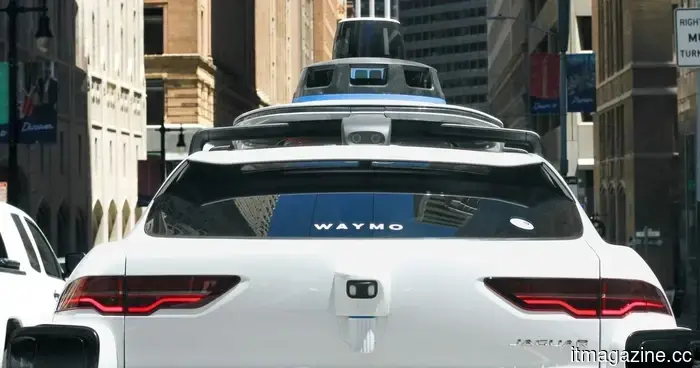 The chaotic era of robotaxis is beginning to conclude.
The initial worldwide regulations for robotaxis establish unified safety standards for completely autonomous vehicles, providing manufacturers with a more defined objective, while still facing significant obstacles related to city approvals, local regulations, and readiness for implementation.
The chaotic era of robotaxis is beginning to conclude.
The initial worldwide regulations for robotaxis establish unified safety standards for completely autonomous vehicles, providing manufacturers with a more defined objective, while still facing significant obstacles related to city approvals, local regulations, and readiness for implementation.
 The Kremlin is seeking clarification from Apple following the removal of VK applications from the App Store.
Apple removed VK's applications in Russia, referencing sanctions. VK claims it has not been sanctioned. The Kremlin is seeking clarification and is considering an alternative operating system.
The Kremlin is seeking clarification from Apple following the removal of VK applications from the App Store.
Apple removed VK's applications in Russia, referencing sanctions. VK claims it has not been sanctioned. The Kremlin is seeking clarification and is considering an alternative operating system.
 The Kremlin is seeking clarification from Apple following the removal of VK applications from the App Store.
Apple removed VK's applications in Russia, referencing sanctions. VK claims it has never been sanctioned. The Kremlin is seeking clarification and desires an alternative operating system.
The Kremlin is seeking clarification from Apple following the removal of VK applications from the App Store.
Apple removed VK's applications in Russia, referencing sanctions. VK claims it has never been sanctioned. The Kremlin is seeking clarification and desires an alternative operating system.
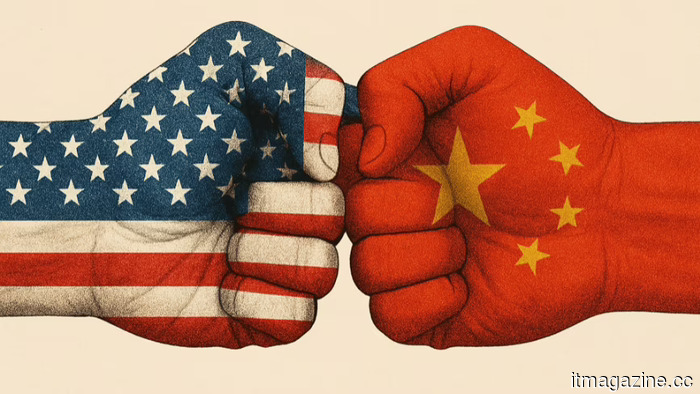 Gotion files lawsuit against Michigan township regarding the abandoned $2.4 billion battery facility.
Green Charter Township recalled its board in an effort to prevent Gotion's $2.36 billion electric vehicle battery plant. The Chinese company is now filing a lawsuit seeking hundreds of millions in damages.
Gotion files lawsuit against Michigan township regarding the abandoned $2.4 billion battery facility.
Green Charter Township recalled its board in an effort to prevent Gotion's $2.36 billion electric vehicle battery plant. The Chinese company is now filing a lawsuit seeking hundreds of millions in damages.
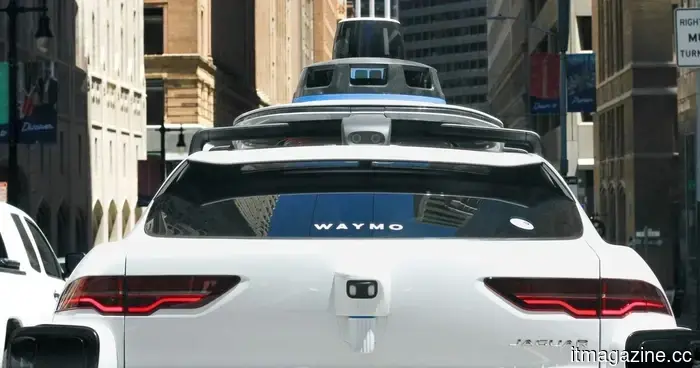 The Wild West period of robotaxis is beginning to come to a close.
The initial global regulations for robotaxis establish uniform safety standards for completely autonomous vehicles, providing clear objectives for manufacturers, while still facing significant challenges with city approvals, local legislation, and preparedness for widespread implementation.
The Wild West period of robotaxis is beginning to come to a close.
The initial global regulations for robotaxis establish uniform safety standards for completely autonomous vehicles, providing clear objectives for manufacturers, while still facing significant challenges with city approvals, local legislation, and preparedness for widespread implementation.
 An innovative Mac application allows you to experience vibrations via the trackpad whenever you click on a link or button.
HapticPad utilizes your Mac's Force Touch trackpad to provide vibrations on links, buttons, and web inputs as you hover over them in Chrome.
An innovative Mac application allows you to experience vibrations via the trackpad whenever you click on a link or button.
HapticPad utilizes your Mac's Force Touch trackpad to provide vibrations on links, buttons, and web inputs as you hover over them in Chrome.
The EU agrees to Pax Silica, the US-led semiconductor agreement that France described as colonization.
Brussels is participating in the US-led Pax Silica initiative concerning AI chip supply chains, despite French concerns that it compromises Europe’s technological sovereignty.