
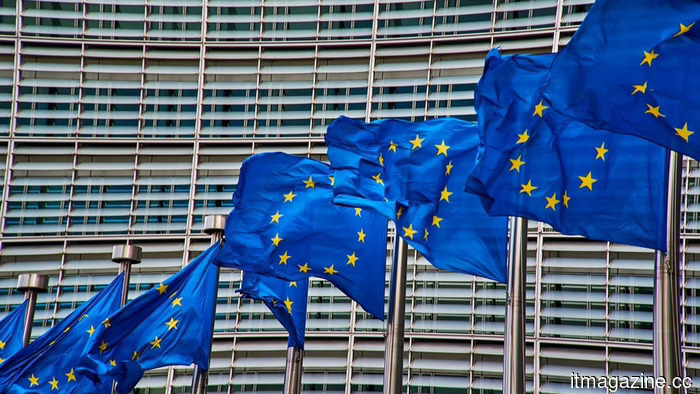
Brussels seeks to subject AWS and Azure to its most stringent technology regulations.
The European Commission has informed Amazon and Microsoft that it has a preliminary opinion that their cloud divisions, Amazon Web Services and Microsoft Azure, should be classified as gatekeepers under the Digital Markets Act (DMA). The phrasing is significant. Neither service meets the DMA’s numerical benchmarks, yet Brussels seeks their inclusion regardless.
This deviation is noteworthy. The DMA is fundamentally based on specific numerical criteria such as revenue and user counts, which automatically determine whether a company qualifies as a gatekeeper. AWS and Azure do not satisfy any of the cloud-specific criteria.
Instead, the Commission has opted for a qualitative approach, contending in its preliminary findings that both services serve as an “important gateway” between businesses and their EU customers, irrespective of the established thresholds.
If this classification is upheld, AWS and Azure, the largest and second-largest cloud providers in the EU, would be subjected to the DMA's common obligations: no self-preferencing, required interoperability, and regulations on data portability to ease the process of switching providers. The Commission has pointed to the issues of lock-in and substantial switching costs as key concerns.
“In Europe, we are increasingly dependent on cloud computing services,” remarked Teresa Ribera, the Commission’s executive vice-president responsible for a clean, equitable, and competitive transition, highlighting consumers, businesses of various sizes, and public administrations. She stressed the objective as creating “a level playing field for all cloud service providers.”
Henna Virkkunen, the executive vice-president for tech sovereignty, added a focus on artificial intelligence, noting that cloud services have become “a prerequisite for AI,” with over half of EU businesses now relying on them.
This detail clarifies the timing of the issue. Although the dispute is officially regarding cloud infrastructure, the underlying significance pertains to the foundational layer supporting the AI surge, which Brussels has determined should not be subjected to thresholds established prior to this growth.
The preliminary conclusions stem from a seven-month investigation, during which the Commission highlighted the firms’ revenue, operational scale, well-established user bases, and the influence of their AI tools and partnerships on cloud procurement decisions.
Both companies have raised objections. Amazon has publicly asserted that applying the DMA to the cloud would, in its words, undermine European competitiveness and resilience.
At this stage, neither company has yet been designated. The preliminary opinion initiates a defense period: Amazon and Microsoft can contest the findings before the Commission reaches a final decision, expected in the upcoming months.
Should a formal designation occur, it would commence the timeline for compliance. Currently, this is a position rather than a final verdict. Nonetheless, it marks the first instance of the EU targeting its gatekeeper rules at cloud infrastructure while bypassing the very thresholds upon which the framework was originally constructed.
The key question for the coming months will be whether this qualitative approach withstands the legal scrutiny from the companies involved.
Other articles
 TensorX and Solstice secure $1 billion to fund Europe’s sovereign AI development.
TensorX and Solstice will support EU AI hardware and data centers, and introduce aiUSX, a yield asset that transforms companies' unused AI cash into infrastructure lending.
TensorX and Solstice secure $1 billion to fund Europe’s sovereign AI development.
TensorX and Solstice will support EU AI hardware and data centers, and introduce aiUSX, a yield asset that transforms companies' unused AI cash into infrastructure lending.
 Gotion files lawsuit against Michigan township regarding the abandoned $2.4 billion battery facility.
Green Charter Township recalled its board in an effort to prevent Gotion's $2.36 billion electric vehicle battery plant. The Chinese company is now filing a lawsuit seeking hundreds of millions in damages.
Gotion files lawsuit against Michigan township regarding the abandoned $2.4 billion battery facility.
Green Charter Township recalled its board in an effort to prevent Gotion's $2.36 billion electric vehicle battery plant. The Chinese company is now filing a lawsuit seeking hundreds of millions in damages.
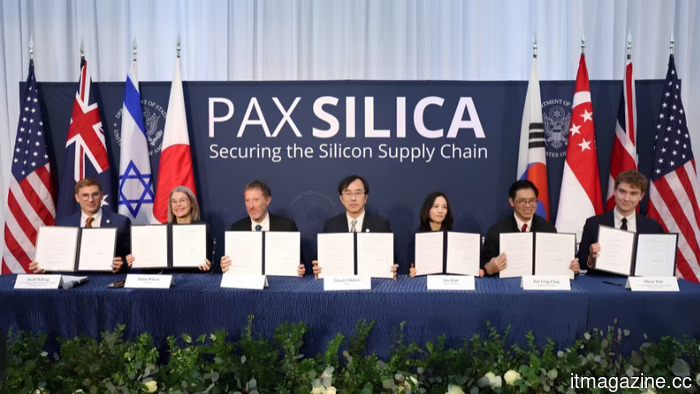 The EU agrees to Pax Silica, the US-led semiconductor agreement that France described as colonization.
Brussels is participating in the US-led Pax Silica initiative concerning AI chip supply chains, despite French concerns that it compromises Europe’s technological sovereignty.
The EU agrees to Pax Silica, the US-led semiconductor agreement that France described as colonization.
Brussels is participating in the US-led Pax Silica initiative concerning AI chip supply chains, despite French concerns that it compromises Europe’s technological sovereignty.
 Anthropic recruits Orange's AI leader as it speeds up its expansion in Europe.
Steve Jarrett, who has served as Orange's chief AI officer since 2019, will be joining Anthropic in Paris on August 25 to modify its products for the European and African markets.
Anthropic recruits Orange's AI leader as it speeds up its expansion in Europe.
Steve Jarrett, who has served as Orange's chief AI officer since 2019, will be joining Anthropic in Paris on August 25 to modify its products for the European and African markets.
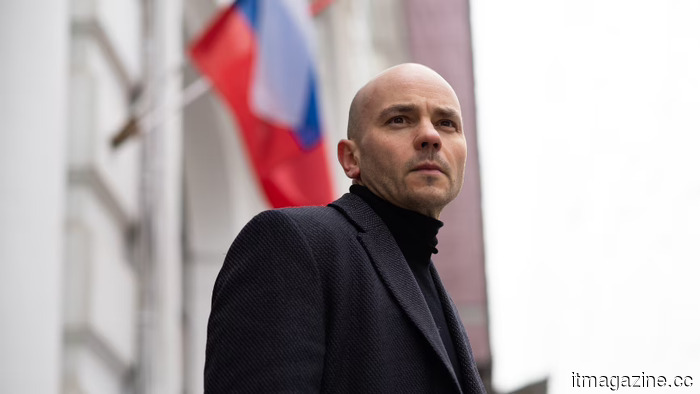 Russia accessed an activist's iPhone using Cellebrite, months after the company stated it had withdrawn.
Citizen Lab discovered forensic proof that Russia utilized Cellebrite’s UFED on opposition politician Andrey Pivovarov, several months after the company claimed to have severed connections.
Russia accessed an activist's iPhone using Cellebrite, months after the company stated it had withdrawn.
Citizen Lab discovered forensic proof that Russia utilized Cellebrite’s UFED on opposition politician Andrey Pivovarov, several months after the company claimed to have severed connections.
 The Kremlin is seeking clarification from Apple following the removal of VK applications from the App Store.
Apple removed VK's applications in Russia, referencing sanctions. VK claims it has not been sanctioned. The Kremlin is seeking clarification and is considering an alternative operating system.
The Kremlin is seeking clarification from Apple following the removal of VK applications from the App Store.
Apple removed VK's applications in Russia, referencing sanctions. VK claims it has not been sanctioned. The Kremlin is seeking clarification and is considering an alternative operating system.
Brussels seeks to subject AWS and Azure to its most stringent technology regulations.
The Commission's initial position suggests that the cloud divisions of Amazon and Microsoft ought to be considered DMA gatekeepers, despite not satisfying the typical criteria.