
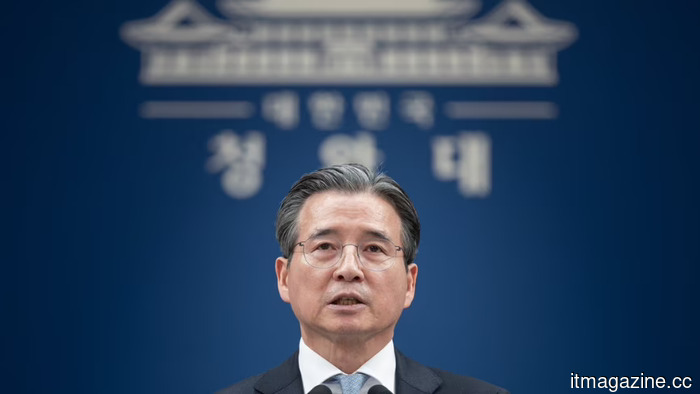
South Korea is in discussions with Samsung and SK Hynix regarding a second chip cluster.
A presidential advisor has indicated that the demand for AI may accelerate the next phase of semiconductor fabrication plant construction by over a decade, highlighting the need for a designated location. On Wednesday, South Korea's government engaged in discussions with Samsung Electronics and SK Hynix regarding a significant new investment in chip manufacturing, with a forthcoming announcement about a new chip cluster anticipated.
Kim Yong-beom, a presidential policy advisor, characterized the situation more as a logistical challenge rather than a negotiation, noting that the urgency stems from demand. He stated that the "exponential and explosive" order growth driven by the AI sector could necessitate the companies to expedite the construction of new facilities by more than ten years, potentially moving up production capacity planned for later to 2034 or 2035. The rapid sales of chips are reshaping the timeline.
Kim openly acknowledged the challenge of locating a large new site for a second cluster in the next seven or eight years. The initial cluster, located south of Seoul, serves as the backbone of Korean memory production, and establishing a similarly scaled second cluster requires extensive land, power, and water resources that cannot be assembled quickly.
While the discussions are ongoing, details regarding financial figures remain vague. Reports from Korean media suggest Samsung and SK Hynix are considering substantial investments in the southwestern part of the country, with potential costs reaching hundreds of trillions of won, but these speculations extend beyond what the presidential office has verified and should be viewed as expectations rather than firm commitments.
The political context includes President Lee Jae-myung's focus on balanced regional development, making the placement of new industrial investments a national policy priority rather than merely a corporate decision. Positioning a second chip cluster outside the existing Seoul-area corridor would support this aim, contributing to the government’s involvement in the discussions.
The urgency of the conversation is underscored by Korea achieving double-digit nominal growth for the first time in over twenty years, primarily driven by the soaring profits of its semiconductor manufacturers. However, this growth is concentrated within two companies, and officials are increasingly concerned about how the profits are distributed.
Kim has cautioned this month that the windfall from the chip industry may end up being funneled into real estate rather than being invested in wages or productive ventures, suggesting a "normalization of property taxation" might be a necessary response.
The distribution of profits has already sparked tensions; Samsung's largest union nearly initiated a prolonged strike earlier this year before reaching a governmental mediation for a pay agreement. The broader conversation about who benefits from the AI profits has escalated into a matter of national policy in Seoul.
The same chip surge that is advancing fab construction is simultaneously intensifying these discussions. For the companies, the benefits of collaborating with the government are clear. New fabrication plants are among the most capital-intensive industrial projects, and government assistance with land, permits, and infrastructure can significantly reduce lead times.
The demand for high-bandwidth memory that powers AI accelerators has bolstered both firms, especially benefiting SK Hynix, and both companies aim to avoid any capacity shortages when the next wave of orders arrives.
What was confirmed on Wednesday was that an announcement is forthcoming. Key aspects such as the design, location, cost of the second cluster, and the allocation of expenses between the companies and the government remain to be finalized. For now, Seoul has acknowledged that discussions are in progress, with time rapidly advancing beyond initial plans.
Other articles
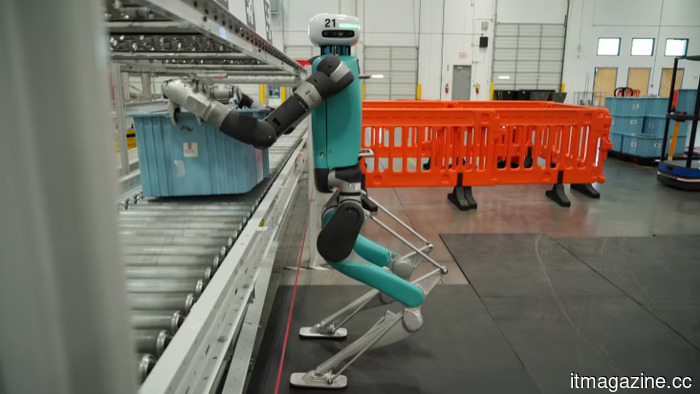 Agility Robotics is said to be going public through a SPAC deal valued at $2.5 billion.
According to a report from the WSJ, the manufacturer of the Digit humanoid robot is said to be negotiating a public listing via a SPAC merger that would value the company at approximately $2.5 billion.
Agility Robotics is said to be going public through a SPAC deal valued at $2.5 billion.
According to a report from the WSJ, the manufacturer of the Digit humanoid robot is said to be negotiating a public listing via a SPAC merger that would value the company at approximately $2.5 billion.
 YouTube reaches a settlement before California's second trial concerning social media addiction.
YouTube, owned by Google, has reached a settlement with a teenage plaintiff just weeks prior to a second pivotal trial in California, while Meta, Snap, and TikTok are set to face the jury.
YouTube reaches a settlement before California's second trial concerning social media addiction.
YouTube, owned by Google, has reached a settlement with a teenage plaintiff just weeks prior to a second pivotal trial in California, while Meta, Snap, and TikTok are set to face the jury.
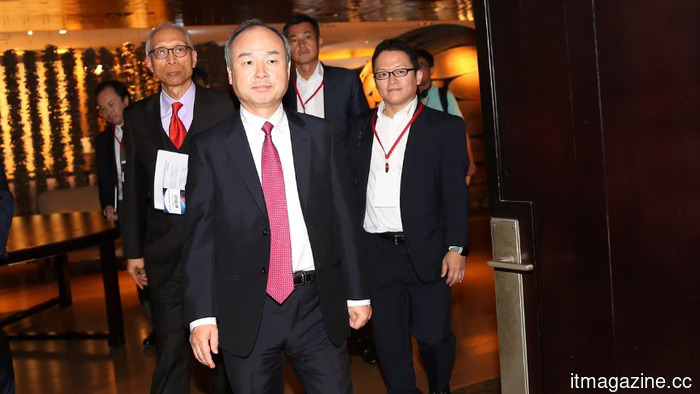 SoftBank's Son describes referring to AI as a bubble as 'an insult.'
During SoftBank's annual meeting, Masayoshi Son dismissed the discussions about an AI bubble as an affront and requested shareholders to give him another 10 to 15 years.
SoftBank's Son describes referring to AI as a bubble as 'an insult.'
During SoftBank's annual meeting, Masayoshi Son dismissed the discussions about an AI bubble as an affront and requested shareholders to give him another 10 to 15 years.
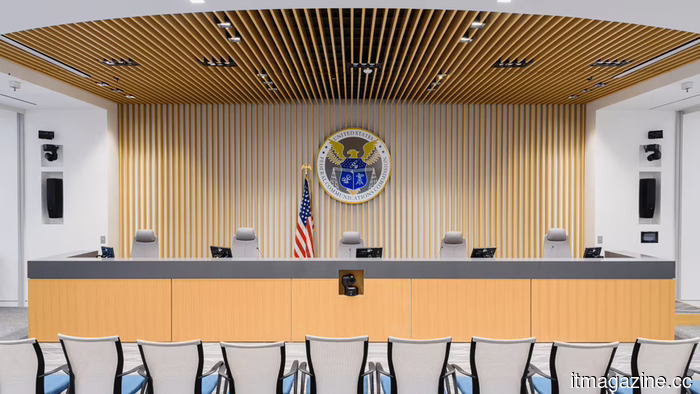 A US spectrum auction recently generated $3.5 billion to fund the removal of Huawei equipment.
The AWS-3 auction conducted by the FCC generated approximately $3.5 billion, with around $3.3 billion allocated to repay the Treasury loan related to the rip-and-replace initiative.
A US spectrum auction recently generated $3.5 billion to fund the removal of Huawei equipment.
The AWS-3 auction conducted by the FCC generated approximately $3.5 billion, with around $3.3 billion allocated to repay the Treasury loan related to the rip-and-replace initiative.
 The US is urging Meta to permit a review of its AI, and Meta is the final remaining holdout.
According to the NYT, the Trump administration is urging Meta, the only major US developer that has not done so, to present its AI for federal evaluation.
The US is urging Meta to permit a review of its AI, and Meta is the final remaining holdout.
According to the NYT, the Trump administration is urging Meta, the only major US developer that has not done so, to present its AI for federal evaluation.
 Meta's $399 Kylie Jenner glasses will respond in her voice.
Meta's Starfire glasses, created in collaboration with Kylie Jenner and priced at $399, feature Meta AI speaking in her voice and showcase their new line of branded products.
Meta's $399 Kylie Jenner glasses will respond in her voice.
Meta's Starfire glasses, created in collaboration with Kylie Jenner and priced at $399, feature Meta AI speaking in her voice and showcase their new line of branded products.
South Korea is in discussions with Samsung and SK Hynix regarding a second chip cluster.
An adviser to the president states that Seoul is in talks about new fabrication investments with Samsung and SK Hynix, suggesting that the demand for AI might accelerate construction by ten years.