
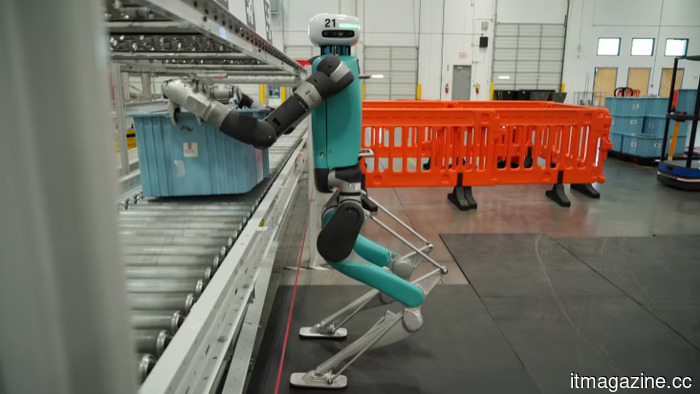
Agility Robotics is said to be going public through a SPAC deal valued at $2.5 billion.
Agility Robotics, the Oregon-based startup behind the bipedal Digit robot, is reportedly in discussions to go public via a merger with a special-purpose acquisition company (SPAC), with a valuation estimated at around $2.5 billion, as per the Wall Street Journal.
The specifics of the deal have not been confirmed, the SPAC partner has yet to be identified, and the company has not made any public comments; therefore, the valuation should be regarded as indicative of ongoing negotiations rather than a finalized agreement.
Regardless, this implied valuation suggests an increase from Agility's last private market pricing. The company completed a $400 million Series C funding round in March 2025, which valued it at approximately $2.12 billion, and has accumulated over $640 million in total funding throughout its history.
A SPAC merger valued between $2.5 billion to $3 billion would assign a public market premium to a company whose main selling point is that its robot effectively serves paying clients.
Agility emphasizes this aspect heavily. Digit, the 1.75-meter humanoid that emerged from Oregon State University, is one of the few humanoids to generate revenue through commercial usages rather than demonstrations, managing over 100,000 tote movements in a GXO Logistics warehouse and securing a multi-year robots-as-a-service contract.
Amazon’s Industrial Innovation Fund was an early growth investor in Agility, indicating interest from the largest potential buyer of warehouse automation globally.
The robots-as-a-service model is a key component of the business pitch. Instead of selling the hardware outright, Agility leases Digit to logistics companies through a subscription model, designed to lower adoption barriers and provide the company with recurring revenue rather than one-time sales.
Agility has tailored Digit for repetitive warehouse tasks, such as transferring totes between conveyors and storage, jobs that are monotonous, physically demanding, and typically difficult to staff.
The path Agility is reportedly pursuing is noteworthy. Many well-funded humanoid companies have remained private, raising significant amounts of capital. For instance, Figure AI boasts a private valuation in the tens of billions, and China’s Unitree has filed for an IPO estimated at around $7 billion after outselling Tesla in humanoid units.
In contrast, a SPAC offers a quicker and historically more lenient route to public markets—similar to the surge of speculative hardware companies that went public during the 2021 boom, not all of which thrived under public scrutiny.
The context features a sector flush with capital but lacking revenue. Global investments in robotics and physical AI reached $27.6 billion in 2025, more than double that of the previous year, with funds directed toward companies at various stages, including those that haven't sold products yet.
Some investment has gone to humanoids, while others have gone to companies claiming that the form factor is flawed, such as wheeled-robot manufacturers who view legs as an unnecessary expense.
China's humanoid surge is already facing commercialization challenges, with about 150 companies competing in a market where most customers report dissatisfaction.
In this environment, Agility's appeal to public investors hinges on actual deployment rather than mere demonstrations: a robot actively generating revenue in warehouses, a significant logistics client, and ties with Amazon.
Whether this will be sufficient to justify a multi-billion-dollar public offering, and whether the valuation lands at $2.5 billion, $3 billion, or another number upon eventual filing, will be clarified in the coming weeks.
Currently, the company has neither confirmed the discussions nor identified the SPAC involved.
Other articles
 South Korea is in discussions with Samsung and SK Hynix regarding a second chip cluster.
An adviser to the president has indicated that Seoul is in talks with Samsung and SK Hynix regarding new semiconductor investments, suggesting that demand for AI may accelerate construction timelines by ten years.
South Korea is in discussions with Samsung and SK Hynix regarding a second chip cluster.
An adviser to the president has indicated that Seoul is in talks with Samsung and SK Hynix regarding new semiconductor investments, suggesting that demand for AI may accelerate construction timelines by ten years.
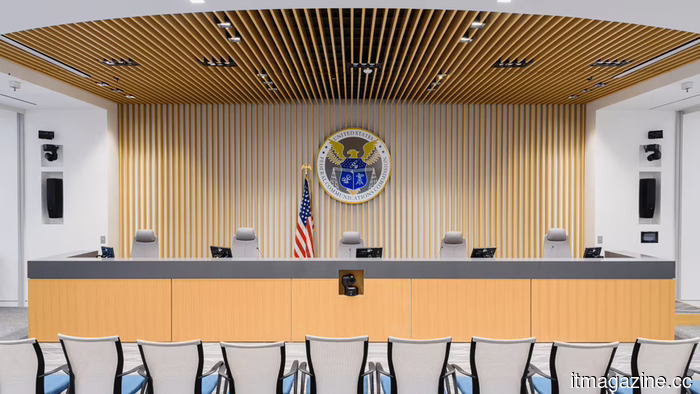 A US spectrum auction recently generated $3.5 billion to fund the removal of Huawei equipment.
The AWS-3 auction conducted by the FCC generated approximately $3.5 billion, with around $3.3 billion allocated to repay the Treasury loan related to the rip-and-replace initiative.
A US spectrum auction recently generated $3.5 billion to fund the removal of Huawei equipment.
The AWS-3 auction conducted by the FCC generated approximately $3.5 billion, with around $3.3 billion allocated to repay the Treasury loan related to the rip-and-replace initiative.
 YouTube reaches a settlement before the second trial in California regarding social media addiction.
YouTube, owned by Google, has reached a settlement with a teenage plaintiff just weeks ahead of a second bellwether trial in California, allowing Meta, Snap, and TikTok to go to trial.
YouTube reaches a settlement before the second trial in California regarding social media addiction.
YouTube, owned by Google, has reached a settlement with a teenage plaintiff just weeks ahead of a second bellwether trial in California, allowing Meta, Snap, and TikTok to go to trial.
 The US is urging Meta to permit a review of its AI, and Meta is the final remaining holdout.
According to the NYT, the Trump administration is urging Meta, the only major US developer that has not done so, to present its AI for federal evaluation.
The US is urging Meta to permit a review of its AI, and Meta is the final remaining holdout.
According to the NYT, the Trump administration is urging Meta, the only major US developer that has not done so, to present its AI for federal evaluation.
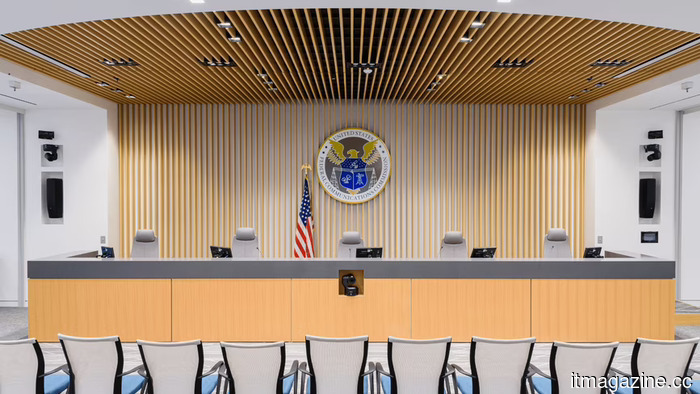 A spectrum auction in the US has generated $3.5 billion to cover the costs of removing Huawei equipment.
The AWS-3 auction conducted by the FCC generated approximately $3.5 billion, with up to $3.3 billion designated for repaying the Treasury loan supporting the rip-and-replace initiative.
A spectrum auction in the US has generated $3.5 billion to cover the costs of removing Huawei equipment.
The AWS-3 auction conducted by the FCC generated approximately $3.5 billion, with up to $3.3 billion designated for repaying the Treasury loan supporting the rip-and-replace initiative.
 South Korea is in discussions with Samsung and SK Hynix regarding a second chip cluster.
An adviser to the president states that Seoul is in talks about new fabrication investments with Samsung and SK Hynix, suggesting that the demand for AI might accelerate construction by ten years.
South Korea is in discussions with Samsung and SK Hynix regarding a second chip cluster.
An adviser to the president states that Seoul is in talks about new fabrication investments with Samsung and SK Hynix, suggesting that the demand for AI might accelerate construction by ten years.
Agility Robotics is said to be going public through a SPAC deal valued at $2.5 billion.
According to a report from the WSJ, the manufacturer of the Digit humanoid robot is said to be negotiating a public listing via a SPAC merger that would value the company at approximately $2.5 billion.