
The US is urging Meta to permit a review of its AI, and Meta is the final remaining holdout.
The Trump administration has been urging Meta to present its most advanced AI models for a federal security assessment, making Meta the only significant US developer that has not complied, as reported by the New York Times. The report indicates that this pressure has been communicated through emails as Washington enhances its oversight of advanced AI technologies. Meta has not publicly acknowledged the details of these communications, and the information comes from the Times's reporting rather than any official announcement.
While the reviews are technically voluntary, they would allow the government to assess a model's strengths and vulnerabilities, aiming to identify potential threats—from assistance with cyberattacks to military misuse—before a system is widely released. This framework was established in an executive order signed by Trump on June 2, inviting developers to submit "covered frontier models" to the government for up to 30 days before sharing them with trusted partners.
Many of Meta’s competitors have already complied. OpenAI and Anthropic have been collaborating with the government on pre-release testing, and in May, Google DeepMind, Microsoft, and xAI committed to providing early access for national-security assessments, according to the Times.
This situation places Meta noticeably outside an agreement that its competitors have embraced. A spokesperson named Francis Brennan stated that Meta shares the goal of promoting US leadership in “robust and secure frontier AI” and anticipates signing an agreement soon, as reported.
The timing appears to make sense. Meta launched Muse Spark in April, the first model from its Superintelligence Labs division, which marks a departure from the company’s Llama background and is a closed model. A government eager for early access to advanced systems would logically reach out to a developer that has recently released a flagship model privately.
Washington's overarching concerns are that a sufficiently advanced model could lower the threshold for serious harm and that the opportunity to understand a system is limited once it is broadly deployed. These concerns are not theoretical, and the administration has demonstrated its willingness to act on them. For instance, this month, the government instructed Anthropic to prevent foreign nationals from accessing its two most advanced models; this directive was deemed so unfeasible by the company that it disabled the models globally.
This indicates a readiness to intervene in a launched product on national-security grounds. Thus, an invitation for model review could be seen less as a courtesy and more as the softer end of a spectrum with a more forceful end.
Meta's hesitation, if it is indeed hesitation, contrasts sharply with its extensive AI ambitions. The company has projected capital expenditures reaching into the hundreds of billions of dollars for its AI expansion, even while dealing with the scrutiny associated with that investment. A company investing at such a scale has legitimate reasons to keep its latest architectures confidential, and a review that allows the government early insight works against the inclination to safeguard its investments.
The specifics of what a review would entail remain unclear. The Times describes the goal as spotting vulnerabilities before deployment, but the detailed procedures for what evaluators would examine, how long they would possess a model, and the implications of their findings are governed by a framework that is only weeks old.
Meta’s AI division has also faced difficulties, including a breach that jeopardized training secrets, complicating discussions about who can access its models. Currently, the standoff is characterized by pressure rather than penalties. The administration has made its request, Meta has indicated it expects to agree, and the gap between these stances is where the narrative lies.
What is clear is the trend: a government that has deemed frontier AI a security issue and the one major developer that has yet to agree.
Other articles
 YouTube reaches a settlement before the second trial in California regarding social media addiction.
YouTube, owned by Google, has reached a settlement with a teenage plaintiff just weeks ahead of a second bellwether trial in California, allowing Meta, Snap, and TikTok to go to trial.
YouTube reaches a settlement before the second trial in California regarding social media addiction.
YouTube, owned by Google, has reached a settlement with a teenage plaintiff just weeks ahead of a second bellwether trial in California, allowing Meta, Snap, and TikTok to go to trial.
 Meta's $399 Kylie Jenner glasses will respond in her voice.
Meta's Starfire glasses, created in collaboration with Kylie Jenner and priced at $399, feature Meta AI speaking in her voice and showcase their new line of branded products.
Meta's $399 Kylie Jenner glasses will respond in her voice.
Meta's Starfire glasses, created in collaboration with Kylie Jenner and priced at $399, feature Meta AI speaking in her voice and showcase their new line of branded products.
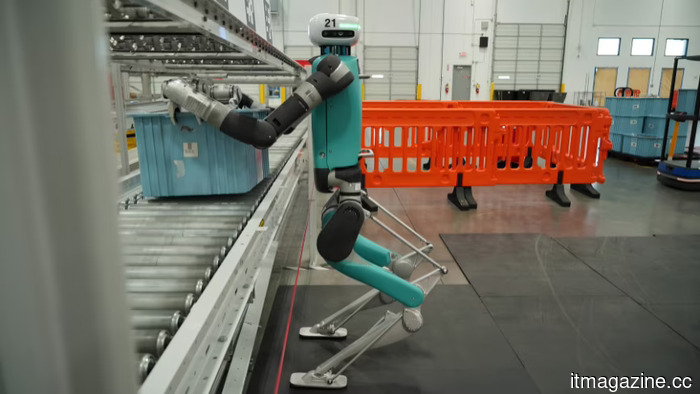 Agility Robotics is said to be going public through a SPAC transaction valued at $2.5 billion.
The creator of the Digit humanoid robot is said to be in discussions to become publicly traded via a SPAC merger that would value the company at approximately $2.5 billion, according to a report by the WSJ.
Agility Robotics is said to be going public through a SPAC transaction valued at $2.5 billion.
The creator of the Digit humanoid robot is said to be in discussions to become publicly traded via a SPAC merger that would value the company at approximately $2.5 billion, according to a report by the WSJ.
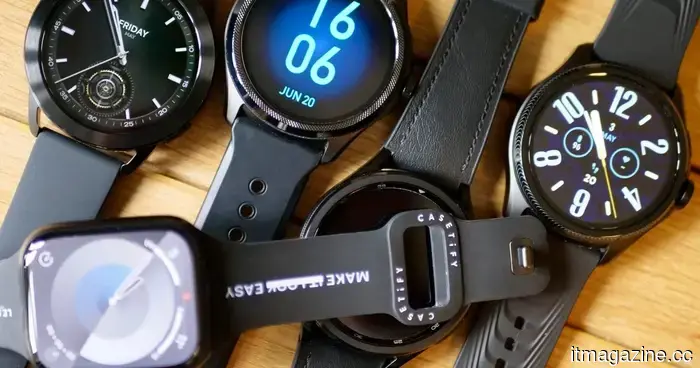 I sifted through the smartwatch deals for Prime Day so you don't have to, and here are the top picks.
Prime Day 2026 features genuine discounts on smartwatches, and these seven selections cater to various budgets and needs.
I sifted through the smartwatch deals for Prime Day so you don't have to, and here are the top picks.
Prime Day 2026 features genuine discounts on smartwatches, and these seven selections cater to various budgets and needs.
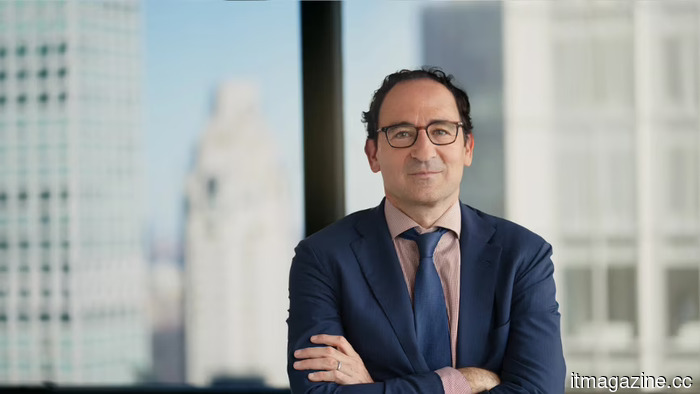 Blackstone intends to invest $30 billion in AI data centers in Japan and remains unfazed by discussions about a potential bubble.
Jonathan Gray informed Nikkei that Blackstone plans to invest $30 billion in Japanese AI data centers over a period of three to five years, targeting facilities with capacities exceeding one gigawatt.
Blackstone intends to invest $30 billion in AI data centers in Japan and remains unfazed by discussions about a potential bubble.
Jonathan Gray informed Nikkei that Blackstone plans to invest $30 billion in Japanese AI data centers over a period of three to five years, targeting facilities with capacities exceeding one gigawatt.
 Here are the top Prime Day offers on health wearables that I suggest checking out before they run out.
Prime Day has reduced prices on some top health wearables, such as Fitbit trackers, Oura Ring 4, Apple Watch Series 11, Galaxy Watch 8, and several others.
Here are the top Prime Day offers on health wearables that I suggest checking out before they run out.
Prime Day has reduced prices on some top health wearables, such as Fitbit trackers, Oura Ring 4, Apple Watch Series 11, Galaxy Watch 8, and several others.
The US is urging Meta to permit a review of its AI, and Meta is the final remaining holdout.
According to the NYT, the Trump administration is urging Meta, the only major US developer that has not done so, to present its AI for federal evaluation.