
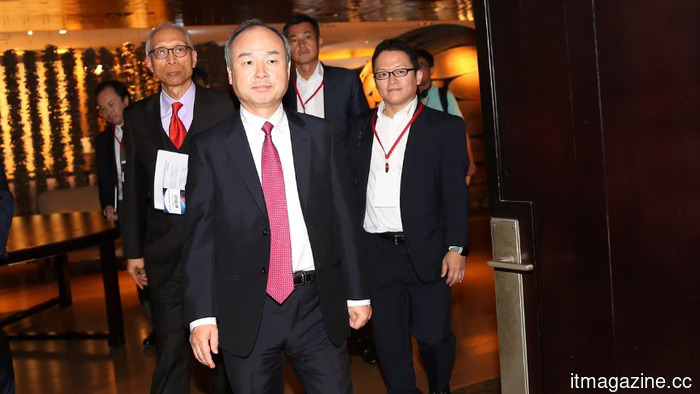
SoftBank's Son describes referring to AI as a bubble as 'an insult.'
At SoftBank Group's annual shareholders' meeting in Tokyo on Wednesday, the founder and CEO was again asked, as he often is during public appearances, whether the artificial intelligence surge that has propelled his wealth to unprecedented levels is simply a bubble poised to burst. He viewed the question as problematic, stating that discussing a bubble is an insult to AI. This wasn't the first time he opted for grand rhetoric; Son has previously referred to bubble discussions as "blasphemy" and dismissed those raising such concerns as "not smart enough, period." The individual who has placed a significant portion of SoftBank's finances on a single hypothesis appears to dismiss opposing views rather than engage with them.
During the Tokyo meeting, Son informed shareholders of his intention to work into his seventies, asking for another 10 or 15 years to pursue what he describes as artificial superintelligence, a stage after artificial general intelligence that aims to tackle problems humanity never thought it could. He quantified the scale of the opportunity as well, declaring to CNBC in Paris earlier in June that the AI revolution is “more than 10x, probably 50x bigger” than the dot-com boom and signals the start of a technological shift that could last for 50 to 100 years.
Son seems reluctant to draw comparisons to the boom due to his own experiences; the last time SoftBank was at the pinnacle of the Japanese market was February 2000, just before the dot-com bubble burst, resulting in a roughly 90% drop in its stock price within the year. Recently, SoftBank briefly surpassed Toyota to become Japan's most valuable publicly traded company for the first time since that peak, although the automaker reclaimed the top position just three days later.
Son's confidence stems from a highly concentrated position; SoftBank's total investment in OpenAI has reached approximately $64.6 billion, resulting in around a 13% ownership stake. To finance the continuation of this investment, the group secured a $40 billion bridge loan and borrowed against this stake, with interest rates reflecting the perceived risk by lenders. S&P has downgraded its outlook on SoftBank’s credit, warning that this exposure to OpenAI could strain the group's liquidity.
None of this seems to disturb Son, who has described the company's stance as being in “total offense mode” and is repositioning it as an industrial holding company for the AI era. The agenda for Wednesday's meeting illustrated this shift; shareholders were asked to amend the articles of incorporation to include AI, semiconductors, robotics, and data centers among the stated business purposes, aligning the paperwork with the investments already made.
Son indicated that his next frontier goes beyond chips and models, identifying humanoid and industrial robotics, which he refers to as physical AI, as the forthcoming trillion-dollar industry. He predicts that superintelligence will eventually contribute at least 10% to global GDP, stating, “Almost all human activities will eventually involve some type of collaboration with superintelligence and physical AI.”
The financial rationale behind this vision is poised to be tested soon. A series of major technology initial public offerings is expected in the coming months, with OpenAI and Anthropic among the companies that have already filed, and SoftBank’s reputation is closely tied to whether these launches validate the current market valuations.
For now, the individual managing the most significant AI investment in corporate Japan has settled on his response to the bubble inquiry: to refuse to acknowledge it. Whether this is a matter of conviction or salesmanship is, in Son’s case, a distinction that seems negligible. For a quarter-century, he has maintained that the future is arriving faster than anticipated, being remarkably correct and equally erroneous in nearly equal parts. The shareholders who granted him another decade on Wednesday are continuing their longstanding wager on which outcome it will be this time.
Other articles
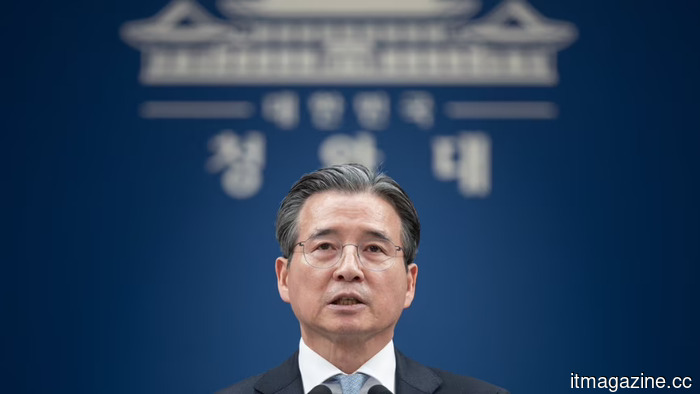 South Korea is in discussions with Samsung and SK Hynix regarding a second chip cluster.
An adviser to the president has indicated that Seoul is in talks with Samsung and SK Hynix regarding new semiconductor investments, suggesting that demand for AI may accelerate construction timelines by ten years.
South Korea is in discussions with Samsung and SK Hynix regarding a second chip cluster.
An adviser to the president has indicated that Seoul is in talks with Samsung and SK Hynix regarding new semiconductor investments, suggesting that demand for AI may accelerate construction timelines by ten years.
 YouTube reaches a settlement before the second trial in California regarding social media addiction.
YouTube, owned by Google, has reached a settlement with a teenage plaintiff just weeks ahead of a second bellwether trial in California, allowing Meta, Snap, and TikTok to go to trial.
YouTube reaches a settlement before the second trial in California regarding social media addiction.
YouTube, owned by Google, has reached a settlement with a teenage plaintiff just weeks ahead of a second bellwether trial in California, allowing Meta, Snap, and TikTok to go to trial.
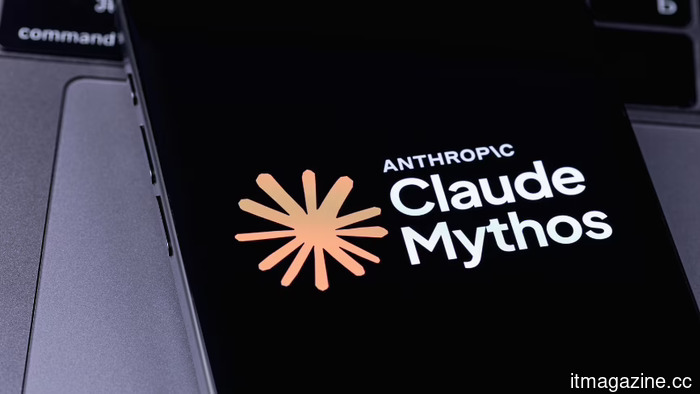 Anthropic's Mythos identified vulnerabilities in classified U.S. systems during a government evaluation.
A US official reported that Anthropic’s Mythos model identified weaknesses in classified government systems during a red-team assessment, rather than indicating an external breach.
Anthropic's Mythos identified vulnerabilities in classified U.S. systems during a government evaluation.
A US official reported that Anthropic’s Mythos model identified weaknesses in classified government systems during a red-team assessment, rather than indicating an external breach.
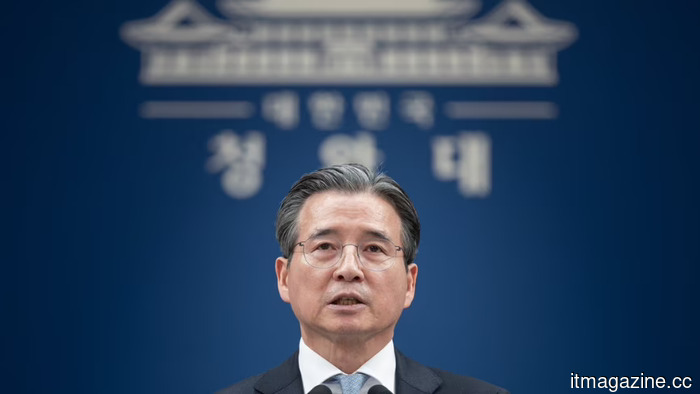 South Korea is in discussions with Samsung and SK Hynix regarding a second chip cluster.
An adviser to the president states that Seoul is in talks about new fabrication investments with Samsung and SK Hynix, suggesting that the demand for AI might accelerate construction by ten years.
South Korea is in discussions with Samsung and SK Hynix regarding a second chip cluster.
An adviser to the president states that Seoul is in talks about new fabrication investments with Samsung and SK Hynix, suggesting that the demand for AI might accelerate construction by ten years.
 Legion LegalTech files a lawsuit against the US regarding the shutdown of Anthropic Fable 5 and Mythos 5.
A legal-tech company from the US, which employs Canadian developers, has filed a lawsuit against Washington regarding the export order that compelled Anthropic to deactivate Fable 5 and Mythos 5 globally.
Legion LegalTech files a lawsuit against the US regarding the shutdown of Anthropic Fable 5 and Mythos 5.
A legal-tech company from the US, which employs Canadian developers, has filed a lawsuit against Washington regarding the export order that compelled Anthropic to deactivate Fable 5 and Mythos 5 globally.
SoftBank's Son describes referring to AI as a bubble as 'an insult.'
During SoftBank's annual meeting, Masayoshi Son dismissed the discussions about an AI bubble as an affront and requested shareholders to give him another 10 to 15 years.