

Micron's revenue increased fourfold as the demand for AI memory drives gross margins over 81 percent.
Micron's revenue for Q3 reached nearly $42 billion, marking a fourfold increase from just over $9 billion the previous year, largely driven by a surge in demand for AI memory. This figure significantly surpassed Wall Street expectations. The company's results indicate that it is capitalizing on the AI memory boom, reflected in its stock's rise of approximately 700 percent over the past year.
Adjusted earnings were over $25 per share, surpassing analyst predictions of around $21. GAAP net income reached over $28 billion, or nearly $25 per share, a significant increase from under $2 billion the previous year. Gross margins exceeded 81 percent, up from 69 percent in the prior quarter and 27 percent a year prior.
The primary highlight is revenue growth, as Micron generated nearly $42 billion, surpassing the consensus estimate of about $36 billion, largely due to soaring demand for high-bandwidth memory (HBM) chips that accompany GPUs in AI accelerators from Nvidia and Google. HBM is currently a crucial component for AI infrastructure's expansion, with Micron being one of only three manufacturers globally able to produce it.
CEO Sanjay Mehrotra noted that Micron is only able to meet between 50 to 66 percent of the current HBM demand. The company's entire HBM supply for 2026 is already sold out through long-term contracts, and it has secured $22 billion in customer cash deposits from large clients eager to ensure their supply.
Micron's upcoming HBM4 chips are reportedly ramping up production at twice the speed of the previous HBM3E generation, with HBM4 revenue having surpassed one billion dollars. This technology is vital for the newest accelerators from Nvidia and Google, where memory bandwidth is becoming crucial for determining inference throughput.
The company's future outlook is likewise ambitious, forecasting Q4 revenue around $50 billion, give or take one billion, exceeding analyst estimates of about $44 billion and far surpassing last year's figure of just over $11 billion. Micron has also raised its full-year capital expenditure forecast to over $25 billion, up from $20 billion, to increase production capabilities for HBM and advanced DRAM.
Micron’s market capitalization reached one trillion dollars on May 26, becoming the latest memory chip manufacturer to achieve this milestone amid the AI-driven memory supercycle that is transforming valuations in the semiconductor sector. The stock's approximately 700 percent increase over the past year reflects a shift in how the market views memory—not merely as a cyclical commodity but as a critical part of structural AI infrastructure.
The company projects that the total addressable market for HBM will grow at a compound annual growth rate of around 40 percent through 2028, expanding from approximately $35 billion in 2025 to about $100 billion. Micron intends to return 100 percent of excess free cash flow to shareholders, a plan supported by the cash deposit strategy that mitigates capital risks during expansion.
However, there are important caveats. Micron is currently the smallest of the three HBM suppliers, behind SK Hynix and Samsung, and has the least share of Nvidia's HBM4 allocations. Additionally, the overall memory market is evolving, with Chinese companies like CXMT making aggressive moves into consumer DRAM segments that the major players have deprioritized in favor of AI chips.
Memory pricing inherently fluctuates, and the sustainability of the current supercycle hinges on continued capital expenditure from hyperscalers. Should AI infrastructure spending wane or HBM supply align with demand, Micron's reported margins could shrink quickly. The current gross margin of 81 percent is historically exceptional for a memory manufacturer and is influenced as much by supply constraints as by product excellence.
For now, the metrics are striking, with revenue quadrupling in a year, margins tripling, and guidance surpassing estimates by over $6 billion—outcomes nearly unprecedented for any company, let alone one that faced losses two years ago. Micron's earnings underscore the deepening AI memory shortage and indicate that companies manufacturing the chips for AI accelerators are capitalizing on value at a pace the market is still adjusting to.
Other articles
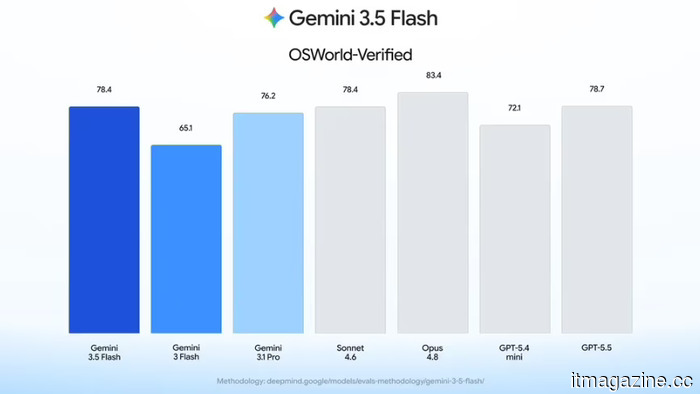 Gemini 3.5 Flash is now capable of viewing and managing your screen, and Google aims for businesses to have confidence in it.
Google has integrated computer usage into Gemini 3.5 Flash, moving away from the standalone model and incorporating enterprise safety measures.
Gemini 3.5 Flash is now capable of viewing and managing your screen, and Google aims for businesses to have confidence in it.
Google has integrated computer usage into Gemini 3.5 Flash, moving away from the standalone model and incorporating enterprise safety measures.
 Runpod achieves a valuation of $1 billion following a $100 million fundraising effort.
Runpod has secured $100 million at a valuation of $1 billion, marking a tenfold increase over the past two years, and reports that it declined acquisition proposals exceeding $500 million.
Runpod achieves a valuation of $1 billion following a $100 million fundraising effort.
Runpod has secured $100 million at a valuation of $1 billion, marking a tenfold increase over the past two years, and reports that it declined acquisition proposals exceeding $500 million.
 Google Wallet has the potential to expedite your experience at airport security through TSA PreCheck's Touchless ID feature.
TSA and Google Wallet have introduced a simplified opt-in feature for PreCheck Touchless ID, allowing travelers to share their digital ID and boarding pass, enabling them to pass through security without needing a physical ID.
Google Wallet has the potential to expedite your experience at airport security through TSA PreCheck's Touchless ID feature.
TSA and Google Wallet have introduced a simplified opt-in feature for PreCheck Touchless ID, allowing travelers to share their digital ID and boarding pass, enabling them to pass through security without needing a physical ID.
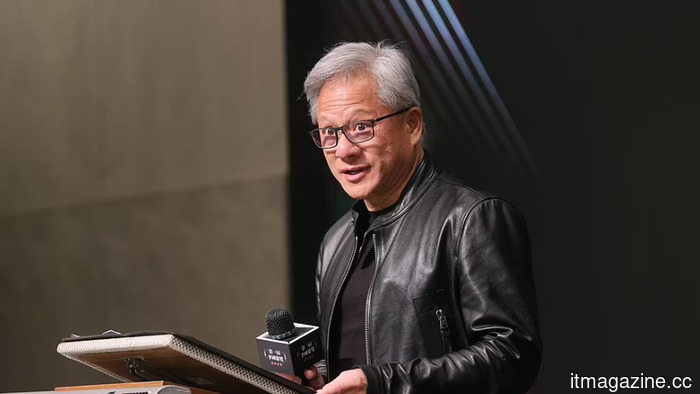 Nvidia CEO Jensen Huang states that illicit data centers are a futile venture and emphasizes that national security is the top priority.
Jensen Huang informed shareholders that Nvidia would place greater importance on US national security than on sales, describing smuggled chip data centers as impractical.
Nvidia CEO Jensen Huang states that illicit data centers are a futile venture and emphasizes that national security is the top priority.
Jensen Huang informed shareholders that Nvidia would place greater importance on US national security than on sales, describing smuggled chip data centers as impractical.
 Qualcomm secures Meta as the first named client for its Dragonfly data center chips.
Qualcomm introduced its Dragonfly C1000 data center chip, with Meta as its initial named customer, and announced its acquisition of AI startup Modular for $3.9 billion.
Anthropic alleges that Alibaba is conducting the largest distillation effort targeting Claude.
Anthropic informed US senators that Alibaba's Qwen lab utilized 25,000 fraudulent accounts to conduct almost 29 million interactions with Claude from April to June.
Qualcomm secures Meta as the first named client for its Dragonfly data center chips.
Qualcomm introduced its Dragonfly C1000 data center chip, with Meta as its initial named customer, and announced its acquisition of AI startup Modular for $3.9 billion.
Anthropic alleges that Alibaba is conducting the largest distillation effort targeting Claude.
Anthropic informed US senators that Alibaba's Qwen lab utilized 25,000 fraudulent accounts to conduct almost 29 million interactions with Claude from April to June.
Micron's revenue increased fourfold as the demand for AI memory drives gross margins over 81 percent.
Micron reported $41 billion in revenue for Q3, marking a fourfold increase compared to the previous year, as HBM4 chips for Nvidia and Google propelled gross margins above 81 percent for the first time.