
Anthropic alleges that Alibaba is conducting the largest distillation effort targeting Claude.
TL;DR: Anthropic has accused Alibaba's Qwen lab of conducting the largest distillation campaign against a US AI company to date, claiming that nearly 25,000 fake accounts were used to carry out almost 29 million exchanges with Claude from April to June. This marks the first serious accusation against a major Chinese tech firm for distillation attacks. Previous claims targeted smaller Chinese startups, which had collectively conducted over 16 million exchanges. Distillation involves feeding a leading AI model structured queries to gather responses, which are then used to train a competing, less costly system that mimics the original's abilities. Anthropic noted that the Alibaba campaign occurred after the US government heightened awareness of such activities. Alibaba did not comment on the charges, and an Anthropic spokesperson highlighted the need for industry and government cooperation to combat distillation.
Following the news, Alibaba's American depositary receipts fell over three percent, continuing a tough period for the company in the US, where it faces various pressures. The Pentagon added Alibaba to its blacklist of Chinese military companies in June, which Anthropic referenced in its letter. Alibaba is currently suing the Defense Department to be removed from that list, arguing the designation is unfounded. This new accusation underscores concerns about Alibaba's alleged involvement in the theft of US AI technologies.
In its communication, Anthropic warned that adversarial distillation allows Chinese labs to replicate advanced AI models at lower training costs, and often these models lack safety measures. The company urged the US government to clarify antitrust rules to enable greater information sharing among labs regarding distillation efforts, supported export controls on advanced AI chips, and called for penalties against those employing distillation.
Legislators are responding, with Senators Bill Hagerty and Andy Kim planning to propose amendments to defense legislation to penalize Chinese firms accessing US AI models improperly. A related bipartisan bill is also under consideration in the House, although the future of these proposals in the final defense bill is unclear.
The timing is critical for Anthropic, which recently reached a valuation of $965 billion after a $65 billion funding round and has confidentially filed for an IPO, potentially this autumn. US officials have indicated that unauthorized distillation results in significant financial losses for Silicon Valley, posing a risk to companies preparing for public markets.
Anthropic's calls for government assistance may not be well received since it is currently in a dispute with the Trump administration regarding export controls on its Fable 5 and Mythos 5 models. Commerce Secretary Howard Lutnick issued an order restricting foreign access to these models due to security concerns, to which Anthropic complied by disabling them. Despite discussions with White House officials, little progress has been made in restoring access.
This situation places Anthropic in a challenging position, as it seeks government action against Chinese labs while also contesting restrictions imposed on its own products. The letter to lawmakers aims to separate these issues, asserting that safeguarding US models from distillation and facilitating their commercial deployment are not mutually exclusive.
The response from Washington will influence both the regulatory landscape for US AI companies and the competitive dynamics of one of the industry's crucial rivalries. Anthropic has now identified four Chinese labs as distillers of its technology, with the Alibaba claim being the most significant. If legislative initiatives gain momentum, the implications could extend beyond Anthropic, raising broader questions about how the US protects intellectual property for software-based AI systems that can be replicated online with strategic prompts.
Other articles
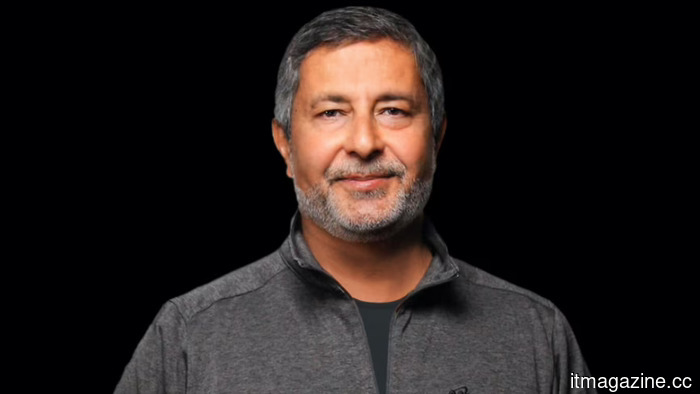 Micron's revenue increased fourfold as the demand for AI memory drives gross margins over 81 percent.
Micron reported $41 billion in revenue for Q3, marking a fourfold increase compared to the previous year, as HBM4 chips for Nvidia and Google propelled gross margins above 81 percent for the first time.
Micron's revenue increased fourfold as the demand for AI memory drives gross margins over 81 percent.
Micron reported $41 billion in revenue for Q3, marking a fourfold increase compared to the previous year, as HBM4 chips for Nvidia and Google propelled gross margins above 81 percent for the first time.
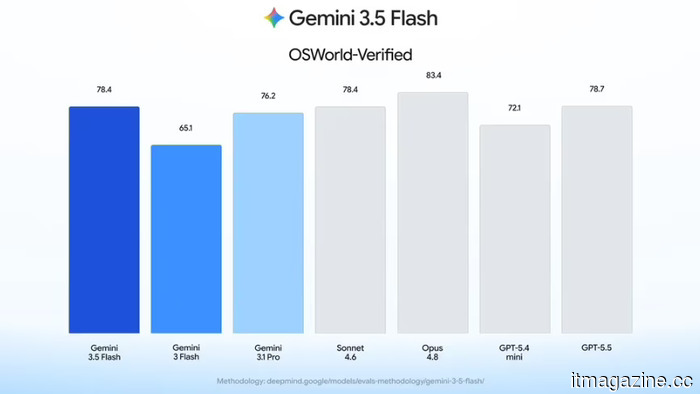 Gemini 3.5 Flash is now capable of viewing and managing your screen, and Google aims for businesses to have confidence in it.
Google has integrated computer usage into Gemini 3.5 Flash, moving away from the standalone model and incorporating enterprise safety measures.
Gemini 3.5 Flash is now capable of viewing and managing your screen, and Google aims for businesses to have confidence in it.
Google has integrated computer usage into Gemini 3.5 Flash, moving away from the standalone model and incorporating enterprise safety measures.
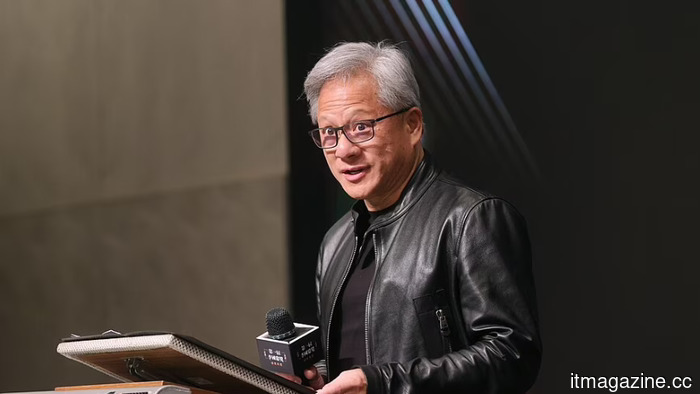 Nvidia CEO Jensen Huang believes that smuggled data centers are a futile approach, emphasizing that national security must take precedence.
Jensen Huang informed shareholders that Nvidia would focus on US national security over sales and described smuggled chip data centers as impractical.
Nvidia CEO Jensen Huang believes that smuggled data centers are a futile approach, emphasizing that national security must take precedence.
Jensen Huang informed shareholders that Nvidia would focus on US national security over sales and described smuggled chip data centers as impractical.
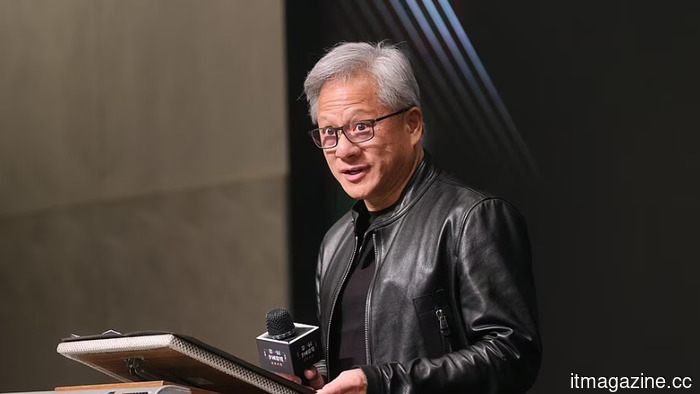 Nvidia's CEO Jensen Huang asserts that illicit data centers are a futile endeavor and that national security should take precedence.
Jensen Huang informed shareholders that Nvidia would place US national security above sales and described smuggled chip data centers as unfeasible.
Nvidia's CEO Jensen Huang asserts that illicit data centers are a futile endeavor and that national security should take precedence.
Jensen Huang informed shareholders that Nvidia would place US national security above sales and described smuggled chip data centers as unfeasible.
 Runpod achieves a $1 billion valuation after raising $100 million.
Runpod has successfully secured $100 million at a valuation of $1 billion, marking a tenfold increase over the past two years, and has stated that it rejected acquisition offers exceeding $500 million.
Anthropic claims that Alibaba is conducting the largest distillation campaign targeting Claude.
Anthropic informed US senators that Alibaba's Qwen lab utilized 25,000 counterfeit accounts to conduct nearly 29 million interactions with Claude from April to June.
Runpod achieves a $1 billion valuation after raising $100 million.
Runpod has successfully secured $100 million at a valuation of $1 billion, marking a tenfold increase over the past two years, and has stated that it rejected acquisition offers exceeding $500 million.
Anthropic claims that Alibaba is conducting the largest distillation campaign targeting Claude.
Anthropic informed US senators that Alibaba's Qwen lab utilized 25,000 counterfeit accounts to conduct nearly 29 million interactions with Claude from April to June.
Anthropic alleges that Alibaba is conducting the largest distillation effort targeting Claude.
Anthropic informed US senators that Alibaba's Qwen lab utilized 25,000 fraudulent accounts to conduct almost 29 million interactions with Claude from April to June.