
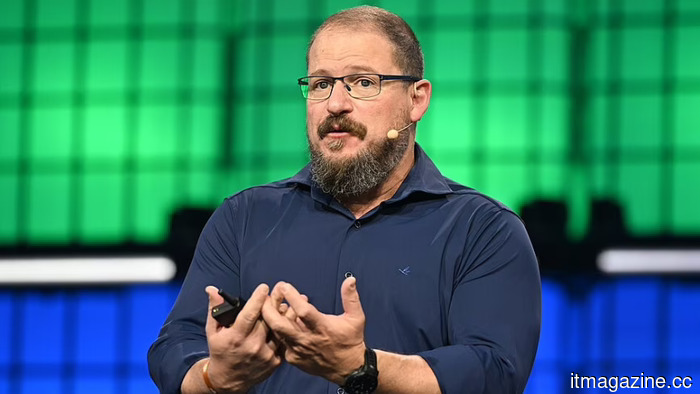
Qualcomm secures Meta as the first named client for its Dragonfly data center chips.
Qualcomm has secured Meta as the first client for its upcoming Dragonfly C1000 data center chip, which is set to launch in 2028, and has confirmed a $3.9 billion acquisition of Modular. This partnership signals Qualcomm’s serious intent to compete in the AI infrastructure sector. The announcement was made during Qualcomm’s investor day in New York, where the company also introduced its new AI300 accelerator chip and confirmed the acquisition of AI software startup Modular, valued at approximately $3.9 billion in stock.
The Dragonfly C1000 is a general-purpose server processor intended for use in data centers alongside Qualcomm’s AI accelerator chips. Meta has pledged to implement the C1000 and its future iterations across its operations. However, since the chip will not be ready until 2028, this partnership represents a commitment looking ahead rather than an immediate implementation.
The Dragonfly brand—first introduced at Computex in June alongside an ASIC supply agreement with ByteDance—includes three categories: data center CPUs, AI inference accelerators, and custom silicon developed with hyperscalers. The recent event provided additional product details beyond those shared during Computex.
On the accelerator front, Qualcomm has added the AI300 chip to its existing range, which already includes the AI200 and AI250. The AI200, built on Qualcomm’s Hexagon neural processing unit technology with direct liquid cooling and up to 768GB of LPDDR memory, is expected to begin shipping to initial customers later this year, while the AI250 is slated to follow in 2027.
These accelerators focus on inference, which involves executing trained AI models at scale rather than training them from the ground up. Qualcomm claims that its extensive experience in mobile chip design gives it a competitive edge in terms of power efficiency, a crucial consideration as data centers face increasing demands on electricity. However, whether this expertise will translate effectively to data center performance is still unproven.
The acquisition of Modular, which TNW reported was nearing completion earlier this week, has now been confirmed at around four billion dollars through an all-stock deal. Qualcomm will issue about 19 million shares to the owners of Modular, with the transaction anticipated to finalize in the second half of this year.
Modular develops the Mojo programming language and the MAX inference engine, which enables AI models to operate across chips from Nvidia, AMD, Intel, and Qualcomm without requiring developers to rewrite code for each specific processor. This stands in direct competition with Nvidia’s CUDA platform, which has kept AI developers tied to Nvidia hardware for two decades. Overcoming this lock-in is a significant hurdle for any company looking to compete with Nvidia in the AI infrastructure domain.
The strategic rationale is clear: Qualcomm can produce competitive chips, but without a software ecosystem that encourages developers to adopt them, the hardware alone won’t suffice. Modular’s cross-platform tools could provide the developer engagement that Qualcomm currently lacks.
CEO Cristiano Amon described the acquisition as part of a broader industry shift towards open, multi-vendor architectures, positioning Qualcomm as an alternative to Nvidia by offering flexibility where Nvidia’s CUDA requires commitment.
While Qualcomm’s aspirations are ambitious, its history in the data center market is limited. The company primarily earns revenue from smartphone processors and modems, and its previous attempt to penetrate the server market with the Centriq processor in 2017 was unsuccessful. The current initiative benefits from stronger institutional support, a key hyperscaler customer in Meta, and a clearer market opportunity in AI inference, but there remains a substantial gap between announcements and actual revenue.
The partnership with Meta is especially significant for what it suggests about diversification. Currently, Meta constructs its AI infrastructure mainly around Nvidia GPUs and has also invested in its own custom MTIA chips. By incorporating Qualcomm into its strategy, Meta appears to be seeking more supplier options as it expands its inference capabilities, rather than opting to replace Nvidia, which recently formed a multiyear strategic partnership with Meta.
Qualcomm’s stock has risen about 30 percent this year amid optimism that AI could provide a second growth avenue beyond smartphones. The investor day aimed to transform that optimism into a actionable plan. With the Modular acquisition enhancing the software component, Meta providing a prominent initial customer, and the AI200 nearing shipment, the foundational elements are coming together conceptually.
However, the practical execution over the next two years will be crucial. The C1000 will not deliver until 2028, the Modular acquisition is still pending completion, and there are no published benchmarks for the AI accelerator lineup compared to Nvidia’s existing or future hardware. Qualcomm is making progress towards entering the market, but it is embarking on a challenge where Nvidia currently holds a significant advantage, with all major cloud providers also developing custom silicon.
Other articles
 Qualcomm secures Meta as the inaugural named client for its Dragonfly data center chips.
Qualcomm introduced its Dragonfly C1000 data center chip, announcing Meta as its initial named customer, and also confirmed its $3.9 billion purchase of the AI company Modular.
Qualcomm secures Meta as the inaugural named client for its Dragonfly data center chips.
Qualcomm introduced its Dragonfly C1000 data center chip, announcing Meta as its initial named customer, and also confirmed its $3.9 billion purchase of the AI company Modular.
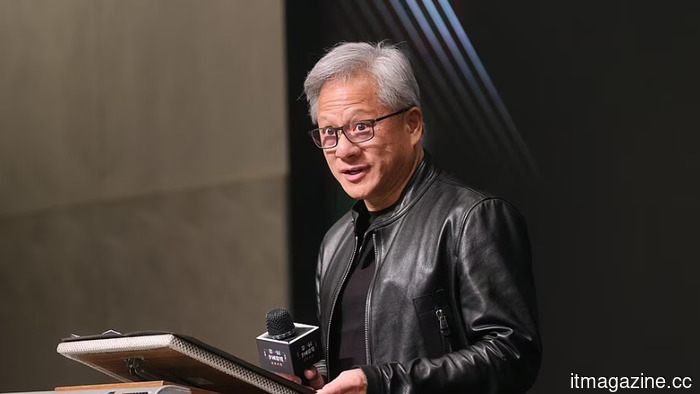 Nvidia's CEO Jensen Huang asserts that illicit data centers are a futile endeavor and that national security should take precedence.
Jensen Huang informed shareholders that Nvidia would place US national security above sales and described smuggled chip data centers as unfeasible.
Nvidia's CEO Jensen Huang asserts that illicit data centers are a futile endeavor and that national security should take precedence.
Jensen Huang informed shareholders that Nvidia would place US national security above sales and described smuggled chip data centers as unfeasible.
 Micron's revenue increased fourfold as the demand for AI memory drives gross margins over 81 percent.
Micron reported $41 billion in revenue for Q3, a fourfold increase compared to the previous year, as HBM4 chips for Nvidia and Google pushed gross margins above 81 percent for the first time.
Micron's revenue increased fourfold as the demand for AI memory drives gross margins over 81 percent.
Micron reported $41 billion in revenue for Q3, a fourfold increase compared to the previous year, as HBM4 chips for Nvidia and Google pushed gross margins above 81 percent for the first time.
 Runpod achieves a $1 billion valuation following a $100 million funding round.
Runpod has secured $100 million at a valuation of $1 billion, representing a tenfold increase in two years, and has stated that it declined acquisition offers exceeding $500 million.
Runpod achieves a $1 billion valuation following a $100 million funding round.
Runpod has secured $100 million at a valuation of $1 billion, representing a tenfold increase in two years, and has stated that it declined acquisition offers exceeding $500 million.
 Tissium secures €60 million for suture-free nerve repair.
France's Tissium has secured €60 million to introduce COAPTIUM CONNECT, the sole FDA-cleared sutureless nerve repair system, into operating rooms in the United States.
Tissium secures €60 million for suture-free nerve repair.
France's Tissium has secured €60 million to introduce COAPTIUM CONNECT, the sole FDA-cleared sutureless nerve repair system, into operating rooms in the United States.
 Micron's revenue increased fourfold due to the demand for AI memory, resulting in gross margins surpassing 81 percent.
Micron reported $41 billion in revenue for Q3, a fourfold increase compared to the previous year, as HBM4 chips for Nvidia and Google contributed to gross margins exceeding 81 percent for the first time.
Micron's revenue increased fourfold due to the demand for AI memory, resulting in gross margins surpassing 81 percent.
Micron reported $41 billion in revenue for Q3, a fourfold increase compared to the previous year, as HBM4 chips for Nvidia and Google contributed to gross margins exceeding 81 percent for the first time.
Qualcomm secures Meta as the first named client for its Dragonfly data center chips.
Qualcomm introduced its Dragonfly C1000 data center chip, with Meta as its initial named customer, and announced its acquisition of AI startup Modular for $3.9 billion.