

Runpod achieves a valuation of $1 billion following a $100 million fundraising effort.
Runpod has successfully secured $100 million in funding, achieving a $1 billion valuation—a remarkable tenfold increase within less than two years. This cloud startup, which leases AI computing power, has reportedly turned down acquisition offers exceeding $500 million.
The ongoing demand for AI computing power is creating opportunities for new players. Runpod, a startup that provides computing resources to AI developers, has raised $100 million, valuing the company at $1 billion.
This growth is impressive, considering that Runpod last raised funds in a seed round in 2024, when it was valued at approximately $100 million. In less than two years, its valuation has increased tenfold. The funding round was led by Summit Partners, a growth investor that typically does not invest in early-stage AI companies.
Summit Partners has a solid reputation, having supported over 550 companies since its inception in 1984, primarily focusing on profitable, growth-stage businesses. Michael Medici, a managing director at the firm, will join Runpod’s board, and J.P. Morgan served as the exclusive placement agent on the deal.
Navigating the compute shortage
The urgency around AI computing resources is heightened. According to some estimates, the AI compute shortage in 2026 may surpass the chip scarcity seen in 2023, as developers struggle to acquire sufficient GPUs. This situation has created opportunities for companies that purchase chips to rent them out.
We've seen this trend before. During the chip shortage of 2023, even venture firms temporarily acted as makeshift cloud providers to secure GPUs for their startups. The anticipated crunch in 2026 is reviving this rush, as demand from AI developers continues to exceed chip supply.
These companies operate under various names: compute resellers, inference providers, and neoclouds. Most focus on renting out servers equipped with Nvidia chips, which have become the standard for AI tasks. Runpod distinguishes itself by also offering servers powered by AMD chips, which can be less expensive and more readily available.
Beyond just providing GPUs
Runpod also aims for a broader service offering. While much of the market has focused solely on running completed models—referred to as inference—Runpod encompasses the entire development cycle. This allows developers to experiment, train, fine-tune, and scale their projects on one platform.
"The market has concentrated on inference over the past two years, but builders require more than that,” stated Zhen Lu, Runpod’s CEO. He envisions a single platform where an idea can progress from initial testing to live deployment, emphasizing speed and simplicity with per-second pricing and no minimum obligations.
The onboarding process is intentionally streamlined. Runpod provides a library of pre-made models and templates, enabling most developers to execute their first task within an hour of registration. There’s no lengthy procurement process, and users aren't required to integrate multiple tools.
The business model is asset-light, as Runpod leases capacity instead of investing heavily in its own data centers. This strategy keeps the company agile but also relies on external providers for the necessary hardware. The industry's current focus on inference efficiency makes it a highly valued skill, and Runpod believes it can effectively offer this service.
The growth story
Investor interest is driven by growth. According to The Information, Runpod has doubled its annualized revenue to approximately $240 million over the last five months, now serving more than one million developers on its platform.
Activity on the platform has been significant. Runpod's serverless architecture has processed over 20 billion inference requests to date, with the company claiming that over 90% of deployments succeed on the first attempt. Additionally, 85% of developers who deploy projects return for additional services, which are metrics that investors typically find appealing.
The credibility of its clients adds to its reputation. The startup Deep Cogito successfully trained its Cogito v1 open models entirely on Runpod in just 75 days with a small team. Hugging Face’s CTO, Julien Chaumond, mentioned that Runpod stands out as one of the few companies genuinely attuned to the needs of open-source developers.
The open-source movement is flourishing, as businesses increasingly turn to open models to reduce expenses, driving them to platforms like Runpod for affordable and flexible computing resources. The company plans to utilize its new funding to enhance its platform, bolster its engineering and developer relations teams, and expand its global reach.
Resisting acquisition offers
Runpod's funding round signifies a notable stance, as the company claims to have turned down buyout offers exceeding $500 million to maintain its independence, according to The Information. For a five-year-old startup, this reflects a bold commitment to its future.
This decision also highlights the current landscape, with significant investment flowing into businesses that facilitate solutions for the GPU bottleneck. Valuations for neoclouds have skyrocketed, with competitors securing funding at multibillion-dollar levels. Runpod seeks to capitalize on this trend while maintaining its independence.
Comparatively, some
Other articles
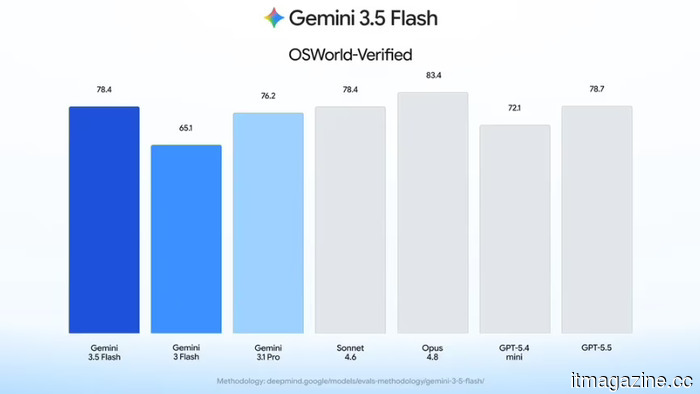 Gemini 3.5 Flash is now capable of viewing and managing your screen, and Google aims for businesses to place their confidence in it.
Google has integrated computer usage directly into Gemini 3.5 Flash, eliminating the standalone version and incorporating enterprise safety measures.
Gemini 3.5 Flash is now capable of viewing and managing your screen, and Google aims for businesses to place their confidence in it.
Google has integrated computer usage directly into Gemini 3.5 Flash, eliminating the standalone version and incorporating enterprise safety measures.
 Qualcomm secures Meta as its first identified customer for the Dragonfly data centre chips.
Qualcomm announced its Dragonfly C1000 data center chip, with Meta being its first specified customer, and confirmed its acquisition of AI startup Modular for $3.9 billion.
Qualcomm secures Meta as its first identified customer for the Dragonfly data centre chips.
Qualcomm announced its Dragonfly C1000 data center chip, with Meta being its first specified customer, and confirmed its acquisition of AI startup Modular for $3.9 billion.
 Tissium secures €60 million for sutureless nerve repair.
France's Tissium has secured €60 million to introduce COAPTIUM CONNECT, the sole FDA-approved sutureless nerve repair system, to operating rooms in the United States.
Tissium secures €60 million for sutureless nerve repair.
France's Tissium has secured €60 million to introduce COAPTIUM CONNECT, the sole FDA-approved sutureless nerve repair system, to operating rooms in the United States.
 Micron's revenue increased fourfold as the demand for AI memory has driven gross margins to surpass 81 percent.
Micron reported $41 billion in revenue for Q3, marking a fourfold increase compared to the previous year, as HBM4 chips for Nvidia and Google pushed gross margins over 81 percent for the first time.
Micron's revenue increased fourfold as the demand for AI memory has driven gross margins to surpass 81 percent.
Micron reported $41 billion in revenue for Q3, marking a fourfold increase compared to the previous year, as HBM4 chips for Nvidia and Google pushed gross margins over 81 percent for the first time.
 EXCLUSIVE: Sam C. Wilson, a star of Masters of the Universe, discusses the film’s lively visuals, stunt work, and practical effects.
In a unique interview, Sam C. Wilson, the star of Masters of the Universe, talks about his role as the villain Trap-Jaw, the practical effects used in the film, the stunt work involved, and his collaboration with director Travis Knight.
Anthropic claims that Alibaba is conducting the largest distillation campaign aimed at Claude.
Anthropic informed US senators that Alibaba's Qwen lab utilized 25,000 fraudulent accounts to conduct nearly 29 million interactions with Claude from April to June.
EXCLUSIVE: Sam C. Wilson, a star of Masters of the Universe, discusses the film’s lively visuals, stunt work, and practical effects.
In a unique interview, Sam C. Wilson, the star of Masters of the Universe, talks about his role as the villain Trap-Jaw, the practical effects used in the film, the stunt work involved, and his collaboration with director Travis Knight.
Anthropic claims that Alibaba is conducting the largest distillation campaign aimed at Claude.
Anthropic informed US senators that Alibaba's Qwen lab utilized 25,000 fraudulent accounts to conduct nearly 29 million interactions with Claude from April to June.
Runpod achieves a valuation of $1 billion following a $100 million fundraising effort.
Runpod has secured $100 million at a valuation of $1 billion, marking a tenfold increase over the past two years, and reports that it declined acquisition proposals exceeding $500 million.