
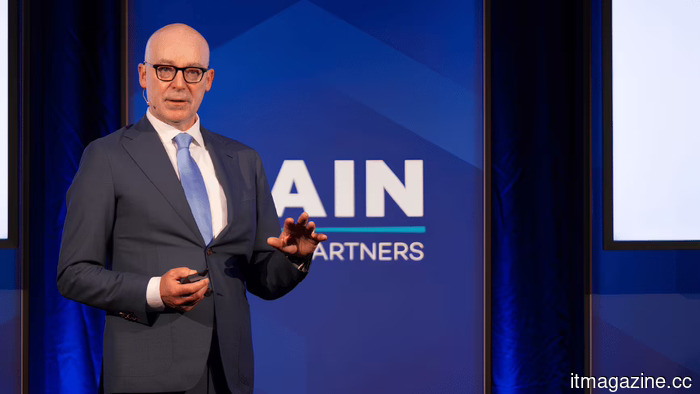
Main Capital €5.25 billion: wagering on stability amid the AI anxiety
While public markets react fearfully to the idea that AI will undermine enterprise software, a modest Dutch company has successfully raised €5.25bn with the opposite belief. Main Capital argues that unexciting, essential software is precisely where significant value will be found in the coming decade.
Charly Zwemstra has dedicated 23 years to acquiring software that most people overlook. Consider systems for hospital appointments, local tax records, and accounting processes—software that organizations seldom think about until it fails. This week, investors provided Zwemstra's firm with €5.25bn to continue this approach.
Main Capital Partners, based in The Hague and focused on enterprise software investments, secured two new funds at their maximum limits in less than six months. Main Capital IX amassed €4bn, more than double its previous fund, while Main Foundation III gathered €1.25bn, also more than twice the size of its predecessor. Both funds experienced oversubscription.
This expansion brings Main’s total assets under management to over €12bn, marking the largest private equity buyout fundraising ever conducted in the Netherlands.
The scale of this achievement is remarkable, but the timing adds to the narrative.
Fundraising amid market turmoil
Main attracted this capital in a challenging market environment for software. According to Tech Funding News, the iShares software ETF has decreased by around 30% from its peak in September 2025. Major players like Salesforce, Workday, and Atlassian have all lost significant market value since February. The prevalent concern is that AI-driven automation will weaken enterprise software from within.
This apprehension has also impacted the buyout sector. Firms like Thoma Bravo and Vista Equity Partners spent recent months reassuring their investors through communications and webinars, but Main's investors sought no such reassurances.
The key factor behind their confidence lies in one statistic: over 23 years, Main has maintained a loss rate of well below 0.5%. In the private equity realm, where write-offs are commonplace, such a figure is nearly unheard of. With 38 exits yielding a weighted average gross return of 4.7x, Main’s impressive track record speaks for itself. Existing investors reinvested at over 120%, indicating they committed even more than prior levels.
Hamilton Lane increased its investment as well, with new capital flowing in from sovereign wealth funds, public pension funds, and insurers from the US, Asia, and the Middle East. Among these were the State Teachers’ Retirement System of Ohio and the Korean Teachers’ Credit Union. Main managed the entire fundraising process independently, without utilizing a placement agent.
The unexciting foundation
Main's approach is straightforward to outline but challenging to replicate. The firm acquires profitable software companies in specialized niches and then adds related businesses to create cross-border market leaders. It invests equity ranging from €5m to €150m and has conducted over 300 acquisitions, including approximately 100 platform deals and more than 200 follow-on investments.
The portfolio includes over 55 companies and more than 15,000 employees across Europe and North America. None of this is glamorous, yet all of it is vital.
Municipalities are unlikely to change their tax software casually, just as hospitals don't replace scheduling systems without good reason. The costs associated with switching are precisely what underpin consistent cash flows, even when popular SaaS companies face volatility.
Main's model functions quietly in the background. Recently, the firm acquired a majority stake in Ferranti, a Belgian company that develops essential software for utilities, and merged its HR platform BCS with Timegrip to establish a pan-European payroll entity. Neither transaction garnered headlines, but both exemplify the firm's strategy in action.
Zwemstra founded Main in 2003 after departing AlpInvest Partners and was an early participant in European software buyouts. Two decades later, this strategy appears less like a niche and more akin to a fortress.
Seeing AI as an opportunity, not a threat
Main views AI from a different angle compared to the broader market. While many perceive a threat to enterprise software, the firm regards it as a chance for acquisitions. "We’re at a turning point," Zwemstra stated. "AI is unlocking a new wave of growth and value creation opportunities."
Main supports this assertion with proprietary data. The firm utilizes its own market-intelligence tools across its portfolio to monitor where AI generates lasting value and where it reduces the prices that incumbents can charge.
The rationale is that AI and consolidation are now moving in a similar direction. A fragmented marketplace of small, essential software vendors becomes easier to consolidate as buyers seek fewer suppliers and more advanced products. Main believes it can deliver both.
The product-markets encompass healthtech, govtech, infrastructure, and proptech, all rich with smaller vendors possessing valuable, regulated data that is difficult to replace. This data is crucial for making AI features effective, and it poses challenges for new entrants. Main bets that the incumbents it has already
Other articles
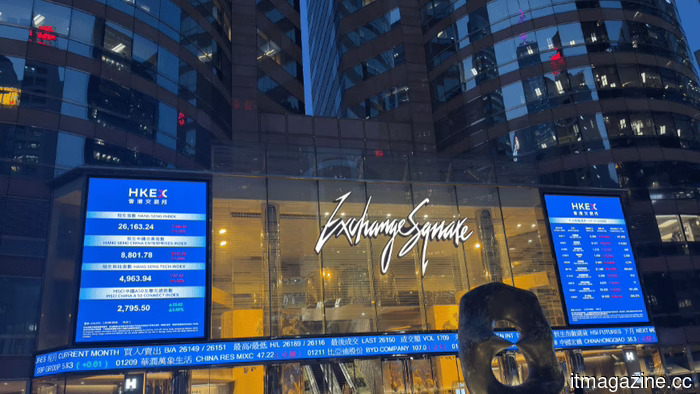 Apple suppliers rush to Hong Kong: $4 billion in a week
Apple suppliers Luxshare and Lingyi are competing to secure billions in funding to shift their focus from smartphone components to AI hardware and humanoid robots in Hong Kong.
Apple suppliers rush to Hong Kong: $4 billion in a week
Apple suppliers Luxshare and Lingyi are competing to secure billions in funding to shift their focus from smartphone components to AI hardware and humanoid robots in Hong Kong.
 OpenAI's Jalapeño chip: an alternative to Nvidia.
OpenAI introduced Jalapeño, its first AI chip developed in partnership with Broadcom for inference, as part of its efforts to reduce its dependence on Nvidia.
OpenAI's Jalapeño chip: an alternative to Nvidia.
OpenAI introduced Jalapeño, its first AI chip developed in partnership with Broadcom for inference, as part of its efforts to reduce its dependence on Nvidia.
 LastPass experiences another data breach; however, your password vault remains secure this time.
LastPass has verified that customer names, contact information, and support case records were compromised in a breach at Klue, although the company asserts that password vaults are still secure.
LastPass experiences another data breach; however, your password vault remains secure this time.
LastPass has verified that customer names, contact information, and support case records were compromised in a breach at Klue, although the company asserts that password vaults are still secure.
 Hadrian's $7.5 billion valuation: physical-AI wager, rejected.
Hadrian is said to be in discussions to secure $1 billion at a valuation of $7.5 billion, a figure it describes as "inaccurate." This comes amid the surge in physical AI and reindustrialization efforts.
Hadrian's $7.5 billion valuation: physical-AI wager, rejected.
Hadrian is said to be in discussions to secure $1 billion at a valuation of $7.5 billion, a figure it describes as "inaccurate." This comes amid the surge in physical AI and reindustrialization efforts.
 I would suggest the Galaxy Watch 8 priced at $218 as the top smartwatch deal for Prime Day for the majority of individuals.
The Galaxy Watch 8 is now available for an all-time low price of $218.49 during Prime Day, giving you a discount of over $130 on Samsung's newest smartwatch.
I would suggest the Galaxy Watch 8 priced at $218 as the top smartwatch deal for Prime Day for the majority of individuals.
The Galaxy Watch 8 is now available for an all-time low price of $218.49 during Prime Day, giving you a discount of over $130 on Samsung's newest smartwatch.
 During Prime Day, the price of the Sony WH-1000XM5 drops below $200, and I believe it’s well worth the investment.
The Sony WH-1000XM5 is now available at a historic low price of $198 during Prime Day, giving you over $200 in savings on one of the top noise-canceling headphones available.
During Prime Day, the price of the Sony WH-1000XM5 drops below $200, and I believe it’s well worth the investment.
The Sony WH-1000XM5 is now available at a historic low price of $198 during Prime Day, giving you over $200 in savings on one of the top noise-canceling headphones available.
Main Capital €5.25 billion: wagering on stability amid the AI anxiety
Main Capital raised €5.25 billion, marking the largest buyout fund in the Netherlands, with a loss rate below 0.5% and a contrarian approach that anticipates AI will enhance enterprise software.