
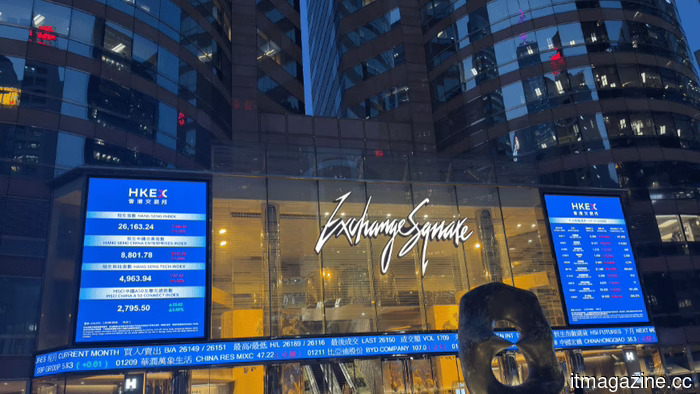
Apple suppliers rush to Hong Kong: $4 billion in a week
Two of Apple's major suppliers in China are simultaneously pursuing listings in Hong Kong this week. Luxshare aims to raise around $3 billion, while Lingyi has recently secured $1.1 billion. Both companies are reallocating these funds to shift from smartphone components to AI hardware and humanoid robotics.
The manufacturers of your AirPods are discreetly amassing significant capital. This week, two of them sought it in the same venue. According to Bloomberg, Luxshare Precision, which assembles AirPods and a growing number of iPhones, is testing the waters for a Hong Kong listing that could generate approximately $3 billion. This would rank among the largest offerings in the city this year. Just days prior, fellow Apple supplier Lingyi iTech raised HK$8.3 billion ($1.1 billion) by pricing its shares at the highest point of the range and rejecting more than 100 orders.
These two transactions are not merely coincidental; they reflect the same strategic gamble made twice. China's hardware supply chain is recalibrating for a new phase and is eager for offshore investment to facilitate this transition.
June is witnessing a surge in Hong Kong listings. Bloomberg Intelligence projects that the city's proceeds from initial public offerings are expected to exceed $43 billion this year, marking a six-year peak. June alone is anticipated to yield the highest number of deals for any month in 2026.
The timing is strategic. By soliciting investor orders before June ends, companies can avoid the need to refile updated financial statements, which explains the rush of firms coming through simultaneously. This urgency is evident in Luxshare's swift actions.
The company cleared a listing hearing at the Hong Kong exchange on Tuesday, shortly after receiving approval from China's securities regulator.
The trend extends beyond these two firms; companies from the mainland are increasingly looking to Hong Kong as the pathway to a New York listing becomes more constricted. High-tech newcomers are now dominating the market. The AI developer Zhipu is considering a multibillion-dollar share sale in Hong Kong. The Apple suppliers represent another aspect of the same trend: they are not software innovators but the manufacturers that produce the hardware.
What these funds will be used for is particularly intriguing. Lingyi iTech, which specializes in components for consumer electronics, is not just focusing on smartphones. It plans to channel the proceeds into research, capacity expansion, and acquisitions while exploring AI hardware and humanoid robotics.
This ambition is tangible. Lingyi is constructing a large-scale factory in Beijing and aims to produce 500,000 humanoid robots annually by 2030. The rationale is clear; humanoid robots require precision motors, sensors, thermal systems, and structural components—many of which Chinese factories already supply for smartphones, vehicles, and drones.
Transforming a smartphone production line to create robots is an advancement rather than a complete overhaul. Other competitors, including Lens Technology and AAC Technologies, are also adapting their precision-component facilities for robotics manufacturing.
Lingyi's financial performance allows it to explore new ventures. Its revenue increased by 16% to 51.4 billion yuan ($7.6 billion) in 2025. Shares listed in Shenzhen have doubled in value over the past year, boosting its market capitalization to about $21 billion. Founded by Zeng Fangqin in 2006, the company attracted nearly 300 institutional orders for its Hong Kong offering, with key investors including smartphone manufacturer Honor and Sunny Optical.
The top ten investors secured more than half of the total allocation, indicating strong demand. Lingyi's shares are set to debut in Hong Kong on June 26, marking the largest initial offering since Victory Giant's $3 billion listing in April.
Luxshare, on the other hand, is a more established player. Its Shenzhen shares have more than doubled over the past year, pushing its market capitalization above $77 billion. The company’s revenue reached 332.3 billion yuan ($48.9 billion) in 2025, reflecting a 24% year-on-year increase. Citic Securities, Goldman Sachs, and China International Capital Corp are leading its planned listing.
Luxshare has an appealing narrative for investors. Chairwoman and CEO Grace Wang started her career on a Shenzhen production line in 1988 and established Luxshare in 2004. This month, Fortune recognized her as one of its 2026 Most Powerful Women in Business, marking her as the sole Chinese executive in that category. Earlier in the year, she topped Forbes China's list of the most successful businesswomen in the country.
The company has expanded beyond Apple and now operates across Asia, North America, and Europe, with investments in 5G infrastructure, automotive electronics, and smart manufacturing. Luxshare's latest sustainability report indicates that clean energy accounts for 64% of its energy use, that absolute Scope 1 and 2 emissions decreased by 25% from 2022 levels, and that women occupy 37.5% of board positions.
The company is aiming for carbon
Other articles
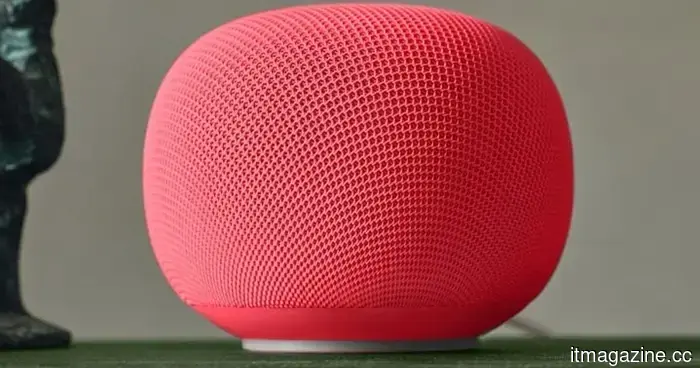 The Google Home Speaker is quite remarkable, but that impression changes when you examine the power cable.
A buyer managed to get the new Google Home Speaker ahead of time and shared their initial thoughts. The sound quality is impressive, the setup is fast, but the non-removable power cable is a significant drawback for repairability.
The Google Home Speaker is quite remarkable, but that impression changes when you examine the power cable.
A buyer managed to get the new Google Home Speaker ahead of time and shared their initial thoughts. The sound quality is impressive, the setup is fast, but the non-removable power cable is a significant drawback for repairability.
 Sentient Foundation initiates a $42 million initiative to support creators of open-source AGI.
The nonprofit is merging grants with investments that favor founders to support developers, researchers, and startups working on artificial general intelligence in an open manner, contending that the future of intelligence should not be dominated by a select few corporations.
Sentient Foundation initiates a $42 million initiative to support creators of open-source AGI.
The nonprofit is merging grants with investments that favor founders to support developers, researchers, and startups working on artificial general intelligence in an open manner, contending that the future of intelligence should not be dominated by a select few corporations.
 Tecno's EllaClaw AI assistant aims to organize your phone and handle your tasks.
Tecno's EllaClaw agent goes beyond typical chatbot responses and begins performing actual tasks, such as clearing RAM, conserving battery, requesting rides, and facilitating shopping within your applications, all while ensuring you remain in control.
Tecno's EllaClaw AI assistant aims to organize your phone and handle your tasks.
Tecno's EllaClaw agent goes beyond typical chatbot responses and begins performing actual tasks, such as clearing RAM, conserving battery, requesting rides, and facilitating shopping within your applications, all while ensuring you remain in control.
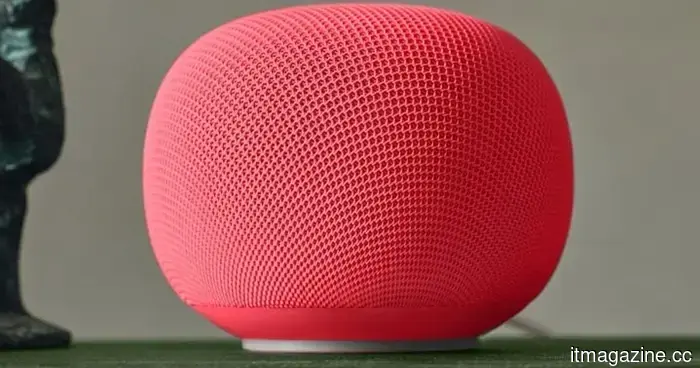 The Google Home Speaker is quite remarkable, but that is until you examine the power cable.
A buyer managed to get the new Google Home Speaker ahead of its official release and shared their initial thoughts. The sound quality is impressive, the installation process is swift, but the non-removable power cable is a significant disappointment for its repair potential.
The Google Home Speaker is quite remarkable, but that is until you examine the power cable.
A buyer managed to get the new Google Home Speaker ahead of its official release and shared their initial thoughts. The sound quality is impressive, the installation process is swift, but the non-removable power cable is a significant disappointment for its repair potential.
 You can avoid overspending on a high-end Android tablet with this Galaxy Tab S11 offer.
Samsung's Galaxy Tab S11 has received a price reduction for Prime Day, making its AMOLED display, sleek design, and included S Pen more appealing for those looking for Android tablets at this time.
You can avoid overspending on a high-end Android tablet with this Galaxy Tab S11 offer.
Samsung's Galaxy Tab S11 has received a price reduction for Prime Day, making its AMOLED display, sleek design, and included S Pen more appealing for those looking for Android tablets at this time.
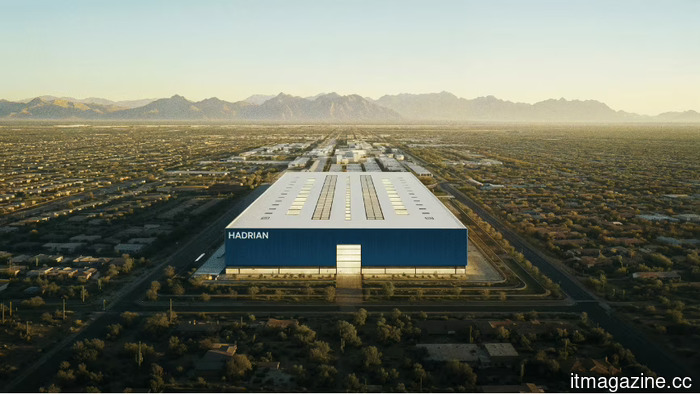 Hadrian's $7.5 billion valuation: physical-AI wager, rejected.
Hadrian is said to be in discussions to secure $1 billion at a valuation of $7.5 billion, a figure it describes as "inaccurate." This comes amid the surge in physical AI and reindustrialization efforts.
Hadrian's $7.5 billion valuation: physical-AI wager, rejected.
Hadrian is said to be in discussions to secure $1 billion at a valuation of $7.5 billion, a figure it describes as "inaccurate." This comes amid the surge in physical AI and reindustrialization efforts.
Apple suppliers rush to Hong Kong: $4 billion in a week
Apple suppliers Luxshare and Lingyi are competing to secure billions in funding to shift their focus from smartphone components to AI hardware and humanoid robots in Hong Kong.