

Legion LegalTech files a lawsuit against the US regarding the shutdown of Anthropic Fable 5 and Mythos 5.
Legion LegalTech contends that the export directive resulting in the global shutdown of Fable 5 and Mythos 5 has caused "immediate, irreparable, and existential" damage to its operations. The U.S. legal-technology firm has filed a lawsuit against the federal government concerning the directive that, two weeks ago, compelled Anthropic to disable its two most advanced AI models for all users worldwide.
Legion LegalTech Corp submitted its complaint on Tuesday in federal court in Washington, D.C., requesting a judge to annul the order and indicating its intention to seek an injunction to prevent the administration from implementing it. The directive at the center of the case was issued by the Commerce Department’s Bureau of Industry and Security on June 12. It cited national security concerns and ordered Anthropic to deactivate Fable 5 and Mythos 5 for "any foreign national," both inside and outside the U.S., which included the company’s own foreign-national staff. Due to the inability of Anthropic to reliably verify nationality in real-time, the sole means of compliance was to disable both models for all users simultaneously. The company has described this action as disproportionate.
Legion presents itself as an unexpected plaintiff designed by the order. Based in San Jose, the company develops drafting and case-management tools for lawyers and relies on Anthropic's models for its platform. Even though it is a U.S. company, its software development team includes Canadian nationals working from Canada, precisely the demographic affected by the directive. With access removed, the team lost its capability to perform its duties.
The tone in the filing suggests more than just a typical procurement issue. The complaint asserts, "The harm to Legion is immediate, irreparable, and existential." It further states, "The pace of frontier AI advancement is relentless, and competitive ground lost during a suspension cannot be reclaimed retroactively."
The company is asking the court to invalidate the directive and plans to seek a temporary order preventing enforcement during the pendency of the case. Anthropic is not involved in the lawsuit and, when asked for comment, referred to an earlier statement expressing gratitude to the administration for its ongoing cooperation to resolve the issue swiftly.
Neither the Commerce Department nor the White House provided immediate comments. The government has not publicly detailed its concerns. According to Anthropic’s account, it is understood that someone discovered a method to bypass, or "jailbreak," Fable 5. Anthropic claims that it identified only a minor technique that involved asking the model to read a codebase and rectify its errors, with the vulnerabilities already being publicly disclosed.
This incident is noteworthy as it marks the first instance where Washington has employed export controls to remove a commercial AI product from the market, as opposed to hardware.
What makes the Legion lawsuit more significant than a singular customer's complaint is its legal context. Anthropic and the U.S. government are already engaged in litigation in Washington and California following the company's lawsuit against the Pentagon's classification of it as a national security supply-chain risk, a consequence of Anthropic’s refusal to permit military use of Claude for autonomous weaponry or domestic surveillance.
The administration that enforced the model restrictions is the same that has encouraged banks to embrace the technology and previously opposed expanding civilian access to Mythos, despite the NSA's continued usage of it.
The collateral damage extends beyond the U.S. borders, affecting allied users, including the UK’s AI Security Institute, a leading organization for testing advanced models that lost access to the systems it was actively evaluating.
This case is receiving attention beyond the courtroom as it examines whether a security order targeting foreign nationals can be compatible with a model utilized by hundreds of millions of individuals, many of whom are paying customers with no direct connection to the concerns raised.
Currently, the issues are procedural. Legion is seeking to have the directive annulled and temporarily suspended while awaiting the government's response. Meanwhile, the models remain offline, keeping the existential clock ticking as the legal discussions continue.
Other articles
 YouTube reaches a settlement before the second trial in California regarding social media addiction.
YouTube, owned by Google, has reached a settlement with a teenage plaintiff just weeks ahead of a second bellwether trial in California, allowing Meta, Snap, and TikTok to go to trial.
YouTube reaches a settlement before the second trial in California regarding social media addiction.
YouTube, owned by Google, has reached a settlement with a teenage plaintiff just weeks ahead of a second bellwether trial in California, allowing Meta, Snap, and TikTok to go to trial.
 SoftBank's Son describes referring to AI as a bubble as 'an insult.'
During SoftBank's annual meeting, Masayoshi Son dismissed the discussions about an AI bubble as an affront and requested shareholders to give him another 10 to 15 years.
SoftBank's Son describes referring to AI as a bubble as 'an insult.'
During SoftBank's annual meeting, Masayoshi Son dismissed the discussions about an AI bubble as an affront and requested shareholders to give him another 10 to 15 years.
 YouTube reaches a settlement before California's second trial concerning social media addiction.
YouTube, owned by Google, has reached a settlement with a teenage plaintiff just weeks prior to a second pivotal trial in California, while Meta, Snap, and TikTok are set to face the jury.
YouTube reaches a settlement before California's second trial concerning social media addiction.
YouTube, owned by Google, has reached a settlement with a teenage plaintiff just weeks prior to a second pivotal trial in California, while Meta, Snap, and TikTok are set to face the jury.
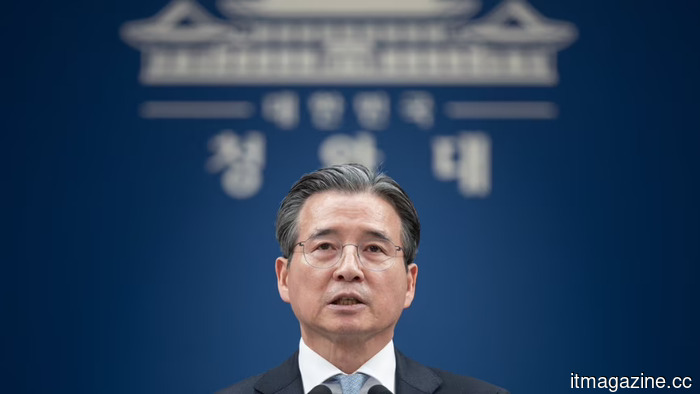 South Korea is in discussions with Samsung and SK Hynix regarding a second chip cluster.
An adviser to the president has indicated that Seoul is in talks with Samsung and SK Hynix regarding new semiconductor investments, suggesting that demand for AI may accelerate construction timelines by ten years.
South Korea is in discussions with Samsung and SK Hynix regarding a second chip cluster.
An adviser to the president has indicated that Seoul is in talks with Samsung and SK Hynix regarding new semiconductor investments, suggesting that demand for AI may accelerate construction timelines by ten years.
 Anthropic's Mythos identified vulnerabilities in classified U.S. systems during a government evaluation.
A US official reported that Anthropic’s Mythos model identified weaknesses in classified government systems during a red-team assessment, rather than indicating an external breach.
Anthropic's Mythos identified vulnerabilities in classified U.S. systems during a government evaluation.
A US official reported that Anthropic’s Mythos model identified weaknesses in classified government systems during a red-team assessment, rather than indicating an external breach.
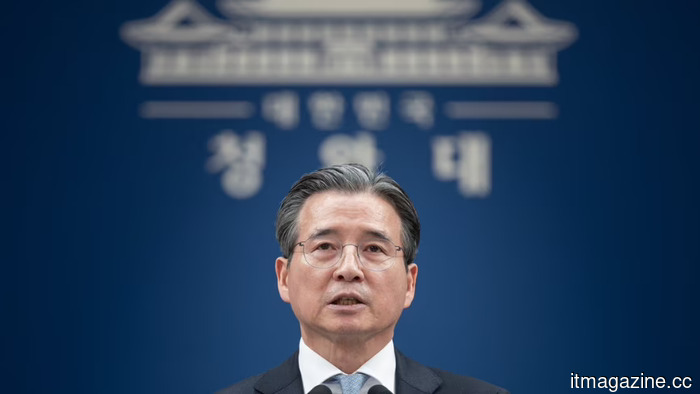 South Korea is in discussions with Samsung and SK Hynix regarding a second chip cluster.
An adviser to the president states that Seoul is in talks about new fabrication investments with Samsung and SK Hynix, suggesting that the demand for AI might accelerate construction by ten years.
South Korea is in discussions with Samsung and SK Hynix regarding a second chip cluster.
An adviser to the president states that Seoul is in talks about new fabrication investments with Samsung and SK Hynix, suggesting that the demand for AI might accelerate construction by ten years.
Legion LegalTech files a lawsuit against the US regarding the shutdown of Anthropic Fable 5 and Mythos 5.
A legal-tech company from the US, which employs Canadian developers, has filed a lawsuit against Washington regarding the export order that compelled Anthropic to deactivate Fable 5 and Mythos 5 globally.