
YouTube reaches a settlement before the second trial in California regarding social media addiction.
A month prior to a Los Angeles jury hearing the case of a Florida teenager, Google quietly withdrew, leaving Meta, Snap, and TikTok to handle the remainder of the proceedings. YouTube reached a settlement with the teenage plaintiff just weeks before he was scheduled to confront the company in court, thereby stepping away from the second bellwether trial in California's extensive social-media addiction litigation.
The plaintiff, referred to by the initials R.K.C. in court documents, is a Florida teenager who claims that excessive social media usage has contributed to his anxiety, depression, and suicidal thoughts, for which he is still receiving treatment. His case was chosen as a bellwether trial, meant to gauge jury reactions to underlying claims before thousands of similar lawsuits are resolved.
The lawsuit named four defendants, and YouTube’s withdrawal leaves the remaining three—Meta’s Instagram, Snap’s Snapchat, and ByteDance’s TikTok—set to go in front of the jury next month. The primary accusation throughout this litigation remains consistent: plaintiffs assert that these platforms were deliberately designed to be addictive. They cite features like infinite scroll, autoplay, and algorithmic feeds that engage young users at the cost of their mental health, and they argue that the companies have hidden the associated risks, a framing that the defendants have consistently contested.
This settlement comes after a verdict that prompted all defendants in this case to reassess their strategies. In March, a Los Angeles jury found Meta and Google liable in the first bellwether case, awarding $6 million to a young woman named K.G.M. and attributing more of the responsibility to Meta. This marked the first social-media addiction case to reach a verdict, impacting precisely the two companies that had opted not to settle beforehand, while Snap and TikTok had settled prior to trial.
Given that context, YouTube’s decision appears less surprising and more like a recurring pattern. After already suffering a loss in March, Google has now chosen to follow the same path as Snap and TikTok did initially.
Companies that reach settlements typically do not disclose any details; those that go to trial risk having a jury's verdict set a precedent for future cases. The significance of these individual trials is what lends weight to the bellwether structure. Currently, there are over 3,300 lawsuits concerning addiction claims pending against social media companies in California state court, along with about 2,400 cases initiated by individuals, school districts, and states that have been consolidated in federal court.
The bellwether approach exists because trying each case individually would take decades; early verdicts and settlements are intended to establish valuation terms for the remaining cases. This process is also ongoing in related school-district cases, which are being pursued separately. Snap, YouTube, and TikTok settled a school bellwether case before trial, and Meta later reached a settlement in the Kentucky case that would have been the first school-district trial related to youth mental health.
The personal injury cases filed by individual teenagers, including R.K.C.’s, receive more public attention as they present a named claimant and a specific alleged harm to a jury. For Google, the cost of withdrawing from the July trial equates to whatever settlement amount it agreed to pay R.K.C., an expense it won’t have to justify in court. For the companies still facing the trial, the decision-making process is more complex.
Meta continues to invest significantly in artificial intelligence despite the increasing number of child safety lawsuits, and it will head into the second trial as the only original defendant that has not opted to settle at any point. The trial on July 27 in Los Angeles will move forward with the remaining three defendants. Whether any of them will follow YouTube's lead and withdraw before the trial is something that will be clarified in the coming weeks.
Другие статьи
 Legion LegalTech files a lawsuit against the US regarding the shutdown of Anthropic Fable 5 and Mythos 5.
A legal-tech company from the US, which employs Canadian developers, has filed a lawsuit against Washington regarding the export order that compelled Anthropic to deactivate Fable 5 and Mythos 5 globally.
Legion LegalTech files a lawsuit against the US regarding the shutdown of Anthropic Fable 5 and Mythos 5.
A legal-tech company from the US, which employs Canadian developers, has filed a lawsuit against Washington regarding the export order that compelled Anthropic to deactivate Fable 5 and Mythos 5 globally.
 SoftBank's Son describes referring to AI as a bubble as 'an insult.'
During SoftBank's annual meeting, Masayoshi Son dismissed the discussions about an AI bubble as an affront and requested shareholders to give him another 10 to 15 years.
SoftBank's Son describes referring to AI as a bubble as 'an insult.'
During SoftBank's annual meeting, Masayoshi Son dismissed the discussions about an AI bubble as an affront and requested shareholders to give him another 10 to 15 years.
 Anthropic's Mythos identified vulnerabilities in classified U.S. systems during a government evaluation.
A US official reported that Anthropic’s Mythos model identified weaknesses in classified government systems during a red-team assessment, rather than indicating an external breach.
Anthropic's Mythos identified vulnerabilities in classified U.S. systems during a government evaluation.
A US official reported that Anthropic’s Mythos model identified weaknesses in classified government systems during a red-team assessment, rather than indicating an external breach.
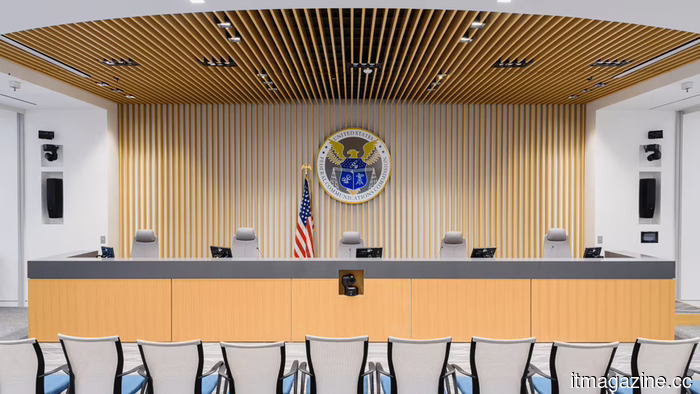 A US spectrum auction recently generated $3.5 billion to fund the removal of Huawei equipment.
The AWS-3 auction conducted by the FCC generated approximately $3.5 billion, with around $3.3 billion allocated to repay the Treasury loan related to the rip-and-replace initiative.
A US spectrum auction recently generated $3.5 billion to fund the removal of Huawei equipment.
The AWS-3 auction conducted by the FCC generated approximately $3.5 billion, with around $3.3 billion allocated to repay the Treasury loan related to the rip-and-replace initiative.
 YouTube reaches a settlement before California's second trial concerning social media addiction.
YouTube, owned by Google, has reached a settlement with a teenage plaintiff just weeks prior to a second pivotal trial in California, while Meta, Snap, and TikTok are set to face the jury.
YouTube reaches a settlement before California's second trial concerning social media addiction.
YouTube, owned by Google, has reached a settlement with a teenage plaintiff just weeks prior to a second pivotal trial in California, while Meta, Snap, and TikTok are set to face the jury.
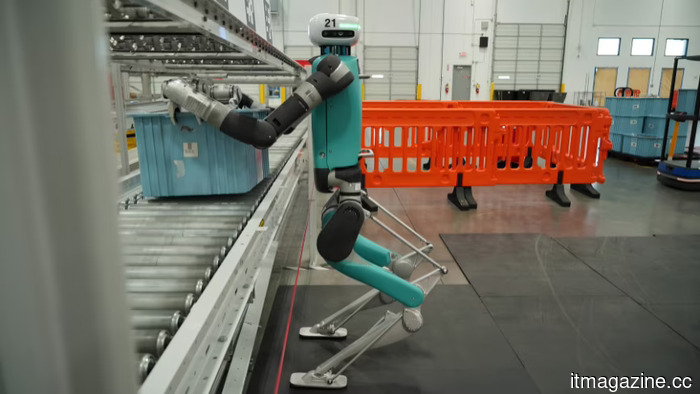 Agility Robotics is said to be going public through a SPAC transaction valued at $2.5 billion.
The creator of the Digit humanoid robot is said to be in discussions to become publicly traded via a SPAC merger that would value the company at approximately $2.5 billion, according to a report by the WSJ.
Agility Robotics is said to be going public through a SPAC transaction valued at $2.5 billion.
The creator of the Digit humanoid robot is said to be in discussions to become publicly traded via a SPAC merger that would value the company at approximately $2.5 billion, according to a report by the WSJ.
YouTube reaches a settlement before the second trial in California regarding social media addiction.
YouTube, owned by Google, has reached a settlement with a teenage plaintiff just weeks ahead of a second bellwether trial in California, allowing Meta, Snap, and TikTok to go to trial.