
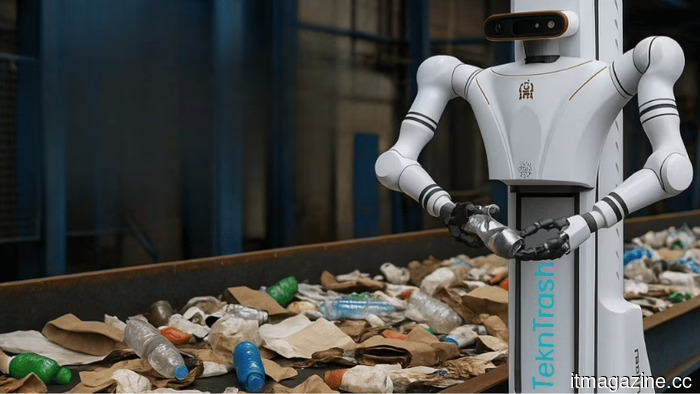
China's forecast for humanoid robots has increased to 50,000.
Morgan Stanley has once again raised its forecast for humanoid robot shipments in China, now predicting 50,000 units for this year. The bank indicates that these robots are transitioning from demonstrations to actual use in factories, retail stores, and restaurants.
Chinese robots are moving out of showrooms and onto the shop floor. According to a report by CNBC, Morgan Stanley has doubled its estimate for humanoid robot shipments in China for the second time this year, now anticipating 50,000 units to be shipped by 2026.
This new estimate shows a significant increase. At the start of the year, the bank predicted 14,000 units, which was later revised to 28,000 in January, demonstrating remarkable growth once again. The acceleration is attributed to the faster-than-expected transition from demo use to commercial application.
In terms of market numbers, Morgan Stanley estimates China’s humanoid market to be worth $2 billion this year, with projections reaching $15 billion by 2030. Additionally, it forecasts annual shipments could reach 446,000 units by then, up from an earlier estimate of 262,000, as reported by SCMP. These figures account for external sales only, excluding prototypes and in-house robots.
“Commercial validation, government support, and feedback from the supply chain indicate a quicker adoption of humanoids in China,” noted Sheng Zhong, an equity analyst at the bank. In summary, there are genuine orders, government assistance, and a steady supply of parts.
Looking at the larger picture, Morgan Stanley anticipates the global humanoid market will expand from around $3 billion in 2025 to $28 billion by 2030. Last year, only about 13,000 humanoid robots were shipped worldwide, based on one industry assessment, so the bank is predicting rapid growth.
The deployments are becoming more practical. Chinese manufacturers are striving to increase production and are integrating humanoids into factories, convenience stores, and restaurants rather than just showcasing them at trade events. Companies like EV maker Xpeng are planning for large-scale production by the end of the year.
Morgan Stanley's own supply-chain analysis supports this trend. Analysts highlighted that factories, logistics centers, unmanned retail spaces, and interactive services are serving as the initial testing grounds. The narrative has shifted from mere spectacle to practical application.
External observers recognize this momentum as well. “If you visit any factory in China today, you’ll find more automation and robotics in use than anywhere else globally,” remarked Joe Ngai, chairman of McKinsey's Greater China region. He referred to humanoids as a potential “next big frontier” for investors.
The ambitions extend beyond traditional roles. BYD aims to have humanoids in its showrooms to assist in selling cars within one to two years, as stated by its deputy head to Business Insider. The focus is no longer solely on industrial applications; it is starting to engage with consumers.
Government involvement plays a significant role in this progress. Beijing has prioritized “embodied AI” for the next five years, encouraging local governments to provide affordable land and office space to startups, and urging banks to offer favorable loan terms.
This support is reflected in market data; last year, Chinese firms accounted for over 80% of the world's humanoid shipments and dominated the top five positions by volume, as reported by Business Insider, citing Omdia. Companies like Unitree led the way, while U.S.-based Figure AI ranked seventh and Tesla was ninth. Tesla is not expected to commence public sales of its Optimus robot until late 2027.
For investors, the bank favors a parts supplier over a robot manufacturer. Morgan Stanley identified Shanghai-listed Leaderdrive as a significant opportunity and raised its 12-month price target to 464 yuan ($68) from 269 yuan. This company provides precision components to humanoid builders such as Ubtech and Galbot, potentially commanding 40% of the global market this year.
This represents a classic “picks and shovels” approach. In a competitive landscape where numerous robot brands contend, suppliers of joints, gears, and manipulators typically benefit regardless of which robots succeed. The bank believes Leaderdrive could retain about a quarter of that market in the long run.
The same rationale is leading robotics firms to enter public markets rapidly. A wave of listings is emerging, with companies like Seer Intelligent now trading in Hong Kong. Seer generates 18% of its revenue from overseas across more than 65 countries, reflecting a rare reach beyond China. The two largest manufacturers, Unitree and AgiBot, are preparing for listings that could value them collectively at around $13 billion.
However, potential challenges could arise from politics. Chinese robot executives indicate that geopolitical tensions and trade uncertainties pose the greatest risks. The U.S. has expressed concern regarding China’s advancements in AI technology and the possibility of reliance on Chinese-made machines.
This complexity makes international expansion more difficult. Chinese companies are exploring various markets and emphasizing compliance
Other articles
 Deezer introduces a remix tool that operates without AI and compensates artists for each stream.
Deezer's Remix Lab enables fans to remix songs with the approval of artists using in-app tools, rather than AI, and provides royalties for every stream of the remixed songs.
Deezer introduces a remix tool that operates without AI and compensates artists for each stream.
Deezer's Remix Lab enables fans to remix songs with the approval of artists using in-app tools, rather than AI, and provides royalties for every stream of the remixed songs.
 By 2028, expenses associated with AI coding might exceed the salaries of developers.
According to Gartner, by 2028, the expenses associated with AI coding will surpass the typical salary of a developer, due to the rise in token usage and consumption-based pricing.
By 2028, expenses associated with AI coding might exceed the salaries of developers.
According to Gartner, by 2028, the expenses associated with AI coding will surpass the typical salary of a developer, due to the rise in token usage and consumption-based pricing.
 The House votes on legislation regarding energy expenses for AI data centers.
Congress is urging Big Tech to take on the energy expenses associated with AI data centers. This week, a House committee will vote on a proposal to prevent the costs of AI expansion from being passed on to household electricity bills.
The House votes on legislation regarding energy expenses for AI data centers.
Congress is urging Big Tech to take on the energy expenses associated with AI data centers. This week, a House committee will vote on a proposal to prevent the costs of AI expansion from being passed on to household electricity bills.
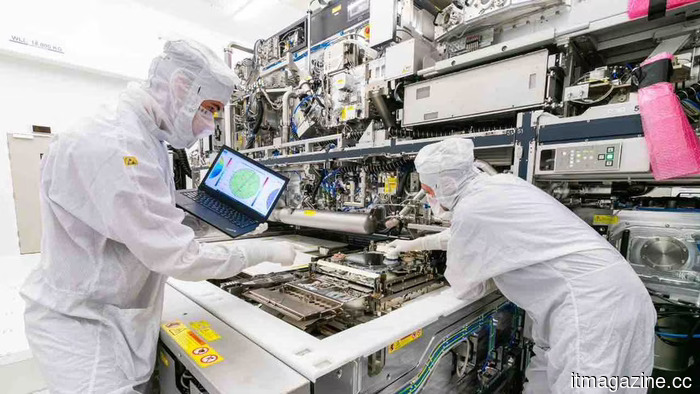 xLight EUV investment: $350 million funding targets ASML.
The xLight EUV gamble: the US-supported startup is seeking to raise $350 million to compete with ASML, while a Dutch company sets its sights on Nvidia.
Mistral OCR 4: an affordable, self-hosted AI for document processing.
Mistral OCR 4 transforms documents into structured data, operates on your own servers, and is priced from $2 for every 1,000 pages. It’s Europe's choice for back-office operations.
xLight EUV investment: $350 million funding targets ASML.
The xLight EUV gamble: the US-supported startup is seeking to raise $350 million to compete with ASML, while a Dutch company sets its sights on Nvidia.
Mistral OCR 4: an affordable, self-hosted AI for document processing.
Mistral OCR 4 transforms documents into structured data, operates on your own servers, and is priced from $2 for every 1,000 pages. It’s Europe's choice for back-office operations.
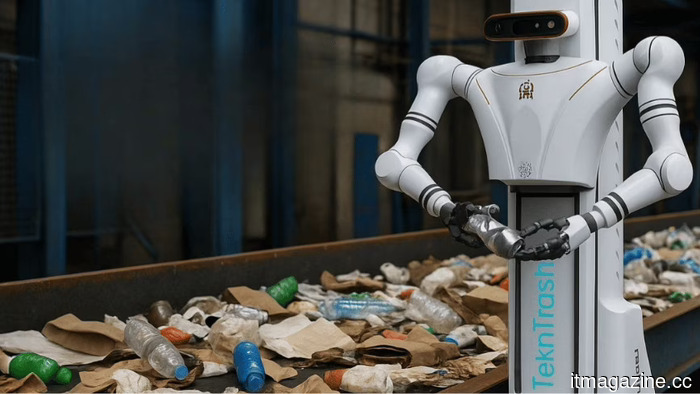 The projection for humanoid robots in China has increased to 50,000.
Morgan Stanley has raised its forecast for humanoid robots in China to 50,000 this year, marking the second increase as these machines are now being utilized in actual factories and stores.
The projection for humanoid robots in China has increased to 50,000.
Morgan Stanley has raised its forecast for humanoid robots in China to 50,000 this year, marking the second increase as these machines are now being utilized in actual factories and stores.
China's forecast for humanoid robots has increased to 50,000.
Morgan Stanley increased its forecast for humanoid robots in China to 50,000 this year, marking its second revision, as these machines become integrated into actual factories and stores.