
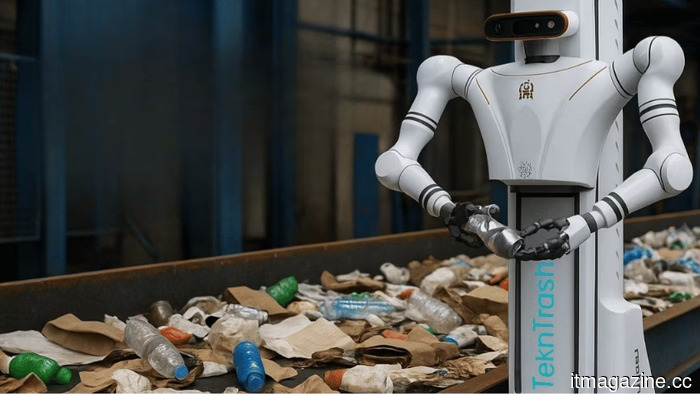
China's projection for humanoid robots has been doubled to 50,000.
Morgan Stanley has once again raised its forecast for shipments of humanoid robots in China, now predicting they will reach 50,000 units this year. The bank notes that these machines are transitioning from demonstration phases to actual use in factories, shops, and restaurants.
Chinese robots are moving from display areas to operational sites. According to a report by CNBC, Morgan Stanley has revised its prediction for humanoid robot shipments in China for the second time this year, increasing their expectation to 50,000 units for 2026.
This revision marks a significant increase. At the beginning of the year, the bank estimated shipments at 14,000 units, which was later raised to 28,000 in January, and has now nearly doubled again. The acceleration is attributed to the rapid shift from demonstrations to commercial utilization, occurring quicker than anticipated.
Market insights reveal that Morgan Stanley values China’s humanoid market at $2 billion this year, projecting it to rise to $15 billion by 2030. The bank now forecasts annual shipments to hit 446,000 units by that time, up from a prior estimate of 262,000, as reported by SCMP. These figures reflect only external sales, excluding prototypes or robots utilized internally by manufacturers.
“Commercial validation, government support, and supply chain feedback indicate a quicker adoption of humanoids in China,” stated Sheng Zhong, an equity analyst at the bank. In essence, there are tangible orders, government assistance, and a steady flow of components.
On a larger scale, Morgan Stanley anticipates the global humanoid market will expand from approximately $3 billion in 2025 to $28 billion by 2030. Last year, only around 13,000 humanoid robots were shipped worldwide, according to one industry estimate, suggesting a steep growth trajectory.
The deployment of humanoids is becoming more practical. Chinese manufacturers are rapidly increasing production and integrating humanoids into factories, convenience stores, and restaurants, moving beyond mere exhibitions. Companies, including electric vehicle maker Xpeng, are planning to initiate mass production by the end of the year.
Morgan Stanley’s own supply chain investigations corroborate this trend. Analysts identified that early applications for humanoids are emerging in factories, logistics centers, unmanned retail outlets, and interactive services. The narrative is shifting from being a showcase to fulfilling everyday work roles.
Outside observers are also witnessing this momentum. “Currently, if you visit any Chinese factory, there's more automation and robotics in use than anywhere else globally,” remarked Joe Ngai, McKinsey’s Greater China chairman. He suggested that humanoids could represent a potential “next big frontier” for investors.
The ambitions extend beyond industrial applications. BYD aims to utilize humanoids on its showroom floors to assist in car sales within the next year or two, as stated by its deputy manager to Business Insider. The focus is shifting from purely industrial applications to customer-facing roles.
Governmental involvement plays a crucial role in this development. Chinese authorities have prioritized “embodied AI,” or intelligence within physical machines, over the next five years. They are encouraging local governments to provide affordable land and office spaces to startups and are urging banks to offer favorable lending conditions.
This support is reflected in the market dynamics, with Chinese companies accounting for over 80% of global humanoid shipments last year and taking the top five positions in terms of volume, as noted by Business Insider and Omdia. Companies such as Unitree have led the charge, while American firms like Figure AI and Tesla ranked seventh and ninth, respectively, with Tesla planning to delay public sales of its Optimus robot until late 2027.
For investors, Morgan Stanley suggests focusing on a parts supplier rather than a robot manufacturer. The bank highlighted Shanghai-listed Leaderdrive as a key winner and raised its 12-month stock target from 269 yuan to 464 yuan ($68). Leaderdrive provides precision components to humanoid creators like Ubtech and Galbot and could capture 40% of the global market this year.
This aligns with the classic strategy of investing in suppliers rather than manufacturers. When numerous robot brands compete, suppliers of parts—such as joints, gears, and hands—tend to benefit regardless of which brands succeed. The bank projects that Leaderdrive could maintain about a quarter of the market in the long term.
The same rationale is driving robotics companies towards public listings. A surge of initial public offerings is emerging as firms like Seer Intelligent are now trading in Hong Kong. Seer generates 18% of its revenue internationally across over 65 countries, marking a rare instance of global outreach beyond China. Major manufacturers like Unitree and AgiBot are also preparing for listings that could collectively value them around $13 billion.
However, there are potential obstacles ahead. Politics could pose a significant challenge. Chinese robot executives cite geopolitical tensions and trade frictions as substantial risks. Concerns in Washington regarding China’s advancements in AI and reliance on Chinese technology have grown.
This environment complicates overseas expansion.
Other articles
 This Roborock robot vacuum has received a significant discount, and it could be the most intelligent home improvement you'll undertake this summer.
Robot vacuums have advanced significantly from the gimmicky devices they used to be. The high-end models available today not only clean your floors but also map your home, navigate around obstacles, mop hard surfaces, and manage one of the most labor-intensive household tasks with minimal effort from homeowners. This is precisely why the Roborock Qrevo S Pro has gained popularity.
This Roborock robot vacuum has received a significant discount, and it could be the most intelligent home improvement you'll undertake this summer.
Robot vacuums have advanced significantly from the gimmicky devices they used to be. The high-end models available today not only clean your floors but also map your home, navigate around obstacles, mop hard surfaces, and manage one of the most labor-intensive household tasks with minimal effort from homeowners. This is precisely why the Roborock Qrevo S Pro has gained popularity.
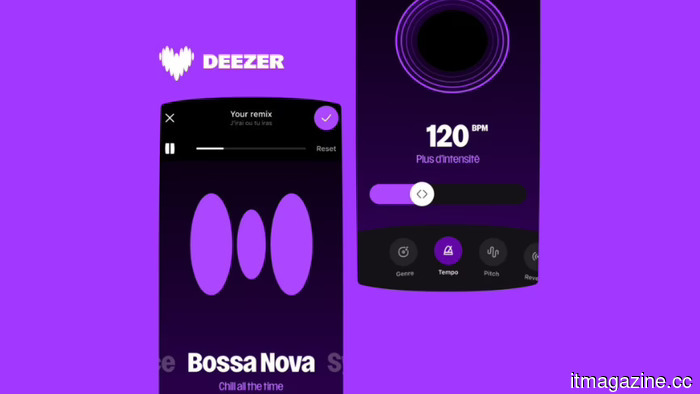 Deezer introduces a remix tool that operates without AI and compensates artists for each stream.
Deezer's Remix Lab enables fans to remix songs with the approval of artists using in-app tools, rather than AI, and provides royalties for every stream of the remixed songs.
Deezer introduces a remix tool that operates without AI and compensates artists for each stream.
Deezer's Remix Lab enables fans to remix songs with the approval of artists using in-app tools, rather than AI, and provides royalties for every stream of the remixed songs.
 Deepfake scams are becoming increasingly severe, and Bitdefender has now launched an app to address the concern.
Bitdefender RealCheck introduces deepfake detection for both Android and iOS, analyzing questionable videos for signs of manipulation and fraudulent intent prior to users sharing clips, clicking links, transferring money, or placing trust in impersonated public figures.
Deepfake scams are becoming increasingly severe, and Bitdefender has now launched an app to address the concern.
Bitdefender RealCheck introduces deepfake detection for both Android and iOS, analyzing questionable videos for signs of manipulation and fraudulent intent prior to users sharing clips, clicking links, transferring money, or placing trust in impersonated public figures.
 At Config 2026, Figma introduced code layers to the canvas, allowing users to create custom AI plugins.
At Config 2026, Figma introduced code layers, animation functionality, AI-generated shaders, personalized skills for its AI assistant, and enhanced Weavy integration.
At Config 2026, Figma introduced code layers to the canvas, allowing users to create custom AI plugins.
At Config 2026, Figma introduced code layers, animation functionality, AI-generated shaders, personalized skills for its AI assistant, and enhanced Weavy integration.
 At Config 2026, Figma introduced code layers on the canvas and enabled users to create custom AI plugins.
At Config 2026, Figma introduced code layers, support for animations, AI-generated shaders, custom capabilities for its AI assistant, and enhanced integration with Weavy.
Mistral OCR 4: an affordable, self-hosted AI for document processing.
Mistral OCR 4 transforms documents into structured data, operates on your own servers, and is priced from $2 for every 1,000 pages. It’s Europe's choice for back-office operations.
At Config 2026, Figma introduced code layers on the canvas and enabled users to create custom AI plugins.
At Config 2026, Figma introduced code layers, support for animations, AI-generated shaders, custom capabilities for its AI assistant, and enhanced integration with Weavy.
Mistral OCR 4: an affordable, self-hosted AI for document processing.
Mistral OCR 4 transforms documents into structured data, operates on your own servers, and is priced from $2 for every 1,000 pages. It’s Europe's choice for back-office operations.
China's projection for humanoid robots has been doubled to 50,000.
Morgan Stanley has increased its forecast for humanoid robots in China to 50,000 this year, marking its second revision, as these machines begin to appear in actual factories and stores.