
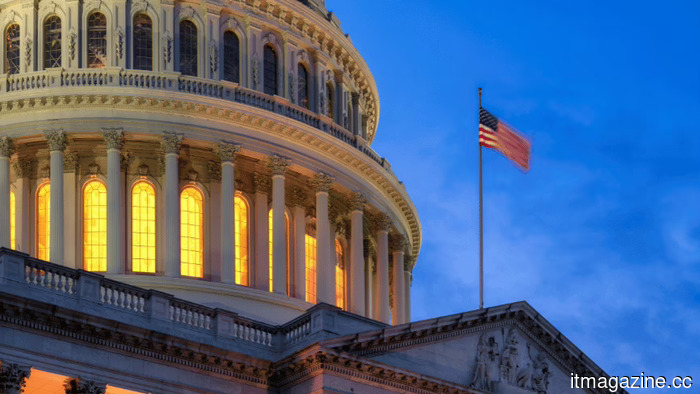
The House votes on legislation regarding energy expenses for AI data centers.
Congress is taking steps to prevent households from bearing the costs of Big Tech's AI energy consumption. A House panel is set to vote this week on a series of measures aimed at assigning energy costs from AI data centers back to the companies that operate them. As the demand for AI increases electricity expenses, Congress is advocating for Big Tech to take on a larger share of the costs. The House Energy and Commerce Committee's energy panel will vote on Wednesday on a package of bills, as reported by POLITICO’s E&E News, focused on addressing the energy costs associated with AI data centers. The intention is to ensure that regular households do not subsidize this expansion.
This marks an initial step, not the completion of new legislation. The subcommittee markup represents just the beginning of a lengthy process. Nonetheless, this initiative is significant, as it is the first occasion that Republican leaders have come together around specific proposals to combat rising data center rates.
What the bills propose
The key piece of legislation is the bipartisan Ratepayer Protection Act, or H.R. 9340. This bill would formalize the principle behind President Trump’s “Ratepayer Protection Pledge,” in which Big Tech companies committed to covering their own energy expenses for data centers. In straightforward terms, data center power costs should be the responsibility of the owners, not local families.
The approach is technical yet straightforward. The bill seeks to amend a utility law from 1978, requiring the largest power consumers to bear the full incremental cost of the grid upgrades that are necessitated by their usage. This will apply to any non-residential site consuming 100 megawatts or more, a threshold aimed at encompassing large data centers.
It even addresses stranded costs, meaning that if a customer disengages, they would still be liable for any upgrades made on their behalf. Republican Rep. Gabe Evans of Colorado is spearheading this initiative, with Democratic Rep. Kathy Castor of Florida acting as a co-sponsor.
A second bill holds a more populist title. The Protecting Families from AI Data Center Energy Costs Act, or H.R. 6529, which comes from Democratic Rep. Greg Landsman of Ohio, is more narrowly focused than its name implies. This legislation would instruct federal energy regulators to gather key stakeholders and devise a strategy to protect residents from increasing energy bills.
The conference would bring together utilities, regulators, and consumer advocates for discussions.
Additional measures
The remainder of the legislative package deals with grid infrastructure. Some bills would encourage regulators to analyze electricity demand forecasting, while others would experiment with AI technologies for grid management or establish standards for enhanced transmission lines. Together, these initiatives constitute the committee's response to a surge that is putting pressure on the system. The markup is scheduled for Wednesday afternoon in the Rayburn building.
Highlighted measures include the Load Forecasting Enhancement Act and the Advanced Transmission Technology to Reduce Rates Act. Although these may not attract significant media attention, both aim to provide better data and infrastructure for the grid to handle future demand.
The reason for urgency
The urgency of the situation can be seen in the numbers. Electricity bills near significant data center locales have surged by as much as 267% over the past five years, according to CNBC. Data centers now consume 4% to 5% of all electricity in the U.S., a figure that is rapidly increasing.
The main operators are well-known. Companies like Amazon, Google, Meta, Microsoft, and Elon Musk’s xAI are among the top data center operators. Their ambitions in AI require vast amounts of electricity, and someone needs to bear the cost of supply. The debate centers around who that should be.
The bills reflect a straightforward concern: when a utility spends billions to provide infrastructure for a data center, those costs can ultimately fall on the monthly bills of all customers. Legislators want the companies that requested the additional power to bear that financial responsibility instead. The pledge established that commitment, and the bills aim to enforce it.
A rare bipartisan occurrence
The political landscape is quite different in this instance. “America must win the race for AI dominance with China,” stated Brett Guthrie, the Republican committee chair. He framed the bills as a means to “protect ratepayers from rising electricity costs.”
The responsibility for the markup falls to Rep. Bob Latta, the Republican from Ohio who chairs the energy subcommittee. He will navigate the package through its initial vote. Having Republicans support a concept of shifting costs indicates a notable change in the party’s stance.
Democrats highlight the public sentiment driving this change. Kathy Castor, a co-sponsor of the ratepayer bill, mentioned that Republicans are responding to “populist anger” from voters. “The public is outraged,” she stated. “They are very concerned about increasing electricity expenses.”
This anger is palpable in communities. Grassroots movements have successfully blocked numerous data center projects, worth billions, as localities resist the impact of these developments.
Regulatory actions are also underway
Congress
Other articles
 I would take advantage of this 8BitDo Prime Day keyboard offer before purchasing another dull gaming keyboard.
8BitDo’s mechanical keyboard, inspired by Xbox, is now available at a discounted price for Prime Day. It combines a transparent green design that evokes nostalgia, wireless connectivity, hot-swappable switches, and an 87-key layout, making it a more appealing option for upgrading your desk.
I would take advantage of this 8BitDo Prime Day keyboard offer before purchasing another dull gaming keyboard.
8BitDo’s mechanical keyboard, inspired by Xbox, is now available at a discounted price for Prime Day. It combines a transparent green design that evokes nostalgia, wireless connectivity, hot-swappable switches, and an 87-key layout, making it a more appealing option for upgrading your desk.
 What features contribute to a laptop's effectiveness for remote work?
This article is presented in collaboration with Dell. The rise of remote and hybrid work has altered what individuals anticipate from a laptop. Many professionals no longer spend their entire day at a single desk. A standard work routine now includes morning Zoom or Microsoft Teams meetings, multiple browser tabs alongside Slack and email, and the need to move around.
What features contribute to a laptop's effectiveness for remote work?
This article is presented in collaboration with Dell. The rise of remote and hybrid work has altered what individuals anticipate from a laptop. Many professionals no longer spend their entire day at a single desk. A standard work routine now includes morning Zoom or Microsoft Teams meetings, multiple browser tabs alongside Slack and email, and the need to move around.
 EXCLUSIVE: Sam C. Wilson, a star of Masters of the Universe, discusses the film's striking visuals, action sequences, and practical effects.
In a special interview, Sam C. Wilson, the star of Masters of the Universe, shares insights about portraying the antagonist Trap-Jaw, the film's practical effects, stunt performance, and his collaboration with director Travis Knight.
EXCLUSIVE: Sam C. Wilson, a star of Masters of the Universe, discusses the film's striking visuals, action sequences, and practical effects.
In a special interview, Sam C. Wilson, the star of Masters of the Universe, shares insights about portraying the antagonist Trap-Jaw, the film's practical effects, stunt performance, and his collaboration with director Travis Knight.
 I compiled a list of the top laptop deals for Prime Day 2026, and these five are my top picks.
After reviewing all the options on Amazon, I've compiled a shortlist of Prime Day 2026 laptop deals, ranging from a $499.99 student laptop to a $1,239.99 gaming rig.
I compiled a list of the top laptop deals for Prime Day 2026, and these five are my top picks.
After reviewing all the options on Amazon, I've compiled a shortlist of Prime Day 2026 laptop deals, ranging from a $499.99 student laptop to a $1,239.99 gaming rig.
 Ferrari has changed its marketing head just a month after the Luce EV unveiling caused a significant drop in its stock value, erasing billions.
Enrico Galliera, Ferrari's CMO for many years, is departing after 16 years. He will be succeeded by former BMW Italy chief Di Silvestre, who will begin on July 1.
Ferrari has changed its marketing head just a month after the Luce EV unveiling caused a significant drop in its stock value, erasing billions.
Enrico Galliera, Ferrari's CMO for many years, is departing after 16 years. He will be succeeded by former BMW Italy chief Di Silvestre, who will begin on July 1.
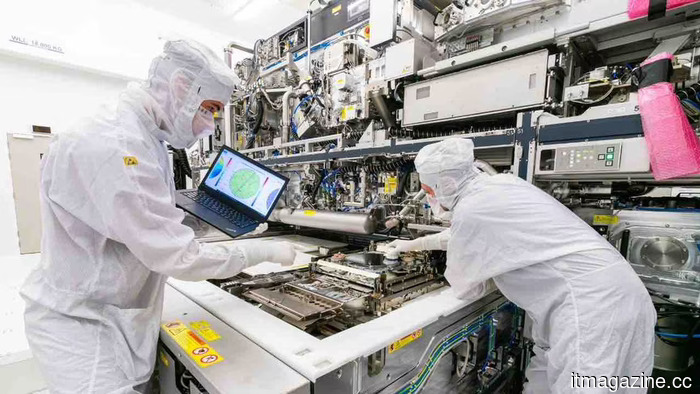 xLight EUV wager: $350 million funding targets ASML.
The xLight EUV bet: The US-supported startup is seeking to raise $350 million to compete with ASML, while a Dutch company sets its sights on Nvidia.
xLight EUV wager: $350 million funding targets ASML.
The xLight EUV bet: The US-supported startup is seeking to raise $350 million to compete with ASML, while a Dutch company sets its sights on Nvidia.
The House votes on legislation regarding energy expenses for AI data centers.
Congress is urging Big Tech to take on the energy expenses associated with AI data centers. This week, a House committee will vote on a proposal to prevent the costs of AI expansion from being passed on to household electricity bills.