

The dominance of Google is beginning to wane in the age of AI.
TL;DR: Google achieved its fastest revenue growth since 2022 while maintaining a 90% share of the search market. However, talent departures, increasing competition, regulatory actions, and its own shift towards AI are threatening its dominance. ChatGPT and Bing both recently surpassed one billion users, and DuckDuckGo has seen a surge in installations.
Google's financial results are at an all-time high, with Alphabet reporting $109.9 billion in revenue for Q1 2026, marking a 22% year-on-year increase and the fastest growth since 2022. Search advertising revenue increased by 19.1%, and search queries reached an all-time peak. Despite this, just prior to the announcement, the company's stock faced its worst decline in over a year, dropping around 7% following the exit of two key AI researchers to competitors. This presents a paradox for Google: it is performing well financially while potentially losing critical ground in the future.
The talent drain has raised concerns among investors, notably with the departure of Noam Shazeer, a vice president of engineering instrumental in developing the Transformer architecture, who joined OpenAI. Shortly after, John Jumper, a Nobel laureate and Google DeepMind vice president known for the AlphaFold2 protein-folding system, left for Anthropic. These high-profile exits reportedly wiped about $250 billion from Alphabet's market capitalization.
Competitors are on the rise, with ChatGPT achieving over one billion monthly active users in May 2026, making it the fastest app to reach this milestone per Sensor Tower estimates reported by Reuters. It consistently tops Apple’s iOS App Store as the leading free app, while Anthropic’s Claude ranks eighth, just behind Google’s Gemini. Microsoft’s Bing also crossed one billion monthly active users last quarter, although it holds only 5% of the global search market, indicating that many of these users may be infrequent or using Bing as a default. DuckDuckGo has seen substantial installation growth following Google's I/O announcement in May, with a peak increase of approximately 70% on iOS as users search for alternatives to AI-heavy search results.
Google's competitive challenges are worsened by structural issues. At its May I/O event, Google introduced a vision for search focused on AI agents rather than traditional links, a shift it deems essential, but one that risks disrupting the financial model supporting it. AI Overviews now appear in about half of search queries and studies indicate a 34.5% average decrease in organic click-through rates when they are included. While Google claims AI Overviews monetize similarly to traditional search, its own network advertising revenue, which depends on external site traffic, dipped by 4% in Q1.
On the regulatory front, Google’s search market share has fallen from 92.9% in 2023 to approximately 89.6%, the largest decline in its history. A U.S. federal court ruled that the company illegally maintained its search monopoly through exclusive default agreements. The enforcement measures introduced in September 2025 prohibited such exclusive contracts and initiated a data-sharing requirement, although the judge denied the Department of Justice’s request for a Chrome divestiture. Both parties have appealed, with oral arguments anticipated in late 2026 or early 2027. Morgan Stanley analysts project that mandatory choice screens could cost Google 5-8% of its search traffic over three years, potentially risking $15-25 billion in annual advertising revenue.
The broader concern revolves around the future of the internet that Google developed. Nearly 60% of Google’s search results now conclude without directing users to any external website, with German courts already holding Google accountable for the content its AI Overviews produce. Publishers who relied on Google for traffic are witnessing a decrease in referrals as the company incorporates their content into AI-generated responses. The open web, which Google’s advertising model was designed to capitalize on, is being eroded by the very AI features the company claims are necessary for competitiveness.
Google is relying on its ability to navigate the antitrust measures, retain sufficient talent to remain at the forefront, and develop an AI-first search product that continues to attract advertising at current rates. It is, paradoxically, the most profitable search company in history while also facing significant risks from the ongoing evolution of search.
Other articles
 Meta's new prediction market application, Arena, has the potential to introduce betting to 3 billion users.
According to the New York Times, Mark Zuckerberg instructed Meta to develop a prediction market application named Arena to rival Polymarket and Kalshi.
Meta's new prediction market application, Arena, has the potential to introduce betting to 3 billion users.
According to the New York Times, Mark Zuckerberg instructed Meta to develop a prediction market application named Arena to rival Polymarket and Kalshi.
 Stark Defence secures €500 million in funding, spearheaded by Sequoia and Founders Fund, with a valuation exceeding €3.5 billion.
Berlin-based drone manufacturer Stark Defence secured €500 million from Sequoia and Founders Fund, giving the two-year-old kamikaze drone startup a valuation exceeding three billion euros.
Stark Defence secures €500 million in funding, spearheaded by Sequoia and Founders Fund, with a valuation exceeding €3.5 billion.
Berlin-based drone manufacturer Stark Defence secured €500 million from Sequoia and Founders Fund, giving the two-year-old kamikaze drone startup a valuation exceeding three billion euros.
 HaloBraid secures $7 million to develop the first robotic hair braiding assistant for salons.
HaloBraid secured $7 million in funding, led by Alexis Ohanian's firm Seven Seven Six, to develop a robotic assistant that completes braids in seconds for salon professionals.
HaloBraid secures $7 million to develop the first robotic hair braiding assistant for salons.
HaloBraid secured $7 million in funding, led by Alexis Ohanian's firm Seven Seven Six, to develop a robotic assistant that completes braids in seconds for salon professionals.
 I discovered the top Prime Day headphone bargains that are worth your investment and avoided the low-quality options.
Prime Day is bursting with headphone offers, but I would prioritize checking these discounts from Sony, Bose, Sennheiser, JBL, and Beats first.
I discovered the top Prime Day headphone bargains that are worth your investment and avoided the low-quality options.
Prime Day is bursting with headphone offers, but I would prioritize checking these discounts from Sony, Bose, Sennheiser, JBL, and Beats first.
 Honda has reached a multiyear agreement for solid-state batteries with QuantumScape after discontinuing its electric vehicle lineup.
Honda R&D has entered into a joint research agreement with QuantumScape to work on solid-state batteries, becoming the second large automaker, following Volkswagen, to do so.
Honda has reached a multiyear agreement for solid-state batteries with QuantumScape after discontinuing its electric vehicle lineup.
Honda R&D has entered into a joint research agreement with QuantumScape to work on solid-state batteries, becoming the second large automaker, following Volkswagen, to do so.
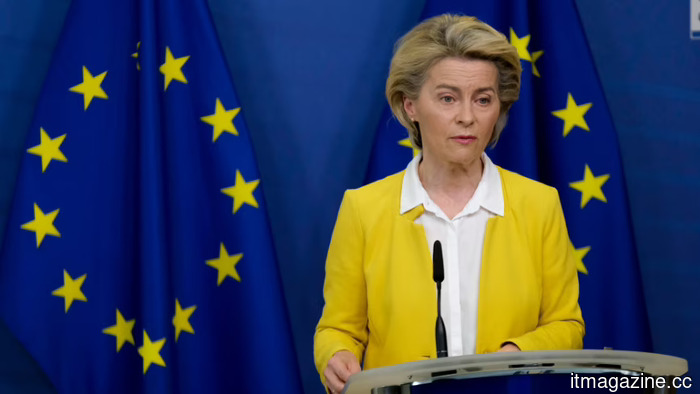 CEOs of Europe's largest tech companies establish a lobbying group to engage with von der Leyen.
Airbus, ASML, Ericsson, Mistral, Nokia, SAP, and Siemens are urging the EU to expedite regulatory changes, reconsider merger regulations, and establish European champions to prevent the US and China from advancing further.
CEOs of Europe's largest tech companies establish a lobbying group to engage with von der Leyen.
Airbus, ASML, Ericsson, Mistral, Nokia, SAP, and Siemens are urging the EU to expedite regulatory changes, reconsider merger regulations, and establish European champions to prevent the US and China from advancing further.
The dominance of Google is beginning to wane in the age of AI.
Google maintains a 90% share of the search market and recently reported record earnings; however, the departure of talent, the rise of ChatGPT, and antitrust measures are gradually undermining its dominance.