
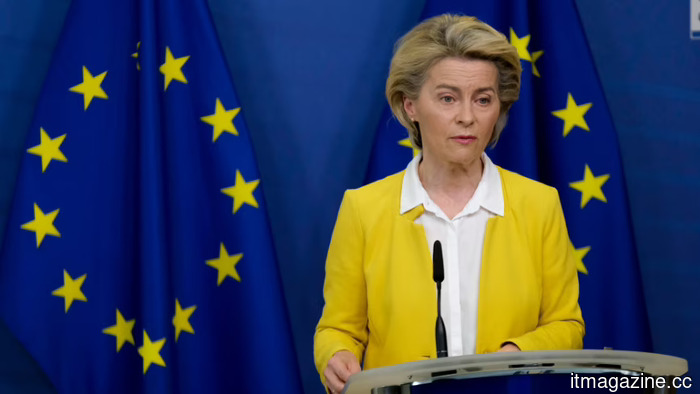
CEOs of Europe's largest tech companies establish a lobbying group to engage with von der Leyen.
**TL;DR:** Seven major European tech companies have established a permanent lobbying group known as the European Tech Creators, which has direct access to European Commission President von der Leyen. The group advocates for quicker deregulation, simplified mergers, and a fully realized single market. However, this arrangement has faced scrutiny regarding the close ties between corporations and policymaking.
Seven of Europe’s largest tech firms have formed a lasting communication channel with European Commission President Ursula von der Leyen, urging the EU to accelerate deregulation and enable consolidation among European companies. This coalition, named the European Tech Creators, collectively generates €417 billion in annual revenue, has a market capitalization of almost €1.1 trillion, and employs nearly a million individuals globally.
“You can’t create very complex policies and then claim you’re going to simplify them,” stated ASML's CEO Christophe Fouquet to reporters in Brussels on Monday. “It’s far better to implement the correct policy from the outset.”
**What the group seeks**
The group's message is clear: Europe is risking its relevance through excessive regulation. Fouquet, along with Airbus CEO Guillaume Faury, outgoing Ericsson CEO Börje Ekholm, and Mistral co-founder Arthur Mensch, met with von der Leyen to advocate for fewer regulations, streamlined mergers, and a finalized single market.
“We’ve allowed the market to become completely fragmented, preventing anyone from achieving the necessary scale to be competitive,” Ekholm remarked, reflecting longstanding grievances from the telecom sector that Europe's more than 100 operators cater to an average of five million customers each, in contrast to the 450 million per operator in China.
**Initial outcomes**
The group seems to be making progress. The European Tech Creators met von der Leyen in late April, and within a week, EU institutions began advancing towards an agreement on the Digital Omnibus concerning AI, which delays obligations for high-risk AI systems by 16 months and extends the simplified compliance framework to companies with up to 750 employees.
The provisional agreement reached on May 7 was the first set of changes to the AI Act since its approval in 2024. While the timeline is influenced by industry lobbying, Germany had also been advocating for lighter regulations independently, so the overlap has not gone unnoticed.
**Speed as a critical factor**
“In AI, developments are occurring at an exceptionally rapid pace,” Mensch commented. “Our issue is that in two years, it might already be too late.” He mentioned that the Commission’s latest proposal on cloud and AI development is a positive step, but it is progressing too slowly. Fouquet has cautioned that Europe is “quite behind” in AI, noting that the U.S. procures 80 percent of the world's most advanced chips.
**Concerns over closeness**
Not everyone is comfortable with this arrangement. The recent appointment of Siemens chairman Jim Hagemann Snabe as the EU’s special envoy for industrial AI by von der Leyen faced criticism from center-left MEPs and watchdog organizations, who argued that the Commission is too closely aligned with the companies it oversees. Snabe reportedly holds stock in the U.S. AI firm C3.ai and serves on the board of Temasek Holdings, which has stakes in Amazon, Nvidia, and Alibaba, according to the Corporate Europe Observatory. The Commission has stated that it sees no conflict of interest with his role at Siemens, and the position is unpaid.
Fouquet defended the appointment, stating that the president “sought out someone from the industry to assist, and that individual chose to accept the position.” He added: “The only way we can respond to that decision is by labeling that person as having a conflict of interest.”
**Implications for Europe**
The model established by the European Tech Creators, consisting of a permanent group of CEOs with regular access to the Commission president, reflects the government-industry relationships that the group admires in Washington and Beijing. Airbus CEO Faury articulated it succinctly: “If this is lobbying, it’s lobbying for a successful Europe.”
Whether Europe’s current push for deregulation yields true competitiveness or merely facilitates lighter oversight of its largest incumbents will depend on which policies the group influences and which ones it manages to thwart. The Commission has also released draft revised merger guidelines, representing the most extensive overhaul in 20 years, which could facilitate consolidation among European firms.
Other articles
 Oracle eliminates 21,000 positions, with an SEC filing attributing the decision to AI.
Oracle reduced its workforce by 13% while investing $55.7 billion in data centers. Its SEC filing specifically attributes the job cuts to the adoption of AI.
Oracle eliminates 21,000 positions, with an SEC filing attributing the decision to AI.
Oracle reduced its workforce by 13% while investing $55.7 billion in data centers. Its SEC filing specifically attributes the job cuts to the adoption of AI.
 Stark Defence has secured €500 million in funding, led by Sequoia and Founders Fund, with a valuation exceeding €3.5 billion.
Berlin-based drone manufacturer Stark Defence secured €500 million in funding from Sequoia and Founders Fund, which places the two-year-old kamikaze drone startup's valuation at over three billion euros.
Stark Defence has secured €500 million in funding, led by Sequoia and Founders Fund, with a valuation exceeding €3.5 billion.
Berlin-based drone manufacturer Stark Defence secured €500 million in funding from Sequoia and Founders Fund, which places the two-year-old kamikaze drone startup's valuation at over three billion euros.
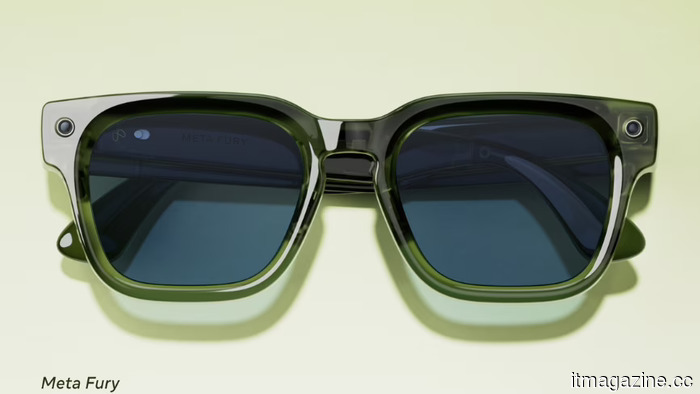 Meta introduces its own line of smart glasses priced at $299, moving away from the Ray-Ban branding.
Meta launches $299 smart glasses featuring a 12MP camera, 3K video, and Muse Spark AI, while maintaining its partnership with EssilorLuxottica.
Meta introduces its own line of smart glasses priced at $299, moving away from the Ray-Ban branding.
Meta launches $299 smart glasses featuring a 12MP camera, 3K video, and Muse Spark AI, while maintaining its partnership with EssilorLuxottica.
 The dominance of Google is beginning to wane in the age of AI.
Google maintains a 90% share of the search market and recently reported record earnings; however, the departure of talent, the rise of ChatGPT, and antitrust measures are gradually undermining its dominance.
The dominance of Google is beginning to wane in the age of AI.
Google maintains a 90% share of the search market and recently reported record earnings; however, the departure of talent, the rise of ChatGPT, and antitrust measures are gradually undermining its dominance.
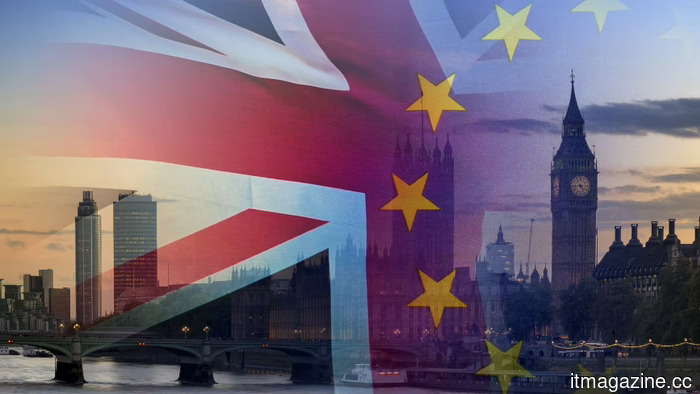 Brexit after ten years: seven Prime Ministers, a 6% reduction in GDP, and an escalating cost.
Ten years following the Brexit referendum, a study by the NBER reveals that the UK economy is 6-8% smaller than it would have been had it remained in the EU. There have been seven prime ministers, a decline in the value of the pound, and a looming demographic challenge.
Brexit after ten years: seven Prime Ministers, a 6% reduction in GDP, and an escalating cost.
Ten years following the Brexit referendum, a study by the NBER reveals that the UK economy is 6-8% smaller than it would have been had it remained in the EU. There have been seven prime ministers, a decline in the value of the pound, and a looming demographic challenge.
 The MLRO of CryptoProcessing discusses why access to banking remains the largest hurdle for the cryptocurrency sector.
Cryptocurrency companies have dedicated years to persuading banks that partnering with them is secure. Despite the increased regulation developed over the past few years, many of these companies continue to face rejection. Jelizaveta Paskovskaja,
The MLRO of CryptoProcessing discusses why access to banking remains the largest hurdle for the cryptocurrency sector.
Cryptocurrency companies have dedicated years to persuading banks that partnering with them is secure. Despite the increased regulation developed over the past few years, many of these companies continue to face rejection. Jelizaveta Paskovskaja,
CEOs of Europe's largest tech companies establish a lobbying group to engage with von der Leyen.
Airbus, ASML, Ericsson, Mistral, Nokia, SAP, and Siemens are urging the EU to expedite regulatory changes, reconsider merger regulations, and establish European champions to prevent the US and China from advancing further.