
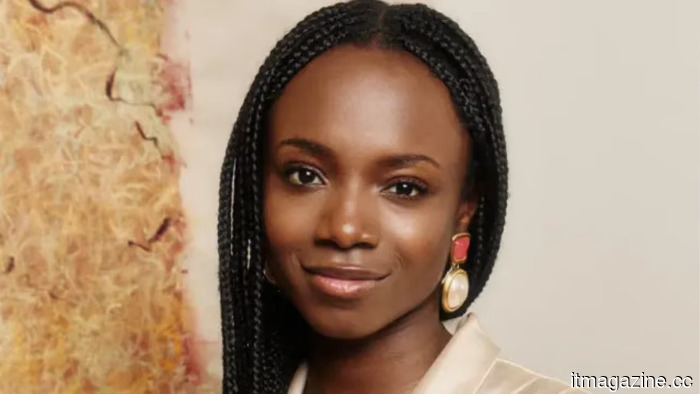
HaloBraid secures $7 million to develop the first robotic hair braiding assistant for salons.
TL;DRHaloBraid raised $7 million from Seven Seven Six to create a robotic braiding assistant for salons, set to launch later this year.
HaloBraid, a robotics company developing an automated braiding assistant for hair salons, has secured $7 million in a seed funding round led by Alexis Ohanian’s venture firm, Seven Seven Six. The assistant collaborates with professional stylists, who begin each braid manually before handing it off to HaloBraid to complete in seconds. The startup aims to introduce its first product to salons later this year.
Founder Yinka Ogunbiyi, who has an MS in engineering and an MBA from Harvard, conceived the idea during the COVID-19 pandemic while attempting to braid her own hair in her London apartment—a task that took her four days. With a background in founding a smart cooking appliance company, she approached hair braiding as an engineering problem, examining the mechanics of a largely manual process that has persisted for centuries.
The market potential is greater than many might assume. Ogunbiyi discovered that people spend an estimated eight billion hours annually on hair braiding. In a survey of 2,000 individuals, 95% indicated they would braid their hair more frequently if the process took less time. A single braiding appointment can take between six to twelve hours, limiting the number of clients stylists can attend to in a day.
The physical toll on professionals is considerable. Braiders are prone to higher rates of carpal tunnel syndrome and arthritis from the repetitive motions required by their work. HaloBraid’s device aims to alleviate this strain by automating the most labor-intensive part of braiding, completing it approximately five times faster than a human.
While Ogunbiyi has not revealed specific details about the device due to pending patents, she noted that hair is particularly challenging to manipulate. Developing the technology involved techniques from material science and inkjet printing, among other fields. The startup previously won Harvard’s President’s Innovation Challenge and received a $75,000 grand prize before its seed round.
Ohanian's interest in this sector is personal, as he is married to Serena Williams and his two daughters often wear braided hairstyles. He observed the investment as part of a broader belief that hardware startups are currently in a strong investment cycle, comparing HaloBraid to other companies in his portfolio, such as rocket maker Stoke Space and asteroid mining firm AstroForge.
He also cited Dyson as a benchmark for what happens when engineering skills are applied to neglected personal care sectors, highlighting that tools for textured hair remain an underexplored market despite the existing demand.
The competitive market is sparse, with Braidiant being the most significant competitor, another automated braiding device. However, development has been slow due to the mechanical challenges posed by working with hair, especially in a complicated process like braiding that requires precise tension, consistent patterns, and careful handling of diverse hair textures.
HaloBraid’s team of about 15 will utilize the funding for product development, manufacturing, and establishing partnerships with salons in preparation for launch. Additionally, the company is already considering a product to undo braids, which can take nearly as long as the braiding process itself.
Consumer robotics is gaining renewed interest from both founders and investors after being deemed too capital-intensive for venture returns in the past. HaloBraid exemplifies this trend, being a hardware device focused on a specific, high-frequency task within a largely ignored market. The startup believes that the venture capital mentality toward physical products has shifted, suggesting that a robot braider serving a $42 billion global hair industry presents a more sustainable business opportunity than a software dashboard.
The ability of HaloBraid to navigate manufacturing, salon adoption, and the realities of running a hardware startup will be crucial in determining if the device can reach the millions of people who currently endure lengthy braiding sessions. Ogunbiyi emphasizes the ambition beyond the initial product: "HaloBraid is our first product, but our larger vision is to create breakthrough technology that makes textured haircare faster, easier, more comfortable, and more joyful."
Other articles
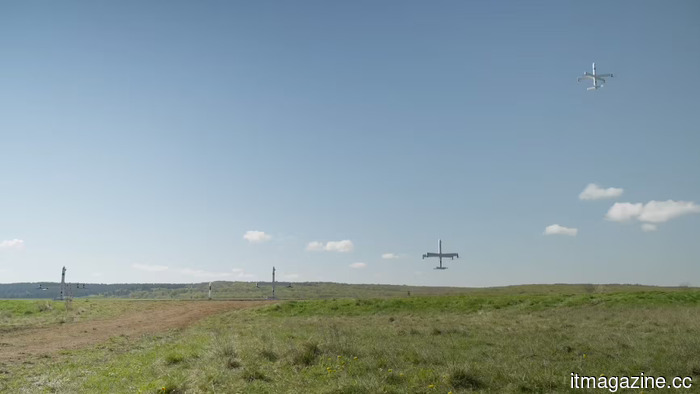 Stark Defence secures €500 million in funding, spearheaded by Sequoia and Founders Fund, with a valuation exceeding €3.5 billion.
Berlin-based drone manufacturer Stark Defence secured €500 million from Sequoia and Founders Fund, giving the two-year-old kamikaze drone startup a valuation exceeding three billion euros.
Stark Defence secures €500 million in funding, spearheaded by Sequoia and Founders Fund, with a valuation exceeding €3.5 billion.
Berlin-based drone manufacturer Stark Defence secured €500 million from Sequoia and Founders Fund, giving the two-year-old kamikaze drone startup a valuation exceeding three billion euros.
 I navigated through the Prime Day frenzy to uncover the top Apple deals that are truly worthwhile.
Explore the top Apple Prime Day 2026 offers. Get the M5 MacBook Air for $949, AirPods Max 2 for $399, AirPods 4 starting at $99, and the iPad Air for $519.
I navigated through the Prime Day frenzy to uncover the top Apple deals that are truly worthwhile.
Explore the top Apple Prime Day 2026 offers. Get the M5 MacBook Air for $949, AirPods Max 2 for $399, AirPods 4 starting at $99, and the iPad Air for $519.
 LastPass reports that customer data was compromised due to a supply chain breach involving Klue.
LastPass informed its customers that personal information and support cases were compromised following a breach at Klue, where hackers exploited stolen OAuth tokens to gain access to Salesforce.
LastPass reports that customer data was compromised due to a supply chain breach involving Klue.
LastPass informed its customers that personal information and support cases were compromised following a breach at Klue, where hackers exploited stolen OAuth tokens to gain access to Salesforce.
 Oracle reduces workforce by 21,000, citing AI in SEC filing.
Oracle reduced its workforce by 13% while investing $55.7 billion in data centers. Its filing with the SEC clearly states that the integration of AI is the reason for the job losses.
Oracle reduces workforce by 21,000, citing AI in SEC filing.
Oracle reduced its workforce by 13% while investing $55.7 billion in data centers. Its filing with the SEC clearly states that the integration of AI is the reason for the job losses.
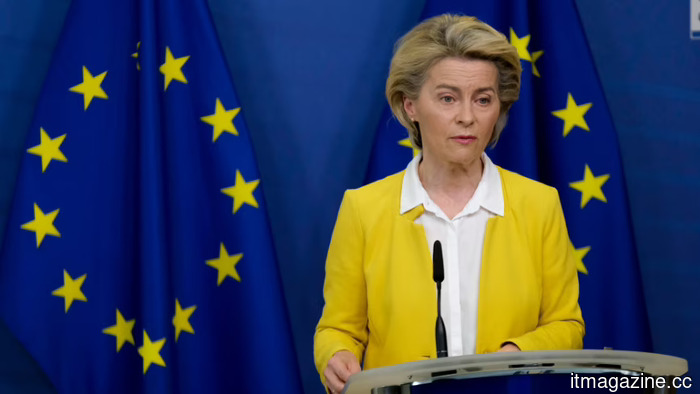 CEOs of Europe's largest tech companies establish a lobbying group to engage with von der Leyen.
Airbus, ASML, Ericsson, Mistral, Nokia, SAP, and Siemens are urging the EU to expedite regulatory changes, reconsider merger regulations, and establish European champions to prevent the US and China from advancing further.
CEOs of Europe's largest tech companies establish a lobbying group to engage with von der Leyen.
Airbus, ASML, Ericsson, Mistral, Nokia, SAP, and Siemens are urging the EU to expedite regulatory changes, reconsider merger regulations, and establish European champions to prevent the US and China from advancing further.
 The MLRO of CryptoProcessing discusses why access to banking remains the most significant hurdle for cryptocurrency.
Cryptocurrency companies have invested years in persuading banks that they are reliable partners for business. Despite the increased regulation compared to previous years, many of these firms continue to be rejected. Jelizaveta Paskovskaja,
The MLRO of CryptoProcessing discusses why access to banking remains the most significant hurdle for cryptocurrency.
Cryptocurrency companies have invested years in persuading banks that they are reliable partners for business. Despite the increased regulation compared to previous years, many of these firms continue to be rejected. Jelizaveta Paskovskaja,
HaloBraid secures $7 million to develop the first robotic hair braiding assistant for salons.
HaloBraid secured $7 million in funding, led by Alexis Ohanian's firm Seven Seven Six, to develop a robotic assistant that completes braids in seconds for salon professionals.