

OpenAI's minimal balance sheet encounters a challenging prospect for an IPO.
OpenAI's financial records indicate no debt and a quarterly capital expenditure of only $46 million. However, as reported by The Information, there is a significant caveat: approximately $665 billion in commitments that are not reflected on the balance sheet, soon to be examined by regulators.
On the surface, OpenAI appears to operate as a streamlined software company, but the actual situation is much more complex. As of March 31, the creator of ChatGPT had no debt and lease liabilities totaling under $750 million, based on a review of its financial disclosures by The Information. Its capital expenditures for the quarter amounted to just $46 million, which is less than that of Salesforce, a firm that focuses solely on software products.
These figures are striking, especially for a company that relies heavily on hardware.
The $665 billion hidden off the books pertains to commitments that, while substantial, do not count as debt. OpenAI faces around $665 billion in purchase commitments primarily related to computing resources, such as long-term contracts for renting the data centers and chips utilized by its models. The organization depends on major providers like Microsoft, Oracle, and Amazon, as well as collaborations with entities like Stargate and Fluidstack for this capacity. These obligations are significant and real, though they are not visible to investors at a glance.
This arrangement brings about another question: who are the counterparties in these agreements? Approximately 72% of OpenAI's revenue-related expenses go to related parties, including Microsoft, which is both a key investor in OpenAI and one of its main suppliers. Such concentrated relationships may raise concerns regarding potential conflicts of interest—exactly the kind of situation public-market regulators often scrutinize.
This situation is emerging as OpenAI prepares for an initial public offering (IPO). The company filed confidentially with the SEC on June 8, just a week after its competitor Anthropic, with Goldman Sachs and Morgan Stanley spearheading the offering. The filing valued OpenAI at around $852 billion, and analysts suggest that a public debut could elevate its worth beyond $1 trillion, possibly this fall. This comes on the heels of SpaceX's IPO in June, which set a record for the largest offering.
The filing also provides financial regulators with their first insights into OpenAI's accounting practices and its intricate business relationships.
The valuation needs to align with its growth prospects, which is currently lacking. OpenAI anticipates that its advertising revenue will soar from $2.4 billion this year to $102 billion by 2030, at which point ads would constitute over a third of its overall sales. The advertising agency WPP predicts that the total market for AI-related search and chatbot advertising will be around $101 billion by 2030, a figure that already includes Google. Essentially, OpenAI forecasts that it can independently capture a market that the entire industry will be vying for.
In summary, OpenAI is still experiencing substantial cash outflows, having spent approximately $34 billion last year and consumed $3.7 billion in just the first three months of 2026. A tidy balance sheet typically instills confidence in investors, but this situation may do the contrary. The absence of debt is insignificant in light of the $665 billion in commitments lurking just beyond the surface. Skeptics caution that any misstep by OpenAI could have a cascading effect throughout the entire AI supply chain.
Другие статьи
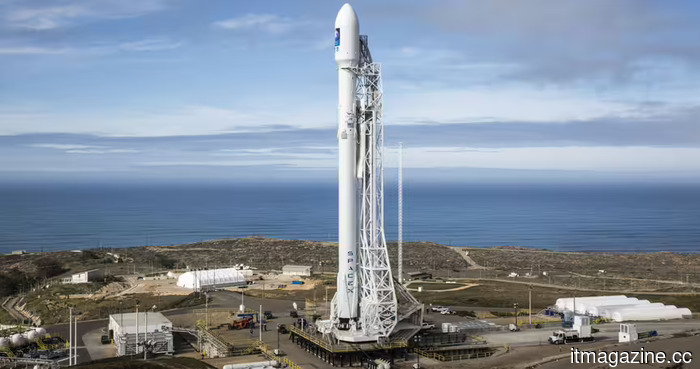 SpaceX launches its first sale of investment-grade bonds.
Just days after its record-breaking IPO, SpaceX is set to raise at least $20 billion through its inaugural investment-grade bond sale to finance a significant expansion of its AI data center.
SpaceX launches its first sale of investment-grade bonds.
Just days after its record-breaking IPO, SpaceX is set to raise at least $20 billion through its inaugural investment-grade bond sale to finance a significant expansion of its AI data center.
 UPS allocates $48 million to cold chain investments amid the rise in biologics.
UPS is enhancing 27 temperature-controlled freight centers across three continents due to the rising demand for biologics and GLP-1 medications, which is fueling a boom in the pharmaceutical cold chain market.
UPS allocates $48 million to cold chain investments amid the rise in biologics.
UPS is enhancing 27 temperature-controlled freight centers across three continents due to the rising demand for biologics and GLP-1 medications, which is fueling a boom in the pharmaceutical cold chain market.
 JD.com plans to replace its 700,000 delivery couriers with robots.
Richard Liu, the founder of JD.com, stated that the company's robots will eventually replace its 700,000 couriers, but he promises to provide retraining for them.
JD.com plans to replace its 700,000 delivery couriers with robots.
Richard Liu, the founder of JD.com, stated that the company's robots will eventually replace its 700,000 couriers, but he promises to provide retraining for them.
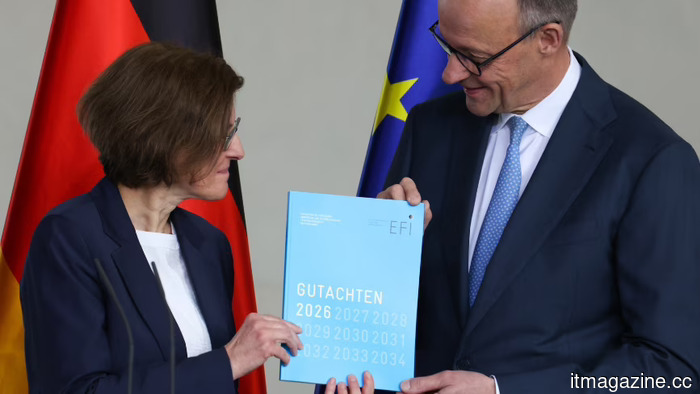 Germany informs Trump: no moon landing without European technology.
Germany's space minister has stated that NASA's Artemis missions rely on hardware manufactured in Germany, amid an escalating transatlantic technology sovereignty conflict.
Germany informs Trump: no moon landing without European technology.
Germany's space minister has stated that NASA's Artemis missions rely on hardware manufactured in Germany, amid an escalating transatlantic technology sovereignty conflict.
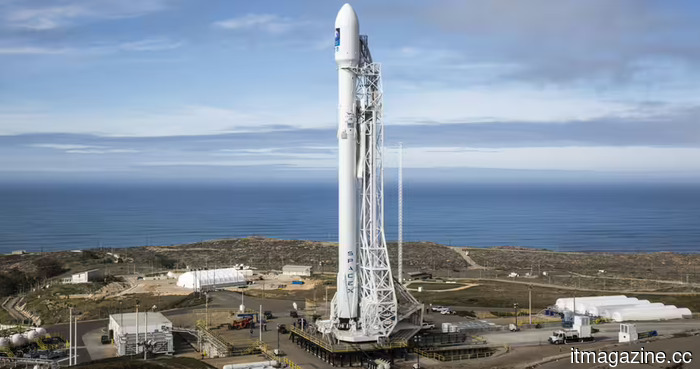 SpaceX launches its first sale of investment-grade bonds.
A few days following its historic IPO, SpaceX is securing a minimum of $20 billion through its initial investment-grade bond sale to finance a significant expansion of its AI data center.
SpaceX launches its first sale of investment-grade bonds.
A few days following its historic IPO, SpaceX is securing a minimum of $20 billion through its initial investment-grade bond sale to finance a significant expansion of its AI data center.
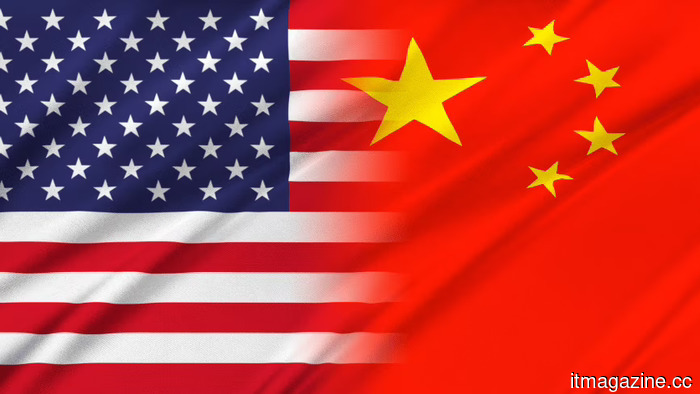 China's trade restrictions affect 56 US companies following the Pentagon's listing.
China's trade restrictions affected 56 American companies, including rare-earth mining firms and drone manufacturers, as a response to the Pentagon's broadened military blacklist.
China's trade restrictions affect 56 US companies following the Pentagon's listing.
China's trade restrictions affected 56 American companies, including rare-earth mining firms and drone manufacturers, as a response to the Pentagon's broadened military blacklist.
OpenAI's minimal balance sheet encounters a challenging prospect for an IPO.
OpenAI holds no debt and has only $46 million in quarterly capital expenditures. As it approaches its IPO, this seemingly pristine balance sheet is raising questions rather than supporting the pitch.