
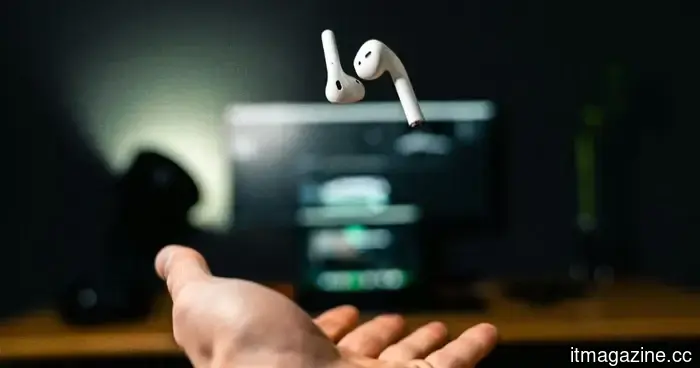
AirPods didn't eliminate public life; they made it simpler to navigate.
Every day, I make my way to the gym with my AirPods in. The reason is rather mundane. They provide me with a small adjustment I can make before the city starts bombarding me with stimuli all at once. Car horns, engines, chatter, heat, gym music seeping through the door, and someone’s phone playing videos at maximum volume. The city doesn’t ask for permission before invading your mind.
This notion gets challenged when earbuds are seen as evidence that people no longer consider those around them. Yes, silence in public can come off as impolite. However, often it’s just self-preservation. It’s someone determining how much noise they can tolerate before the day truly begins.
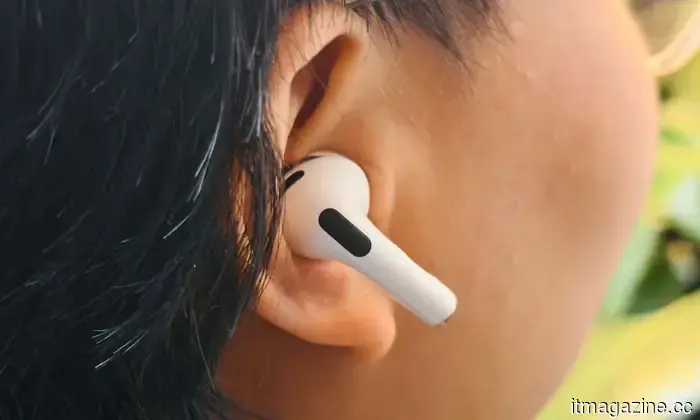
Nadeem Sarwar / Digital Trends
Why earbuds are blamed
This criticism is simple to make. People used to engage in more conversation. Now, it seems everyone is isolated, walking around with personal soundtracks and tiny devices in their ears. It creates a neat narrative that flatters a specific notion of shared public space, where every stranger could have been a conversation partner and every quiet individual represents a minor civic failure.
I’m not completely convinced by this. Sidewalks aren’t exactly designed for gentle human interaction. They are filled with construction noise, traffic, crowds, alerts, flashing convenience stores, and people having speakerphone conversations as if hosting an uninvited podcast.
There’s also something notably extroverted about viewing every missed interaction as a loss. Not every stranger deserves a conversation.
However, there’s a genuine anxiety beneath this perspective. TIME recently referenced research showing that between 2005 and 2019, the average number of words spoken daily dropped by 28%, from around 16,600 to below 12,000. That’s a significant decline. Yet, it doesn’t confirm that earbuds are the cause, which is where the alarmism becomes somewhat convenient.
Noise stops feeling like a personal grievance once statistics enter the conversation. The European Environment Agency estimates that around 145 million people in Europe, or over 30% of the population, are exposed to harmful levels of transport noise according to WHO standards. Suddenly, the desire to quiet the day seems less dramatic.
When I spot someone wearing AirPods outdoors, I don’t automatically think they’re rejecting social interaction. I perceive them as adding a filter. From an outsider’s perspective, this might come off as rude or disengaged. Conversely, from within that bubble, it can signify the difference between staying functional and arriving already exhausted.
There’s also something peculiarly extroverted about categorizing every blocked interaction as a loss. Not every stranger is entitled to a conversation. Not every serene commute needs to be seen as evidence of societal decline.
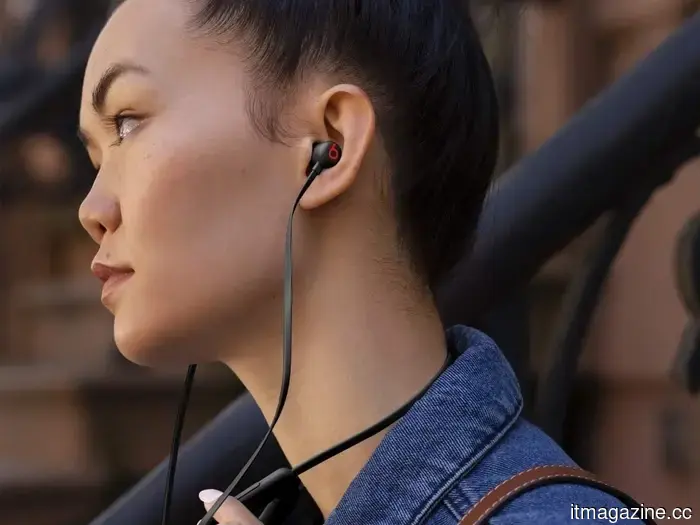
Beats
When convenience appears as accessibility
Someone sporting industrial ear defenders in a grocery store might attract attention. Conversely, a person wearing AirPods seems perfectly normal, even mundane. While the function may overlap, the presentation alters how individuals react.
Noise cancellation, transparency mode, and personal audio features emerged as lifestyle enhancements, yet they serve as informal sensory buffers. They lower the volume without necessitating a visible cue that someone requires an adjustment.
Apple’s own support documentation places AirPods in this realm. The settings for AirPods Pro include Hearing Assistance controls, Ambient Noise Reduction, Own Voice Amplification, and Conversation Boost, which focuses on the individual speaking directly in front of the wearer.
Lexie
That distinction is significant for introverts, anxious commuters, or neurodivergent individuals. AirPods enable someone to navigate crowded environments without having to explain their need for a little less of everything. They make self-regulation seem normal, which is beneficial in a society that often feels awkward when individuals request accommodations directly.
Why a boundary feels antisocial
Earbuds have become personal boundaries, which likely explains why they irritate some individuals. They are small enough to appear harmless, yet visible enough to convey a message: I’m present, but I’m not entirely available.
That signal can be misused, of course. Anyone can use earbuds as a shield to avoid conversation. However, blaming the device still feels too simplistic. Society continues to expect strangers to be accessible. Earbuds provide one small option in the opposite direction.
When I finally reach the gym, it’s not that I’ve evaded the city. I haven’t. The horns are still present, the heat is still there, and someone is likely still watching TikTok without hesitation. I’ve merely dulled the sharpness of the outside world a bit.
Perhaps that’s why the insulation bothers some people. It serves as a reminder that the noise was never neutral. Someone had to establish a boundary somewhere, and this one just happens to be pocket-sized.

Other articles
 Apple users are being targeted by a well-known tech support scam.
Following years of scammers impersonating Microsoft support, reports indicate that Apple users are now encountering a similar surge of fraudulent tech support alerts.
Apple users are being targeted by a well-known tech support scam.
Following years of scammers impersonating Microsoft support, reports indicate that Apple users are now encountering a similar surge of fraudulent tech support alerts.
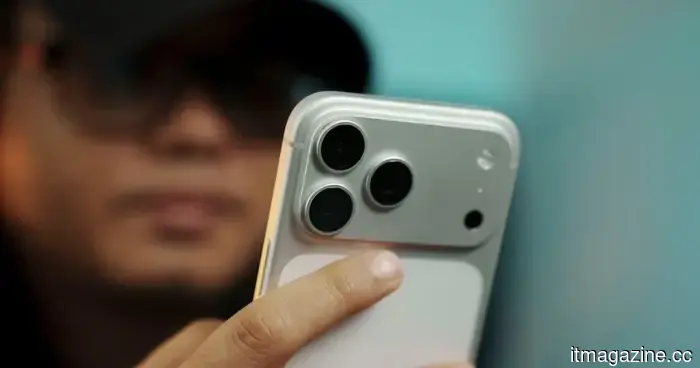 Apple users are being targeted by a well-known tech support scam.
Following years of scammers pretending to be Microsoft support, reports indicate that Apple users are now experiencing a comparable surge of fraudulent tech support alerts.
Apple users are being targeted by a well-known tech support scam.
Following years of scammers pretending to be Microsoft support, reports indicate that Apple users are now experiencing a comparable surge of fraudulent tech support alerts.
 If you own a Mac, you ought to check out this free and aesthetically pleasing disk space utility.
Radix is a free and open-source application for Mac that analyzes folders or drives and displays storage utilization using an interactive sunburst chart.
If you own a Mac, you ought to check out this free and aesthetically pleasing disk space utility.
Radix is a free and open-source application for Mac that analyzes folders or drives and displays storage utilization using an interactive sunburst chart.
 The Liquid Glass slider in iOS 27 appears straightforward, but it's actually more beneficial than I anticipated.
Having used iOS 27 on my iPhone for more than a week, I’ve discovered that the Liquid Glass slider is one of the most overlooked features of the update. Here’s how it functions and why you should give it a try.
The Liquid Glass slider in iOS 27 appears straightforward, but it's actually more beneficial than I anticipated.
Having used iOS 27 on my iPhone for more than a week, I’ve discovered that the Liquid Glass slider is one of the most overlooked features of the update. Here’s how it functions and why you should give it a try.
 A study reveals that almost 60% of TikTok videos presented to new users are low-quality AI-generated content.
A Kapwing analysis of 10,742 TikTok videos revealed that 59% of the content presented to new accounts consists of AI-generated material deemed low quality, which is three times more than what is found on YouTube Shorts.
A study reveals that almost 60% of TikTok videos presented to new users are low-quality AI-generated content.
A Kapwing analysis of 10,742 TikTok videos revealed that 59% of the content presented to new accounts consists of AI-generated material deemed low quality, which is three times more than what is found on YouTube Shorts.
 The Sashimi robot actually exists, and it is precise when it comes to slicing and dicing.
A research group from Norway developed a robot capable of slicing and serving salmon sashimi, utilizing three arms, artificial intelligence training, and a tactile sensor that detects when the blade makes contact with the cutting board.
The Sashimi robot actually exists, and it is precise when it comes to slicing and dicing.
A research group from Norway developed a robot capable of slicing and serving salmon sashimi, utilizing three arms, artificial intelligence training, and a tactile sensor that detects when the blade makes contact with the cutting board.
AirPods didn't eliminate public life; they made it simpler to navigate.
AirPods are often criticized for contributing to social isolation, yet these small earbuds have also turned into a common means of making noisy public environments more bearable.