
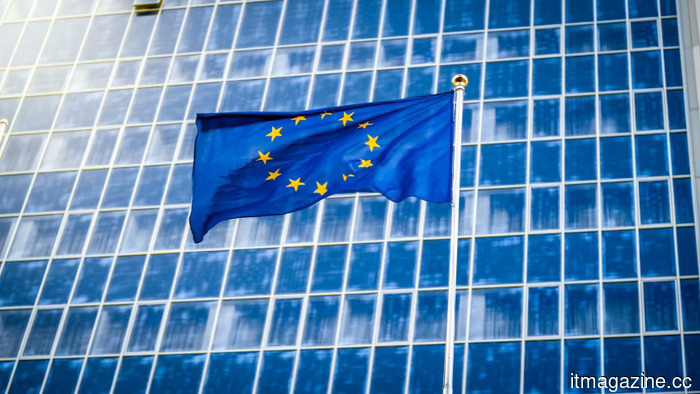
EU urges Big Tech to ensure AI data centers are in accordance with climate objectives.
TL;DREU Energy Commissioner Dan Jorgensen has stated that AI firms are welcome in Europe, but only if they adhere to the bloc's climate objectives. This admonition follows a delay in implementing a sustainability label for data centres, arising from a dispute over nuclear power, and it is noted that just 36 percent of data centres have disclosed their energy consumption.
The European Union's energy chief conveyed to the AI sector that it can establish itself in Europe, but only under the bloc's conditions. In an interview with Politico, Energy Commissioner Dan Jørgensen emphasized that companies seeking to set up data centres in Europe must show dedication to the EU's energy, climate, and environmental aims. This entails backing renewable and nuclear energy instead of fossil fuels, and effectively recycling the significant amounts of waste heat generated by servers. “If we utilized just half of the excess waste heat available today, we could heat 4 million homes across Europe,” Jørgensen remarked. He added, “This is, in my opinion, unacceptable.”
The cautionary note comes amid soaring demand for data centre capacity due to the AI surge. The Kiel Institute estimates that EU data centres could consume as much as 168 terawatt-hours of electricity by 2030, nearly equal to the total annual consumption of Poland. Ireland serves as a cautionary example, with data centres consuming around 22 percent of the nation's electricity, the highest per capita globally.
A report released in late May by Beyond Fossil Fuels and Friends of the Earth Ireland revealed that the expansion of data centres contributed roughly €715 million to Irish household electricity bills from 2015 to 2023, leading to an average extra expense of €360 for households during that timeframe. Denmark has halted all new grid connections after demand driven by AI overwhelmed its clean energy infrastructure. Jørgensen warned that if the sector does not assimilate into local energy systems, political pushback could intensify across Europe.
On the label front, the European Commission is working on a mandatory sustainability rating system for data centres, assessing energy efficiency, water usage, clean energy consumption, and waste heat recovery. However, this proposal has faced delays due to significant resistance from both industry stakeholders and EU governments. The core issue is related to nuclear energy; the draft outlined criteria that recognized only renewable electricity as "clean," excluding nuclear power despite its low carbon emissions.
Ten member states, spearheaded by France and Finland, are urging the Commission to acknowledge nuclear energy as a sustainable source for data centres. There are concerns that penalizing low-carbon, non-renewable energy grids could deter AI investment from coming to Europe altogether. Originally set to be adopted in the second quarter of 2026, the implementation date for the label has now been postponed, with no new timeline established by the Commission.
Additionally, Jørgensen pointed out a significant transparency issue. Only 36 percent of data centres obligated to report their energy performance according to current EU regulations have complied, raising doubts about the bloc's capacity to oversee an industry it cannot currently quantify. “We require greater transparency because they play a crucial role,” Jørgensen stated. “It is also in their interest to demonstrate their performance and show they can be part of the solution rather than merely a problem.”
The timing of the interview coincided with the Commission's unveiling of its European Technological Sovereignty Package on 3 June, which includes a Cloud and AI Development Act aimed at tripling the EU data centre capacity within five to seven years. The conflict between this goal and the bloc's climate obligations is precisely what Jørgensen warned against.
Europe aims to compete with the US and China on AI infrastructure, where initiatives like Meta’s $200 billion gas-powered Hyperion campus in Louisiana exemplify unchecked expansion. However, Europe also desires this infrastructure to be environmentally sustainable. While some companies are already discovering methods to repurpose data centre heat, scaling these solutions throughout the continent is still a challenge the Commission has yet to address.
Other articles
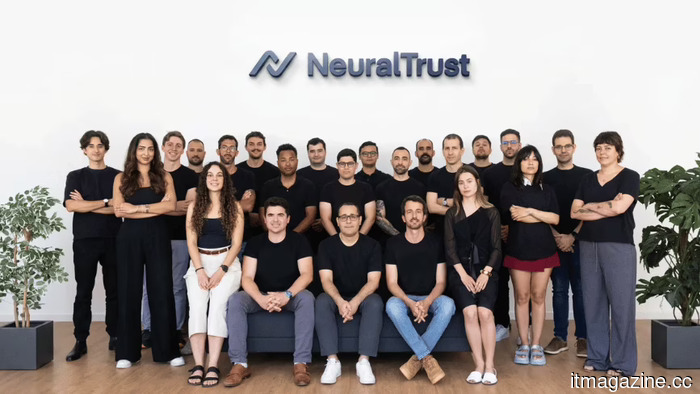 NeuralTrust secures $20 million to enhance the security of enterprise AI agents.
Barcelona's NeuralTrust secured a $20 million seed funding to monitor the proliferation of enterprise agents and to offer European banks and governments a security alternative that is not American.
NeuralTrust secures $20 million to enhance the security of enterprise AI agents.
Barcelona's NeuralTrust secured a $20 million seed funding to monitor the proliferation of enterprise agents and to offer European banks and governments a security alternative that is not American.
 EU advises Big Tech to ensure AI data centers are in line with climate objectives.
Energy Commissioner Jorgensen states that businesses need to back clean energy and recycle waste heat. The introduction of a sustainability label has been postponed due to a disagreement concerning nuclear energy.
EU advises Big Tech to ensure AI data centers are in line with climate objectives.
Energy Commissioner Jorgensen states that businesses need to back clean energy and recycle waste heat. The introduction of a sustainability label has been postponed due to a disagreement concerning nuclear energy.
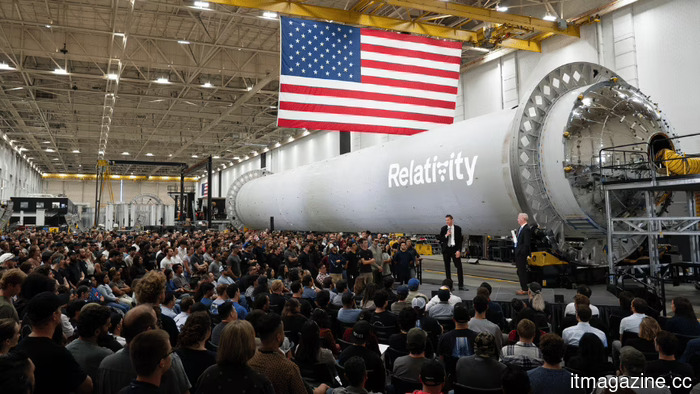 NASA selects Eric Schmidt's Relativity Space for a mission to Mars.
NASA has selected Eric Schmidt's Relativity Space for a Mars orbiter mission slated for 2028. The twist is that the company has yet to achieve a successful orbital launch, and the mission includes a data center intended for Mars orbit.
NASA selects Eric Schmidt's Relativity Space for a mission to Mars.
NASA has selected Eric Schmidt's Relativity Space for a Mars orbiter mission slated for 2028. The twist is that the company has yet to achieve a successful orbital launch, and the mission includes a data center intended for Mars orbit.
 Swiss startup Prem AI is seeking to raise $100 million to enable hedge funds and law firms to own their AI systems rather than merely renting them.
Prem AI creates AI products for companies that are unable to share data with OpenAI or Anthropic. It is seeking to raise $100 million at a valuation exceeding $500 million. "Enterprise intelligence needs to be owned."
Swiss startup Prem AI is seeking to raise $100 million to enable hedge funds and law firms to own their AI systems rather than merely renting them.
Prem AI creates AI products for companies that are unable to share data with OpenAI or Anthropic. It is seeking to raise $100 million at a valuation exceeding $500 million. "Enterprise intelligence needs to be owned."
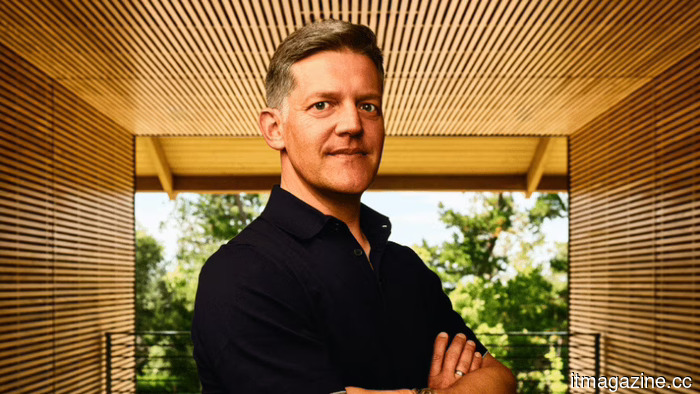 SpaceX has appointed Roelof Botha from Sequoia to its board.
SpaceX appointed Roelof Botha as an 'independent' director and a member of the audit committee just days following its record IPO. In a company ruled by Musk, this designation carries significant weight.
SpaceX has appointed Roelof Botha from Sequoia to its board.
SpaceX appointed Roelof Botha as an 'independent' director and a member of the audit committee just days following its record IPO. In a company ruled by Musk, this designation carries significant weight.
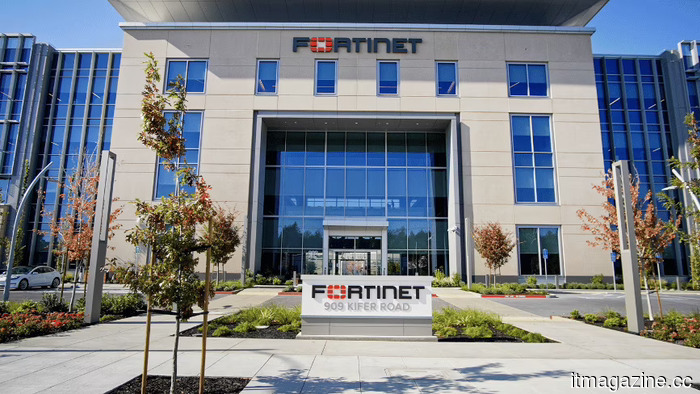 'FortiBleed': Credentials of 75,000 Fortinet firewalls compromised
A vulnerability known as FortiBleed revealed unencrypted credentials for approximately 75,000 Fortinet firewalls in 194 countries, affecting companies such as Samsung, Oracle, and Siemens. Here’s how it occurred.
'FortiBleed': Credentials of 75,000 Fortinet firewalls compromised
A vulnerability known as FortiBleed revealed unencrypted credentials for approximately 75,000 Fortinet firewalls in 194 countries, affecting companies such as Samsung, Oracle, and Siemens. Here’s how it occurred.
EU urges Big Tech to ensure AI data centers are in accordance with climate objectives.
Energy Commissioner Jorgensen states that businesses need to back clean energy initiatives and make use of recycled waste heat. The introduction of a sustainability label has been postponed due to a disagreement related to nuclear energy.