
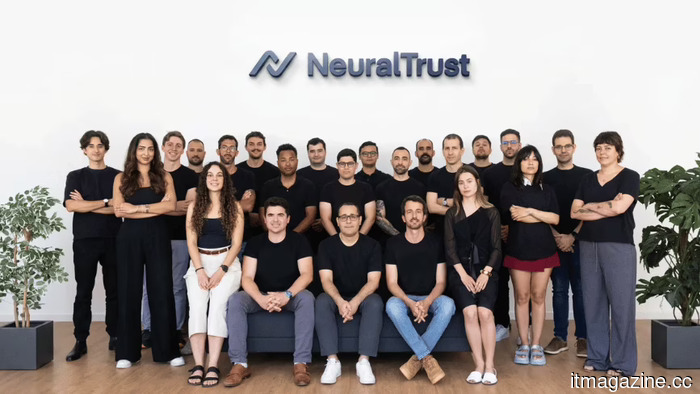
NeuralTrust secures $20 million to enhance the security of enterprise AI agents.
NeuralTrust, a startup based in Barcelona, has secured $20 million in funding to enhance the security of AI agents that large companies are deploying at a rapid pace, outstripping their ability to monitor them. The seed funding round, valued at €17.2 million, was led by Munich's Alstin Capital. Other contributors included VentureFriends, Seaya, Kibo Ventures, Banc Sabadell, the EA Ventures Plug and Play Fund, and Finaves, alongside public investments from the European Innovation Council and Spain's research agency. NeuralTrust claims this is the largest cybersecurity seed round ever raised by a company in the EU, a statement that should be taken with some skepticism, though it is not entirely implausible.
The core issue: untracked agents
NeuralTrust addresses the problem of proliferation. Within large corporations, AI agents emerge without any oversight. One department may develop a customer service agent using one model, while another automates administrative tasks with a different approach, and third-party software may come with its own agents. Each agent connects independently to internal systems, databases, and external tools, operating autonomously. Most security teams lack visibility regarding how many agents are active, their permissions, or whether any have been compromised and are leaking confidential data. “Connecting AI to your email system and allowing it to send messages to external addresses, thereby exposing internal information, could lead to disaster,” stated CEO Joan Vendrell in an interview with Tech Funding News.
NeuralTrust offers a solution in the form of a unified control layer, which consists of three products: TrustGate, a gateway through which all models, tools, and agents pass; TrustGuard, a runtime engine designed to detect and prevent live attacks; and TrustLens, which maps each agent's activities and monitors their operations. The company claims to analyze millions of agent interactions daily, identifying that approximately 1.2 percent, or one in eighty, are malicious.
The underlying marketing angle: ‘not American’
An intriguing aspect of the narrative revolves around geography. NeuralTrust's primary competitors are American firms, and the startup emphasizes its European identity. “There are significant concerns right now regarding technological and defense sovereignty in the EU,” Vendrell remarked. “Certain clients, particularly in government, are highly aware of the origins of the technology they purchase.”
This argument is well-timed. With the EU AI Act becoming stricter and the recent actions in Washington to limit foreign access to its top models, being “made in Europe” has turned into a distinct selling proposition, leading European institutions to start replacing US security vendors with local alternatives.
A potential future category, if timely
The funding round reflects a belief that securing AI agents will evolve into its own market segment, similar to the development of endpoint and cloud security in the past. Evidence suggests this trend is underway: Palo Alto Networks acquired the startup Protect AI for an estimated $500 million in 2025, indicating that major players now regard agent security as integral, rather than supplementary.
Gartner, which NeuralTrust frequently references, anticipates that by 2027, 40 percent of enterprises will retract their autonomous agents due to governance issues that become apparent only after something fails. The prevailing uncertainty, as acknowledged by NeuralTrust's primary investor, concerns timing: whether organizations will embrace this solution before a significant incident involving an agent necessitates action. NeuralTrust is banking on the notion that they will, and that when they do, many will prefer to have a European company on their invoice.
Other articles
 EU advises Big Tech to ensure AI data centers are in line with climate objectives.
Energy Commissioner Jorgensen states that businesses need to back clean energy and recycle waste heat. The introduction of a sustainability label has been postponed due to a disagreement concerning nuclear energy.
EU advises Big Tech to ensure AI data centers are in line with climate objectives.
Energy Commissioner Jorgensen states that businesses need to back clean energy and recycle waste heat. The introduction of a sustainability label has been postponed due to a disagreement concerning nuclear energy.
 The portal itself is the product: it serves as the framework for transforming digital agencies' operational models.
Digital agencies are encountering a scaling barrier as AI takes over the responsibilities that previously warranted retainers. Those that are prospering offer productized services via client portals that integrate intake, billing, delivery, and reporting.
The portal itself is the product: it serves as the framework for transforming digital agencies' operational models.
Digital agencies are encountering a scaling barrier as AI takes over the responsibilities that previously warranted retainers. Those that are prospering offer productized services via client portals that integrate intake, billing, delivery, and reporting.
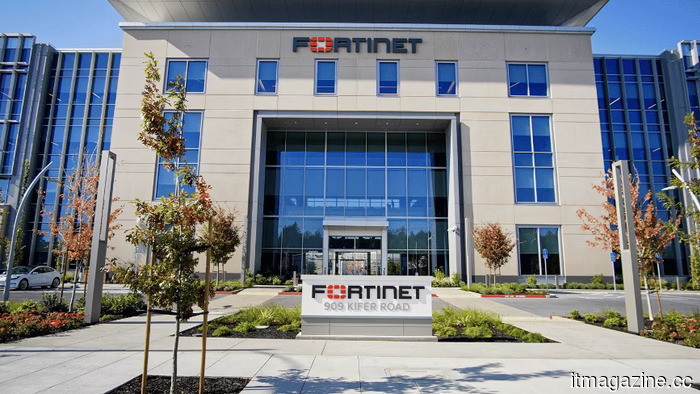 'FortiBleed': Credentials for 75,000 Fortinet firewalls compromised.
A vulnerability known as FortiBleed revealed unencrypted credentials for approximately 75,000 Fortinet firewalls in 194 nations, affecting companies like Samsung, Oracle, and Siemens. Here's the explanation.
'FortiBleed': Credentials for 75,000 Fortinet firewalls compromised.
A vulnerability known as FortiBleed revealed unencrypted credentials for approximately 75,000 Fortinet firewalls in 194 nations, affecting companies like Samsung, Oracle, and Siemens. Here's the explanation.
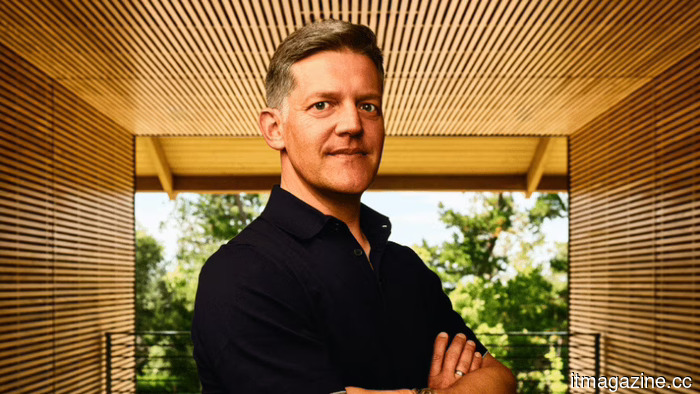 SpaceX has appointed Roelof Botha from Sequoia to its board.
SpaceX appointed Roelof Botha as an 'independent' director and a member of the audit committee just days following its record IPO. In a company ruled by Musk, this designation carries significant weight.
SpaceX has appointed Roelof Botha from Sequoia to its board.
SpaceX appointed Roelof Botha as an 'independent' director and a member of the audit committee just days following its record IPO. In a company ruled by Musk, this designation carries significant weight.
 Swiss startup Prem AI is seeking to raise $100 million to enable hedge funds and law firms to own their AI systems rather than merely renting them.
Prem AI creates AI products for companies that are unable to share data with OpenAI or Anthropic. It is seeking to raise $100 million at a valuation exceeding $500 million. "Enterprise intelligence needs to be owned."
Swiss startup Prem AI is seeking to raise $100 million to enable hedge funds and law firms to own their AI systems rather than merely renting them.
Prem AI creates AI products for companies that are unable to share data with OpenAI or Anthropic. It is seeking to raise $100 million at a valuation exceeding $500 million. "Enterprise intelligence needs to be owned."
 Midjourney's full-body scanner: significant promises, no proven history.
Midjourney has introduced a full-body ultrasound scanner, which its founder claims surpasses MRI technology. Additionally, the company has launched a Midjourney Medical division and a spa. However, the medical assertions have not been verified.
Midjourney's full-body scanner: significant promises, no proven history.
Midjourney has introduced a full-body ultrasound scanner, which its founder claims surpasses MRI technology. Additionally, the company has launched a Midjourney Medical division and a spa. However, the medical assertions have not been verified.
NeuralTrust secures $20 million to enhance the security of enterprise AI agents.
Barcelona's NeuralTrust secured a $20 million seed funding to monitor the proliferation of enterprise agents and to offer European banks and governments a security alternative that is not American.