

The portal itself is the product: it serves as the framework for transforming digital agencies' operational models.
Many digital agencies encounter challenges between their fiftieth and hundredth active client. While sales remain steady, and the pitch deck continues to perform well, the issue lies in service delivery. The behind-the-scenes operations begin to falter under the pressure of clients that the system was not designed to manage.
AI is accelerating this trend for many agencies. According to SparkToro’s annual State of Digital Agencies survey, the percentage of agency owners who consider AI a significant threat has risen from 44% to 53% in just a year. Clients are tightening retainers, and tasks that previously constituted monthly invoices—such as keyword research, initial draft writing, and basic reporting—are increasingly managed by AI tools like ChatGPT, Claude, and other specialized AI solutions. Agencies that are thriving now differ significantly from those that dominated the 2010s.
Successful agencies are offering productized services with predetermined scope and pricing. Much of the operational busywork between sale and delivery has been automated or systematized. Furthermore, the entire client-facing operation is often managed through a single portal that keeps the backend technology hidden from the client. This aspect is frequently underestimated by agency operators. The portal serves not just as an additional component but as the agency itself from the client's perspective.
The underlying issue lies within the tech stack. Traditional agencies relied on fragmented tools to sell labor, whereas newer agencies market an operationalized product through proprietary infrastructure. This distinction represents the core of the transformation, influencing various aspects such as pricing, hiring, software, and growth limitations.
If you visit a typical five-person digital marketing agency and inquire about their operational tools, you’ll likely hear about using HubSpot or spreadsheets for CRM, Stripe for payment processing, Typeform for client intake, project management software like Asana or ClickUp, Slack for internal communication, Gmail for client interactions, Loom for updates, Google Drive for deliverables, and AgencyAnalytics or Looker Studio for reporting. Possibly, Zapier ties everything together.
Individually, these tools are adequate, but collectively, the tech stack proves chaotic. For an agency focused on selling time, this disorganization is manageable since the client primarily evaluates the final output. However, for an agency providing productized services, such as a fixed monthly content package or a defined link-building program, the client is paying for a cohesive experience. Clients expect this interface to resemble the SaaS products they frequently use.
When the interface is scattered across multiple vendor brands, issues arise. Clients may feel like they are overseeing the agency instead of vice versa. Agency owners become overwhelmed, frequently acting as intermediaries for transitions between tools. Each new client introduces disproportionate operational challenges, as the existing system isn't equipped to deliver the same quality to the next client as it did to the last.
When agencies claim they "can’t scale," they’re often referring to this very situation. The quality of work may be acceptable, but the operational inefficiencies associated with delivering a productized service using software originally intended for custom work leads to breakdowns.
A new category of agency software is emerging, designed to build around the deliverable rather than the project itself. The basic premise is clear: if an agency's role involves repeatedly and reliably delivering a packaged service, the entire tech stack should be optimized to streamline this process on infrastructure the agency officially represents.
Wayfront (previously known as Service Provider Pro) has been a pioneer in this area, with numerous agencies using its platform to sell and deliver over $500 million in productized services collectively. While this number is self-reported, it is substantial enough to indicate a significant market.
“Productized services reveal operational weaknesses more quickly than custom work does. Once an offer is standardized, shortcomings in areas such as intake, communication, billing, and delivery become much clearer,” notes Wayfront founder Chris Willow.
What distinguishes this category from typical project management software is its focus on the deliverable. When a client makes a purchase, the system manages the workflow: CRM entry, portal access, intake forms, and project setup with the appropriate SOPs and team. No human intervention is required. Billing, project status, file delivery, and reporting are all integrated into the same platform, which is branded as the agency’s own. From the client's viewpoint, Wayfront is invisible; they only see their agency's system.
For the agencies targeted by this platform—small teams of 2 to 20 people generating revenue between $200K and $2M mainly in digital marketing—this integration is crucial for scaling. With fixed pricing for productized services, protecting profit margins means streamlining the workflow between sale and delivery. A platform that manages intake, project setup, billing, and reporting within a single process outperforms any collection of individual tools. The real narrative within these agencies is about a business category that did not exist a decade ago, now operating on purposely designed infrastructure.
A closer look at operators reveals common trends among agencies that have successfully adopted this model. Adam Steele’s
Other articles
 NASA selects Eric Schmidt's Relativity Space for Mars missions.
NASA has selected Eric Schmidt's Relativity Space for a Mars orbiter mission scheduled for 2028. However, there is a twist: the company has yet to achieve orbit, and the mission includes a data center for Mars orbit.
NASA selects Eric Schmidt's Relativity Space for Mars missions.
NASA has selected Eric Schmidt's Relativity Space for a Mars orbiter mission scheduled for 2028. However, there is a twist: the company has yet to achieve orbit, and the mission includes a data center for Mars orbit.
 SpaceX has appointed Roelof Botha from Sequoia to its board.
SpaceX appointed Roelof Botha as an 'independent' director and a member of the audit committee just days following its record IPO. In a company ruled by Musk, this designation carries significant weight.
SpaceX has appointed Roelof Botha from Sequoia to its board.
SpaceX appointed Roelof Botha as an 'independent' director and a member of the audit committee just days following its record IPO. In a company ruled by Musk, this designation carries significant weight.
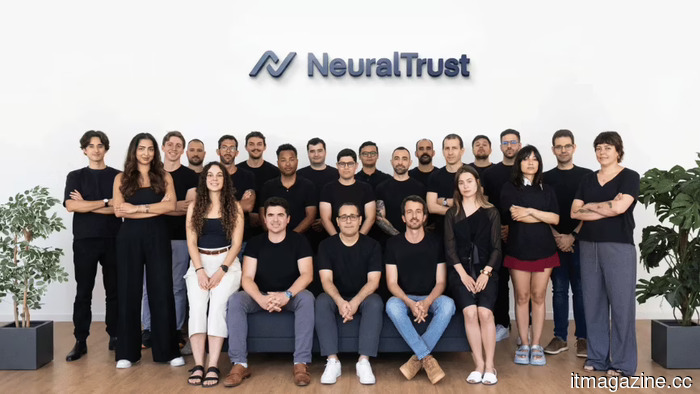 NeuralTrust secures $20 million to protect enterprise AI agents.
Barcelona's NeuralTrust secured $20 million in seed funding to manage enterprise 'agent sprawl' and to offer European banks and governments a security alternative that is not American.
NeuralTrust secures $20 million to protect enterprise AI agents.
Barcelona's NeuralTrust secured $20 million in seed funding to manage enterprise 'agent sprawl' and to offer European banks and governments a security alternative that is not American.
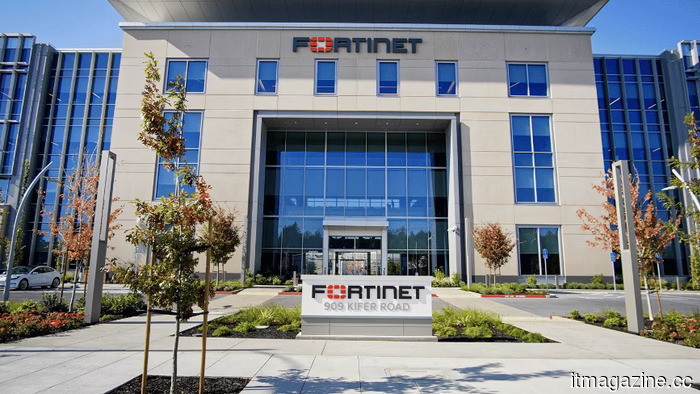 'FortiBleed': Credentials for 75,000 Fortinet firewalls compromised.
A vulnerability known as FortiBleed revealed unencrypted credentials for approximately 75,000 Fortinet firewalls in 194 nations, affecting companies like Samsung, Oracle, and Siemens. Here's the explanation.
'FortiBleed': Credentials for 75,000 Fortinet firewalls compromised.
A vulnerability known as FortiBleed revealed unencrypted credentials for approximately 75,000 Fortinet firewalls in 194 nations, affecting companies like Samsung, Oracle, and Siemens. Here's the explanation.
 MIT has developed a memory system that enables robots to recall the location of your keys.
MIT's DAAAM framework enables robots to have long-term spatial memory by linking language descriptions to 3D maps. When you ask, "Where's my wallet?" it can search through its memory for the answer.
MIT has developed a memory system that enables robots to recall the location of your keys.
MIT's DAAAM framework enables robots to have long-term spatial memory by linking language descriptions to 3D maps. When you ask, "Where's my wallet?" it can search through its memory for the answer.
 MIT developed a memory system enabling robots to recall the location of your keys.
MIT's DAAAM framework enables robots to possess long-term spatial memory by associating language descriptions with 3D maps. When you ask, "where's my wallet?", it searches through its memory.
MIT developed a memory system enabling robots to recall the location of your keys.
MIT's DAAAM framework enables robots to possess long-term spatial memory by associating language descriptions with 3D maps. When you ask, "where's my wallet?", it searches through its memory.
The portal itself is the product: it serves as the framework for transforming digital agencies' operational models.
Digital agencies are encountering a scaling barrier as AI takes over the responsibilities that previously warranted retainers. Those that are prospering offer productized services via client portals that integrate intake, billing, delivery, and reporting.