
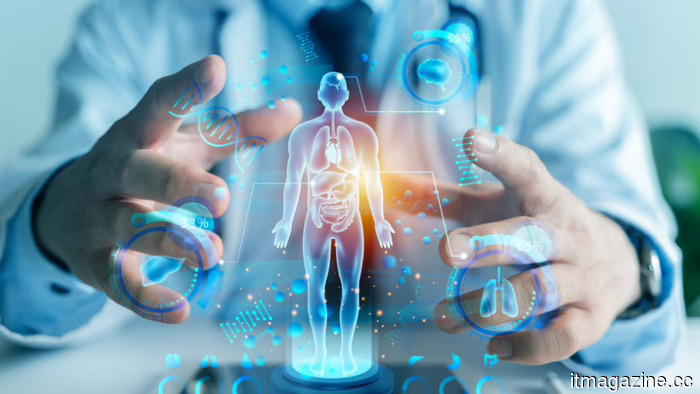
A Colombian AI startup aims to support 50% of physicians in Latin America. Andreessen Horowitz has recently invested in the company.
TL;DR: Telepatia secured $33 million from a16z to connect with half of the 1.9 million doctors in Latin America by 2027. It already aids 14 million patients across five countries.
Telepatia, an AI clinical assistant designed for the healthcare sector in Latin America, has raised $33 million in a Series A funding round led by Andreessen Horowitz. The firm aims to reach 50% of the region's 1.9 million physicians by the end of 2027. With total funding now at $42 million, early investors include Palantir's CTO Shyam Sankar, Rappi's founder Simon Borrero, and Nubank's founder David Velez.
The tool provides real-time transcription of consultations, reviews medical records, identifies potential errors, and offers live suggestions based on clinical guidelines and medical literature. CEO Nicolas Abad describes it as “a second brain for the doctor.” At Brazil’s Hospital Mater Dei, doctors reportedly use the system for an average of eight hours daily, saving 1.7 hours a day according to company figures.
The motivation behind Telepatia is deeply personal. Abad's father, a physician, passed away unexpectedly in late 2022 at age 58 due to a preventable drug interaction. Despite his extensive research on his illness, a fatal combination of a medication for hiccups and a sleep aid led to his death. “This is the product that would have saved my father as a patient, and that he would have loved as a doctor,” Abad shared.
Latin America presents a significant market opportunity. Brazil and Colombia have approximately 2.4 to 2.5 doctors per 1,000 people, which is a third less than the OECD average. Colombia also has just 1.5 nurses per 1,000, in contrast to the OECD’s average of 9.5. Health professionals dedicate 40% to 70% of their time to documentation and administrative tasks, limiting direct patient care. Telepatia aims to enhance the workforce efficiency by managing these documentation responsibilities through AI.
In under a year, the startup claims to have reached over 14 million patients via more than 25 public and private health institutions in Brazil, Colombia, Mexico, Chile, and Argentina. Its clients include publicly traded hospital groups such as Mater Dei, Kora Saúde, and Hapvida, as well as public health networks in cities like Bogota, Medellin, and Barranquilla.
Daisy Wolf, a partner at Andreessen Horowitz, stated, “We just clearly saw them as the winner. We believe healthcare is going to be the industry most transformed by AI.” For a16z, which has previously supported US ambient documentation startups like Abridge AI and Ambience Healthcare, Telepatia is among its largest AI healthcare investments outside the United States.
Regulatory frameworks are still developing. Brazil's Senate has passed an AI bill establishing a risk-based framework, pending approval from the lower house and the president. Colombia has introduced its own AI legislation to Congress. Telepatia carefully positions itself in the market by supporting clinicians rather than making decisions autonomously, ensuring that the physician retains final authority. The company plans to strengthen its operations in Latin America before expanding to regions such as India, Africa, and Southeast Asia, which face similar challenges of physician shortages and documentation burdens on a larger scale.
Other articles
 France disrupts EDF's monopoly on hydropower by implementing a new auction law.
The French Parliament approved a bill that changes EDF's hydropower concessions into permits and mandates annual auctions of 6 GW. EDF is said to be planning a new investment of 4.5 billion euros in pumped-hydro projects.
France disrupts EDF's monopoly on hydropower by implementing a new auction law.
The French Parliament approved a bill that changes EDF's hydropower concessions into permits and mandates annual auctions of 6 GW. EDF is said to be planning a new investment of 4.5 billion euros in pumped-hydro projects.
 Xreal Aura glasses bring Android to your face and are expected to be priced below $1,500.
Xreal Aura is now available for reservations, introducing Android XR, Gemini, and spatial computing to tethered smart glasses anticipated to launch in Fall 2026.
Xreal Aura glasses bring Android to your face and are expected to be priced below $1,500.
Xreal Aura is now available for reservations, introducing Android XR, Gemini, and spatial computing to tethered smart glasses anticipated to launch in Fall 2026.
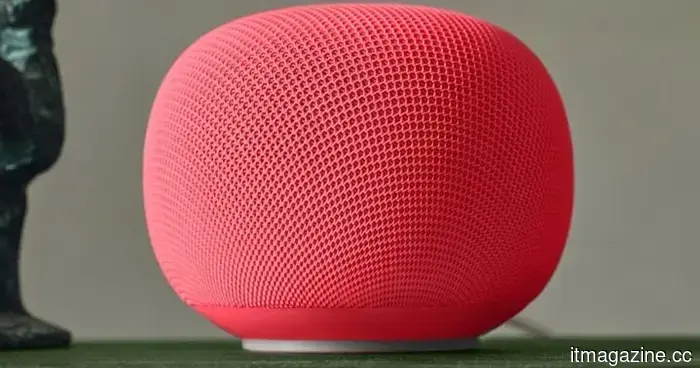 Google's latest Home Speaker, priced at $99, delivers 360-degree sound and advanced Gemini features.
Gemini takes the place of Google Assistant; it offers 360-degree audio and four color choices, while the Nest Audio has been officially discontinued.
Google's latest Home Speaker, priced at $99, delivers 360-degree sound and advanced Gemini features.
Gemini takes the place of Google Assistant; it offers 360-degree audio and four color choices, while the Nest Audio has been officially discontinued.
 Samsung Display has demonstrated why the future of XR may rely on improved tiny screens.
Samsung Display's AWE USA exhibition highlights RGB OLEDoS as a key element of its XR goals, featuring ultra-bright screens for mixed reality headsets, prototype smart glasses, and long-term spatial display ideas.
Samsung Display has demonstrated why the future of XR may rely on improved tiny screens.
Samsung Display's AWE USA exhibition highlights RGB OLEDoS as a key element of its XR goals, featuring ultra-bright screens for mixed reality headsets, prototype smart glasses, and long-term spatial display ideas.
 France ends EDF's monopoly on hydropower with new auction legislation.
The French Parliament passed a legislation that changes EDF's hydropower concessions into permits and mandates annual auctions of 6 GW. Reports suggest that EDF intends to invest 4.5 billion euros in new pumped-hydro projects.
Behavox secures $175 million from BlackRock's HPS for AI compliance initiatives.
The regtech firm, utilized by 10 out of the 24 most systemically significant banks globally, has secured its first equity funding since SoftBank's $100 million investment in 2020. It plans to focus on mergers and acquisitions as well as expanding its platform.
France ends EDF's monopoly on hydropower with new auction legislation.
The French Parliament passed a legislation that changes EDF's hydropower concessions into permits and mandates annual auctions of 6 GW. Reports suggest that EDF intends to invest 4.5 billion euros in new pumped-hydro projects.
Behavox secures $175 million from BlackRock's HPS for AI compliance initiatives.
The regtech firm, utilized by 10 out of the 24 most systemically significant banks globally, has secured its first equity funding since SoftBank's $100 million investment in 2020. It plans to focus on mergers and acquisitions as well as expanding its platform.
A Colombian AI startup aims to support 50% of physicians in Latin America. Andreessen Horowitz has recently invested in the company.
Telepatia secured $33 million from a16z to provide an AI clinical assistant to 950,000 doctors in Latin America by 2027. It currently serves 14 million patients.