
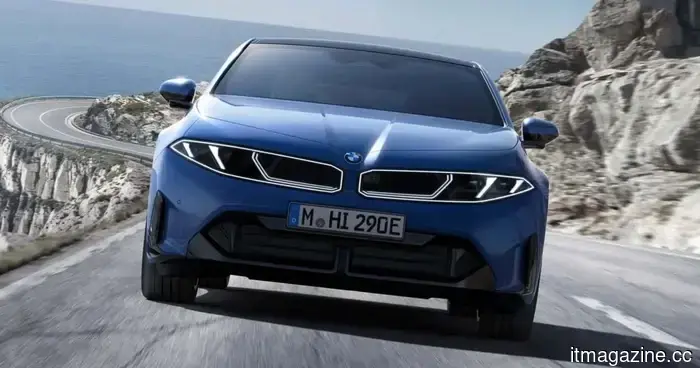
BMW is accepting orders for the i3 much earlier than anticipated, and it has a positive dilemma to account for.
Excess demand and an exceptional vehicle prompt an earlier launch than expected.
BMW had intended to open orders for the new i3 sedan this fall, but the automaker has opted to start taking orders this week instead. This decision stems from a fortunate challenge that any automaker would appreciate: high consumer interest in the vehicle.
Reportedly, BMW is already accepting pre-orders for a "1st Edition" i3 in Germany, several months ahead of the initial schedule. Currently, only the i3 50 xDrive version is available for pre-order.
The change in launch timing does not affect production plans, as assembly is still set to commence in Munich this August. However, American customers will face a longer wait, with the i3 scheduled to arrive in the United States in 2027 and pricing yet to be disclosed.
When it reaches the market, it will come equipped with a NACS charging port, ensuring compatibility with Tesla Superchargers, as well as a CCS adapter for other charging stations.
What features does the BMW i3 provide?
Preliminary EPA tests indicate a range of approximately 440 miles, surpassing the range of any current Tesla for U.S. consumers. Power for the i3 comes from two electric motors generating 469 hp and 476 lb-ft of torque.
These motors are powered by a roughly 107 kWh battery, which can charge at a rate of up to 400 kW. At this charge rate, a 10-to-80% battery recharge takes only 22 minutes despite the large capacity.
Each i3 model also supports Vehicle-to-Load capability, allowing users to draw up to 3.7 kW from the battery to operate tools, appliances, or other electronic devices. A rear-wheel-drive variant with a smaller battery pack is anticipated in the future, though BMW has not yet announced a specific timeline for this option.
For over five years, Shikhar has consistently clarified advancements in consumer technology and shared them...
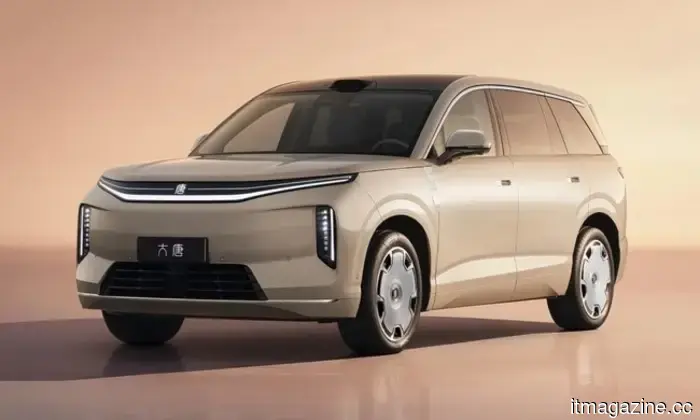
BYD’s Great Tang eSUV provides 10-minute charging and a 590-mile range, starting at $40,000.
The vehicle's impressive specifications, record preorders, and none heading to America.
BYD has debuted the Great Tang, a full-size electric SUV that rivals the range of a conventional gasoline vehicle and requires only slightly longer to recharge. The company's leading eSUV starts at around $35,500, presenting serious competition to most U.S. electric SUVs.
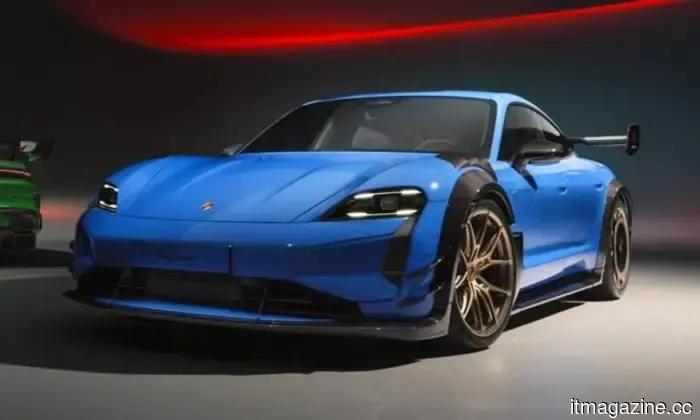
Porsche’s 2027 Taycan introduces a virtual E-Shift gearbox connected to actual paddle shifters.
Porsche aims to address one of the major challenges facing EV hardware with software.
Though electric performance vehicles have become quite fast, particularly in straight-line acceleration, they still struggle to recreate the engaging experience of a traditional sports car. The absence of gear shifts, rev buildup, and physical feedback detracts from the lively feel of a sports car. Porsche believes it can enhance this with software, and the 2027 Taycan update represents its most ambitious attempt to date. The vehicle incorporates a feature called E-Shift, which introduces eight virtual gears controlled by paddle shifters located behind the steering wheel.
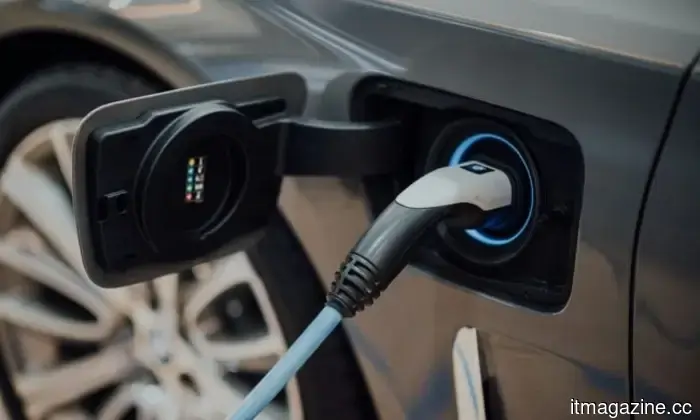
China is introducing new EV safety regulations, which the U.S. should consider adopting.
Mandatory battery fire protections and immediate power cutoffs illustrate a potential framework for a stricter EV safety protocol in the U.S.
China's forthcoming EV safety regulations will require manufacturers to demonstrate that their vehicles can fail safely, rather than merely offering warnings before problems escalate. Beginning July 1, 2026, two new national standards will enforce tougher battery safety measures and establish a physical one-touch method for cutting off high-voltage power in emergencies. The focus will be on critical issues that cannot be ignored by drivers, firefighters, insurers, and regulators alike, including battery fires, collision damage, smoke inhalation, and access for rescue operations following severe incidents.

Other articles
 Sony's latest LYTIA L910 camera sensor will enhance night photography and 4K recording capabilities on smartphones.
Sony's latest phone camera sensor boasts improved low-light performance for night photography and extended 4K HDR recording time without the typical battery drain associated with such features.
Sony's latest LYTIA L910 camera sensor will enhance night photography and 4K recording capabilities on smartphones.
Sony's latest phone camera sensor boasts improved low-light performance for night photography and extended 4K HDR recording time without the typical battery drain associated with such features.
 Claude Design will now adhere to your brand guidelines rather than using generic AI-generated mockups.
Laude Design now constructs with your real brand elements, connects directly with Claude Code, and exports directly to platforms such as Canva, Adobe, Wix, and Vercel.
Claude Design will now adhere to your brand guidelines rather than using generic AI-generated mockups.
Laude Design now constructs with your real brand elements, connects directly with Claude Code, and exports directly to platforms such as Canva, Adobe, Wix, and Vercel.
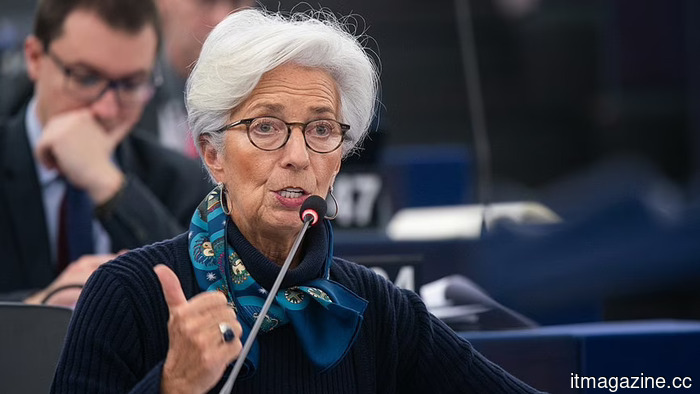 ECB's Lagarde warns that AI might lead to financial crises and advocates for governance similar to Cold War-era non-proliferation measures.
Lagarde cautioned that it is financial crises, rather than technology, that lead to the destruction of jobs and savings. She advocates for a governance model for AI that is based on nuclear non-proliferation treaties.
ECB's Lagarde warns that AI might lead to financial crises and advocates for governance similar to Cold War-era non-proliferation measures.
Lagarde cautioned that it is financial crises, rather than technology, that lead to the destruction of jobs and savings. She advocates for a governance model for AI that is based on nuclear non-proliferation treaties.
 A study reveals that TikTok's feeds display AI-generated content three times more often than those on YouTube.
A recent report from Kapwing revealed that 59% of videos presented to newly created TikTok accounts consist of AI-generated content, which is approximately three times higher than the rate observed on YouTube.
A study reveals that TikTok's feeds display AI-generated content three times more often than those on YouTube.
A recent report from Kapwing revealed that 59% of videos presented to newly created TikTok accounts consist of AI-generated content, which is approximately three times higher than the rate observed on YouTube.
 The Trump Mobile T1 was intended to be manufactured in the United States. Instead, it is a Taiwanese phone that features a gold finish.
The Trump Mobile T1 is an HTC U24 Pro that has been rebranded, featuring a gold finish, with Truth Social already installed, and a plan costing $47.45. Its appearance differs significantly from the initial promises.
The Trump Mobile T1 was intended to be manufactured in the United States. Instead, it is a Taiwanese phone that features a gold finish.
The Trump Mobile T1 is an HTC U24 Pro that has been rebranded, featuring a gold finish, with Truth Social already installed, and a plan costing $47.45. Its appearance differs significantly from the initial promises.
 Motorola Razr Fold review: The unexpected foldable I didn't anticipate.
The Motorola Razr Fold may be costly and not without flaws, but its sleek design, impressive displays, robust battery life, and practical stylus support position it as a formidable competitor in the foldable market.
Motorola Razr Fold review: The unexpected foldable I didn't anticipate.
The Motorola Razr Fold may be costly and not without flaws, but its sleek design, impressive displays, robust battery life, and practical stylus support position it as a formidable competitor in the foldable market.
BMW is accepting orders for the i3 much earlier than anticipated, and it has a positive dilemma to account for.
BMW is beginning orders for its electric 3 Series, which boasts a range of 440 miles, several months ahead, even as US customers will have to wait until 2027.