
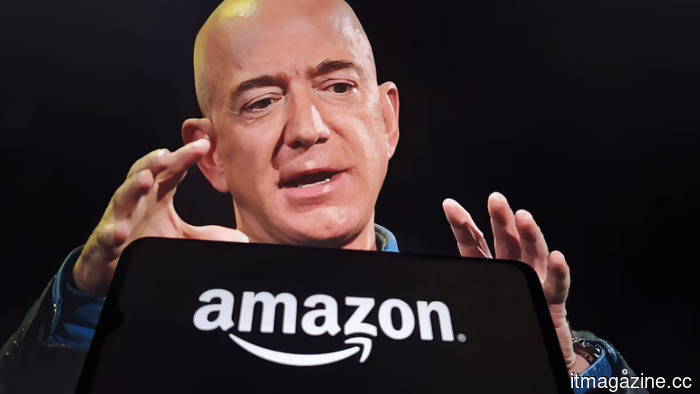
The head of Amazon's AI division acknowledges that their models are behind those of OpenAI and Anthropic.
TL;DR
Peter DeSantis, Amazon’s AI chief, acknowledged that the company’s models “haven’t been at the very frontier” and expressed hopes of catching up within a year. This statement comes as Amazon invests $33 billion in Anthropic while also developing its own competing models.
DeSantis, the senior vice president overseeing Amazon's AI models, custom chips, and quantum computing, revealed to CNBC that Amazon’s models are not at the forefront for the most demanding tasks. He mentioned his goal for the company to be "in the conversation about leading models in the coming year," outlining a catch-up strategy that hinges on custom silicon, unique data, and the extensive infrastructure of Amazon's cloud services.
The dual strategy
Amazon is simultaneously pursuing two AI initiatives. Its model marketplace, Bedrock, allows cloud clients to access models from OpenAI, Anthropic, Meta, and Mistral through a single platform, generating income independent of which model prevails.
Released in December, Nova2, Amazon's in-house model, has garnered around 50,000 customers. However, it has not reached the capabilities of Anthropic’s Claude or OpenAI’s GPT-5.5 for high-demand enterprise and research tasks, which is why DeSantis has been forthright.
The investor hedge
Amazon has committed as much as $33 billion to Anthropic, including a $25 billion deal signed in April that granted Anthropic access to as much as five gigawatts of computing power using Amazon’s Trainium chips. In return, Anthropic has pledged to spend over $100 billion on AWS in the next ten years.
This partnership allows Amazon to benefit from Anthropic’s achievements through both its equity investment and the cloud revenue generated by Anthropic. Amazon’s earnings for Q1 2026 were boosted by a $16.8 billion gain related to Anthropic, despite a 95% drop in the company’s free cash flow.
The competitive dynamics are intense, as Google has also committed up to $40 billion to Anthropic, making it one of the most sought-after startups in Silicon Valley. Furthermore, Amazon CEO Andy Jassy reportedly initiated the US government’s crackdown that resulted in the shutdown of Anthropic’s Fable 5 and Mythos 5 last week, raising concerns about how Amazon balances being Anthropic's largest investor with its role as a competitor developing similar models.
The catch-up plan
DeSantis’s strategy for bridging the gap focuses on custom AI chips, proprietary training data sourced from Amazon’s retail and logistics operations, and the engineering capabilities of a team engaged in frontier models, silicon design, and quantum research. Amazon’s Trainium chips currently support most of Bedrock’s inference tasks.
The upcoming Trainium3, set to launch later this year, promises to deliver four times the performance of its previous version. Jeff Bezos’s separate physical AI lab, Project Prometheus, is raising up to $10 billion, indicating that the company’s AI aspirations reach beyond cloud computing.
Whether custom chips and proprietary data can compensate for the several-year lead established by labs that have invested billions in training frontier models remains uncertain. While DeSantis provided a timeline of “the coming year,” he did not specify any benchmarks for measurement.
Other articles
 A 21-year-old Stanford graduate has successfully secured $11.6 million to develop a wearable hormone monitoring device that does not require blood samples.
Clair Health secured an $11.6 million seed funding round led by Khosla Ventures for a wrist-mounted device that monitors estrogen and progesterone levels without the use of needles. The product is set to be shipped in November.
A 21-year-old Stanford graduate has successfully secured $11.6 million to develop a wearable hormone monitoring device that does not require blood samples.
Clair Health secured an $11.6 million seed funding round led by Khosla Ventures for a wrist-mounted device that monitors estrogen and progesterone levels without the use of needles. The product is set to be shipped in November.
 France disrupts EDF's hydropower monopoly through new auction legislation.
The French Parliament has passed a legislation that changes EDF's hydropower concessions into permits and mandates annual auctions of 6 GW. EDF is said to be planning an investment of 4.5 billion euros in new pumped-hydro projects.
France disrupts EDF's hydropower monopoly through new auction legislation.
The French Parliament has passed a legislation that changes EDF's hydropower concessions into permits and mandates annual auctions of 6 GW. EDF is said to be planning an investment of 4.5 billion euros in new pumped-hydro projects.
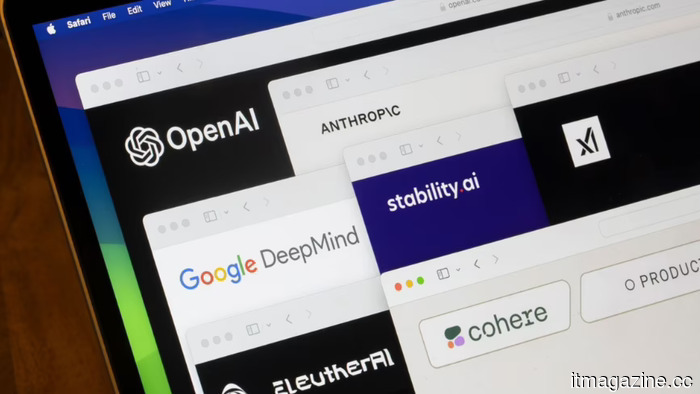 Anthropic and Google DeepMind proposed a US-led AI coalition at the G7, and Canada agreed.
At a private G7 lunch with Trump and other world leaders, Dario Amodei and Demis Hassabis suggested a US-led coalition to establish AI regulations. However, no binding agreements were reached.
Anthropic and Google DeepMind proposed a US-led AI coalition at the G7, and Canada agreed.
At a private G7 lunch with Trump and other world leaders, Dario Amodei and Demis Hassabis suggested a US-led coalition to establish AI regulations. However, no binding agreements were reached.
 France disrupts EDF's monopoly on hydropower by implementing a new auction law.
The French Parliament approved a bill that changes EDF's hydropower concessions into permits and mandates annual auctions of 6 GW. EDF is said to be planning a new investment of 4.5 billion euros in pumped-hydro projects.
France disrupts EDF's monopoly on hydropower by implementing a new auction law.
The French Parliament approved a bill that changes EDF's hydropower concessions into permits and mandates annual auctions of 6 GW. EDF is said to be planning a new investment of 4.5 billion euros in pumped-hydro projects.
 One million Dutch individuals depend solely on social media for their news.
The 2026 Digital News Report reveals that 7% of Dutch adults rely exclusively on social media for news, an increase from 2% in 2018, although trust and interest continue to decline.
One million Dutch individuals depend solely on social media for their news.
The 2026 Digital News Report reveals that 7% of Dutch adults rely exclusively on social media for news, an increase from 2% in 2018, although trust and interest continue to decline.
 Arcade.dev has secured $60 million to enhance its enterprise AI agents.
Arcade.dev secured a $60M Series A funding round led by SYN Ventures to regulate the actions AI agents can perform within company systems, effectively containing the agents within pilot programs.
Arcade.dev has secured $60 million to enhance its enterprise AI agents.
Arcade.dev secured a $60M Series A funding round led by SYN Ventures to regulate the actions AI agents can perform within company systems, effectively containing the agents within pilot programs.
The head of Amazon's AI division acknowledges that their models are behind those of OpenAI and Anthropic.
Peter DeSantis mentions that Amazon's AI models "haven't been at the forefront" and expresses his hope to narrow the gap within a year, utilizing custom chips and exclusive data.