

Telegram contests India's directive to temporarily suspend the app.
The company has approached the Delhi High Court regarding a block related to alleged cheating on a national medical entrance examination, which impacts over 150 million users. Telegram has requested that the Delhi High Court revoke an Indian government order that has temporarily barred the messaging app, marking the company's most significant legal challenge in one of its largest markets.
This order, effective until June 22, was issued following allegations from the National Testing Agency that organized cheating networks were utilizing Telegram to deceive candidates taking a re-examination for NEET-UG, India’s national medical entrance test.
The nature of the block is extensive. Telecom operators have been directed to terminate access, and the app has been removed from app stores, affecting more than 150 million users in India.
The retest is set for June 21, and the government has positioned the block as a temporary, targeted action to prevent the circulation of leaked exam materials and associated scams in the days preceding the examination.
Telegram's main objection concerns proportionality. In the company’s view, shutting down an entire platform used by millions to address the actions of a few cheating rings is an excessively broad approach to a specific issue, with founder Pavel Durov labeling the ban as disproportionate.
The Delhi High Court is now tasked with evaluating whether the block constitutes a legitimate and precisely focused response or an overly broad action that unintentionally involves lawful users in efforts to target unlawful ones.
This argument is a recurring theme for Telegram, which has often found itself in disputes with governments seeking either its user data or its removal. The app faced a two-year block in Russia for refusing to provide encryption keys to the security services, a restriction that Moscow ultimately deemed unworkable. Additionally, it has encountered suspensions and threats from Spain to Indonesia. In several instances, the app has gained more users than it had previously, a trend Durov has not hesitated to highlight.
India presents a more complex case, not due to a different legal question, but because of its vast market. Spain suspended its own Telegram ban to evaluate its impact on users before its enforcement; conversely, India has opted for immediate implementation followed by litigation.
The scale of the affected population forms a part of Telegram’s argument, as well as the government’s belief that a brief, decisive block is warranted.
India has a history with Telegram that falls short of a complete ban. Previously, the government demanded the removal of thousands of channels accused of piracy and exam-paper leaks under the country’s IT Act, the same legal framework being used to justify the current block.
This history is relevant to the proportionality debate: the state can refer to previous, narrower measures it claims did not resolve the issue, while Telegram can contend that escalating from the removal of channels to a nationwide shutdown exemplifies the disproportion they contest.
As it stands, the timeline is crucial. The block is set to last until June 22, the re-test is on June 21, and the High Court will determine the order's fate in the interim. The case will revolve around a question that predates Telegram and will continue beyond it: how much of a network a state can deactivate, and for what duration, to curtail misuse by a small number of individuals.
Other articles
 A hacking group has asserted that it infiltrated Novo Nordisk and is requesting a ransom of $25 million.
FulcrumSec claims to have extracted 1.3TB of data from Novo Nordisk and is requesting $25 million. The manufacturer of Ozempic acknowledged the breach but declined to make any payment.
A hacking group has asserted that it infiltrated Novo Nordisk and is requesting a ransom of $25 million.
FulcrumSec claims to have extracted 1.3TB of data from Novo Nordisk and is requesting $25 million. The manufacturer of Ozempic acknowledged the breach but declined to make any payment.
 Shareholders have filed a lawsuit against Microsoft regarding the slowdown in Azure and expenditures on AI.
A pension fund in Michigan claims that Microsoft hid a slowdown in Azure and rising AI expenses prior to a January decline that resulted in a loss of $357 billion in market value.
Shareholders have filed a lawsuit against Microsoft regarding the slowdown in Azure and expenditures on AI.
A pension fund in Michigan claims that Microsoft hid a slowdown in Azure and rising AI expenses prior to a January decline that resulted in a loss of $357 billion in market value.
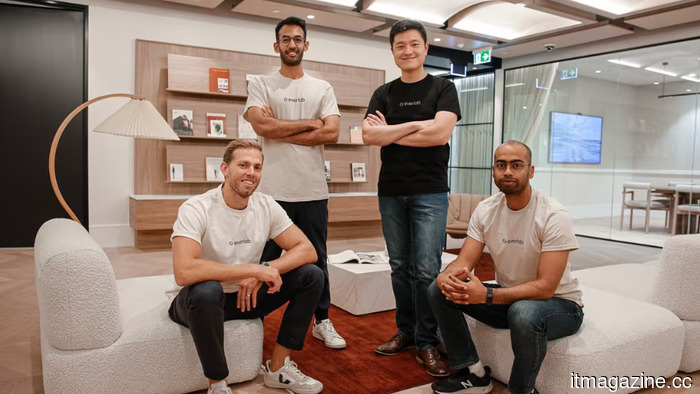 Everlab secures AU$65 million to shift primary care focus from treatment to prevention.
Melbourne-based healthtech company Everlab has secured an oversubscribed AU$65 million in a Series A funding round led by Airtree, which will support its expansion into the UK and a focus on preventative care.
Everlab secures AU$65 million to shift primary care focus from treatment to prevention.
Melbourne-based healthtech company Everlab has secured an oversubscribed AU$65 million in a Series A funding round led by Airtree, which will support its expansion into the UK and a focus on preventative care.
 Telegram contests India's directive that temporarily restricts the app.
Telegram has approached the Delhi High Court regarding a government directive that has blocked the platform until June 22, in connection with alleged cheating on India's NEET-UG medical examination.
Telegram contests India's directive that temporarily restricts the app.
Telegram has approached the Delhi High Court regarding a government directive that has blocked the platform until June 22, in connection with alleged cheating on India's NEET-UG medical examination.
 According to The Information, OpenAI incurred losses of $3.7 billion in the first quarter.
In the first quarter of 2026, OpenAI incurred expenses of $3.7 billion, which is over half of its $5.7 billion revenue, with both numbers having tripled compared to the previous year, according to The Information. The company currently has $73 billion in cash.
According to The Information, OpenAI incurred losses of $3.7 billion in the first quarter.
In the first quarter of 2026, OpenAI incurred expenses of $3.7 billion, which is over half of its $5.7 billion revenue, with both numbers having tripled compared to the previous year, according to The Information. The company currently has $73 billion in cash.
 Shrek 5 trailer: A 'caked up' Gingerbread Man takes center stage as Donkey and the crew find themselves in jail.
The first trailer for Shrek 5 has just been released and it's as wild as always, although not everyone is pleased with the franchise's polished new animation style.
Shrek 5 trailer: A 'caked up' Gingerbread Man takes center stage as Donkey and the crew find themselves in jail.
The first trailer for Shrek 5 has just been released and it's as wild as always, although not everyone is pleased with the franchise's polished new animation style.
Telegram contests India's directive to temporarily suspend the app.
Telegram has approached the Delhi High Court regarding a government directive that restricts its services until 22 June, related to supposed cheating in India’s NEET-UG medical examination.