
Reasons CMOs require a new accountability operating system.
Marketing leaders have more data at their disposal than ever before, yet demonstrating the business impact of advertising is becoming more challenging. As budgets are scrutinized and finance teams seek clearer proof of return on investment, many chief marketing officers (CMOs) are finding that traditional performance metrics no longer meet the inquiries presented in the boardroom.
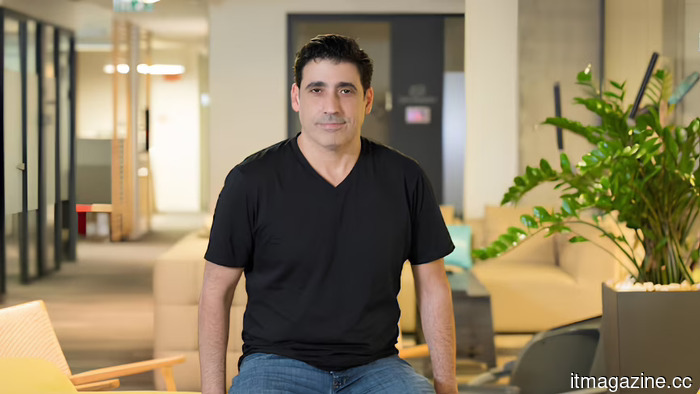
Tal Jacobson, CEO of Perion, argues that the issue goes beyond mere measurement; it is a more profound infrastructure issue. He discusses why the current marketing technology stack fails to provide genuine accountability, how artificial intelligence is transforming both campaign execution and measurement, and what CMOs need to show in order to prove business outcomes rather than just marketing activities.
There has been much discussion about the pressures on CMOs. You believe the issue is more profound than many realize. Why is that?
The dialogue often stops at symptoms; CMOs are feeling pressure, budgets are stagnant, and CFOs demand proof. We all agree on that, but no one is asking why years of investment in marketing technology hasn't actually resolved the underlying problem.
The core issue is structural. We have constructed an entire industry focused on measuring activity rather than outcomes—clicks, impressions, reach, frequency. These do not equate to business results; they are merely substitutes. For a long time, executives accepted them as valid metrics. That time has passed.
CFOs are increasingly demanding accountability for advertising expenditures. They have observed budget increases and now wish to understand the actual impact of those expenditures. Unfortunately, most CMOs, through no fault of their own, cannot provide a credible answer.
Why can't they provide a credible answer? These are advanced organizations with substantial data infrastructure.
The data is present, but it is dispersed across numerous systems, each optimized to highlight its own success.
Search claims credit for conversions, social claims awareness lift, and display claims assists. When channel attributions overlap, they create inflated claims of revenue generated. Every platform has an incentive to showcase its value, with none motivated to present a truthful overall picture.
As a result, CMOs may enter discussions with CFOs armed with numbers from systems not intended to reconcile, leading to perceptions of a measurement problem that is fundamentally an infrastructure issue.
What does the CFO truly want to know that the CMO can't answer?
The most challenging question in advertising: did this spending produce results that wouldn’t have occurred otherwise?
That’s the question of incrementality, which the standard measurement framework was never designed to address. While it is possible to show that a conversion took place, demonstrating that it resulted from the spending—rather than happening in spite of it—is much more complex.
Consider a loyal customer who would have purchased anyway, a seasonal increase inevitable without your campaign, or a market trend progressing independently of your efforts. When you remove those factors, what remains? That is what the CFO seeks to understand, and many marketing departments lack that answer.
Is this a technology issue, an organizational problem, or both?
It is both, but technology must come first. An organizational accountability problem cannot be resolved without the foundational infrastructure that provides necessary evidence.
Currently, CMOs are being asked to operate with the precision expected of CFOs, using tools developed for a different era and a lower standard of proof. This mismatch constitutes the problem. It’s not a question of marketers lacking intelligence or discipline; it's that the infrastructure they use was structured to manage campaigns, not to produce evidence of business-level outcomes.
The industry has promised improved measurement for years. What changes have actually occurred?
What has changed is the penalty for incorrect assumptions. In times of automatic budget growth, lax measurement was acceptable. No one scrutinizes a budget that is generating growth. Now, with stagnant budgets and more challenging growth, each dollar must justify itself against other business priorities.
Additionally, there’s the advent of AI—not just as a buzzword but as a fundamental execution infrastructure. The capacity to process signals across channels in real time, optimize based on business outcomes rather than platform-specific metrics, and distinguish genuine lifts from baseline fluctuations is now technically feasible in ways it wasn't five years ago.
The disconnect lies between what is technologically feasible and what most marketing organizations are currently implementing.
So, what must a CMO possess to approach CFO discussions with confidence?
Three key elements: a comprehensive source of truth across all channels instead of post-fact aggregated channel reports; incrementality measures that can withstand scrutiny, not mere attribution; and the capability to demonstrate real-time optimization rather than relying on a campaign report produced weeks later.
These are not just aspirational goals; they are the minimum standards for the dialogues CMOs should be having by 2026.
Where does Perion fit into this landscape?
We created Perion One specifically to tackle this issue. The principle is clear: fragmentation undermines accountability. If execution is scattered across various channels, measurement will follow suit. Unified evidence cannot arise from a disjointed infrastructure.
Our AI agent, Outmax, functions as a singular execution layer across channels.
Other articles
 Critical Energy secures $22M for prefabricated geothermal systems.
Critical Energy, established by a former SpaceX employee, has secured $22 million to scale up the production of modular geothermal turbines, wagering that the growing demand for AI will require stable sources of clean energy promptly.
Critical Energy secures $22M for prefabricated geothermal systems.
Critical Energy, established by a former SpaceX employee, has secured $22 million to scale up the production of modular geothermal turbines, wagering that the growing demand for AI will require stable sources of clean energy promptly.
 Arcade.dev has raised $60 million to enhance the security of enterprise AI agents.
Arcade.dev secured a $60M Series A funding round, spearheaded by SYN Ventures, to regulate the actions that AI agents can perform within company systems, serving as a barrier that confines agents to pilot activities.
Arcade.dev has raised $60 million to enhance the security of enterprise AI agents.
Arcade.dev secured a $60M Series A funding round, spearheaded by SYN Ventures, to regulate the actions that AI agents can perform within company systems, serving as a barrier that confines agents to pilot activities.
 Trump declines UK request for exemption from Anthropic AI ban.
Starmer's administration advocated for the UK to be exempt from the Anthropic export ban. Washington responded with "zero chance," highlighting Britain's reliance on AI.
Trump declines UK request for exemption from Anthropic AI ban.
Starmer's administration advocated for the UK to be exempt from the Anthropic export ban. Washington responded with "zero chance," highlighting Britain's reliance on AI.
 Arcade.dev has secured $60 million to enhance its enterprise AI agents.
Arcade.dev secured a $60M Series A funding round led by SYN Ventures to regulate the actions AI agents can perform within company systems, effectively containing the agents within pilot programs.
Arcade.dev has secured $60 million to enhance its enterprise AI agents.
Arcade.dev secured a $60M Series A funding round led by SYN Ventures to regulate the actions AI agents can perform within company systems, effectively containing the agents within pilot programs.
 Poland invests $11 million in ElevenLabs.
Poland's state fund Vinci acquired an $11 million stake in the $11 billion AI voice company ElevenLabs and established AI Lab Poland, aiming to foster its own AI leaders domestically.
Poland invests $11 million in ElevenLabs.
Poland's state fund Vinci acquired an $11 million stake in the $11 billion AI voice company ElevenLabs and established AI Lab Poland, aiming to foster its own AI leaders domestically.
 Conduct has secured $60 million in a Series A funding round from Index, ICONIQ, and SAP.
Conduct, a London-based startup established by former Palantir engineers, has secured $60 million in Series A funding from Index, ICONIQ, and SAP to address the complexities of outdated code within large corporations.
Conduct has secured $60 million in a Series A funding round from Index, ICONIQ, and SAP.
Conduct, a London-based startup established by former Palantir engineers, has secured $60 million in Series A funding from Index, ICONIQ, and SAP to address the complexities of outdated code within large corporations.
Reasons CMOs require a new accountability operating system.
Perion's CEO, Tal Jacobson, discusses why the accountability gap for Chief Marketing Officers is an issue related to infrastructure rather than measurement. He also highlights how AI-driven execution is transforming the way marketing demonstrates its impact on business.