
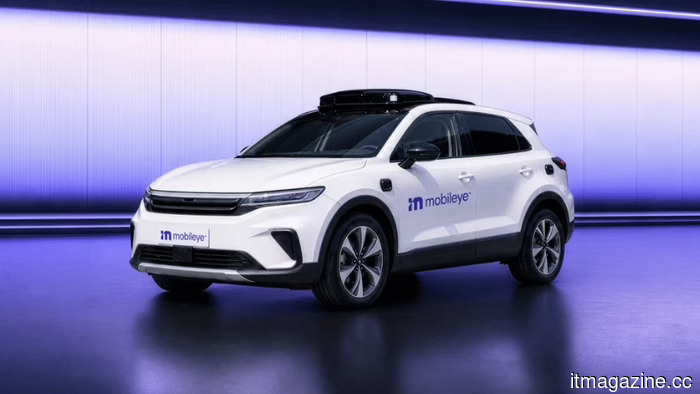
Mobileye plans to introduce its own robotaxi service in the United States in 2027.
For 25 years, Mobileye has been a supplier of self-driving technology, providing cameras, chips, and software for over 230 million vehicles while intentionally leaving the driving aspect to others. On June 16, it announced plans to begin driving itself.
The Jerusalem-based company revealed its intention to launch its own robotaxi service in a U.S. city by 2027, transitioning from solely providing autonomous driving technology to directly owning and operating an autonomous ride-hailing service. Investors reacted positively, with shares increasing by approximately 6 percent.
Mobileye intends to start on a small scale, deploying around 100 vehicles in a major U.S. metropolitan area, gradually expanding through 2027 to fully operate driverless. If successful, the company aims to increase its fleet to about 17,000 vehicles within the next five years.
This transition is significant due to Mobileye's historical position. The Mobileye Drive system is marketed as a standalone product that automotive manufacturers and mobility operators can incorporate into their vehicles, maintaining a neutral supplier status that has allowed partnerships with numerous clients.
Managing its own service disrupts that neutrality and places Mobileye in direct competition with some of its own customers who utilize Mobileye Drive, a conflict the company acknowledges. It presents this shift as a "complementary path to market" rather than a substitution, assuring that its dedication to its partners remains unchanged.
To integrate its full capabilities, Mobileye is utilizing Moovit, a trip-planning application it owns, to handle consumer-facing aspects such as booking, multimodal routing, rider engagement, and fleet management. Moovit claims to serve 1.7 billion users across over 3,500 cities, providing a key advantage that a new entrant would typically take years to cultivate.
CEO Amnon Shashua framed this launch as a necessary response to a market he believes has narrowed, expressing concern over the industry's increasing reliance on a limited number of technology providers and business models, indirectly referencing Waymo's significant lead and Tesla's initiatives.
However, starting in 2027 may be late to make this assertion. Waymo is already providing hundreds of thousands of paid rides weekly in various U.S. cities, while Mobileye's own supplier agreements have occasionally faltered, including the switch from Mobileye to Pony.ai for the Verne robotaxi launch in Zagreb prior to its launch.
The rationale for vertical integration is strong and becoming more popular. XPeng is pursuing a similar strategy, believing that controlling the chip, software, and operations leads to superior robotaxi services compared to assembling various components. Mobileye possesses a greater portion of that stack than many others.
The more pressing concern is the financial aspect. Selling chips is a high-margin, asset-light venture, whereas operating a fleet of robotaxis is burdensome and requires significant capital for vehicles, facilities, maintenance, insurance, and teleoperators—challenges that even Waymo is still striving to address, hence its development of the cost-effective, purpose-built Ojai vehicle.
Mobileye, still primarily owned by Intel and recently completing a roughly $900 million acquisition of humanoid-robot startup Mentee Robotics, is taking on this challenge as it moves into physical AI. It plans to reveal commercial and operational details at a Capital Markets Day before the conclusion of 2026.
The goals are ambitious; the real test will be whether Mobileye can manage a robotaxi operation as proficiently as it develops the technology for one.
Other articles
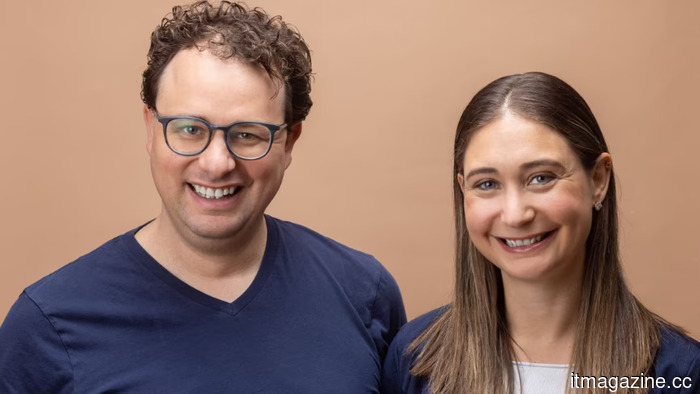 The AI safety paradox at Anthropic: a timeline of six months.
Over the past six months, Anthropic has revealed the untenable situation faced by the AI industry's self-designated safety frontrunner, ranging from a 19,000-word cautionary essay to a shutdown at the White House.
The AI safety paradox at Anthropic: a timeline of six months.
Over the past six months, Anthropic has revealed the untenable situation faced by the AI industry's self-designated safety frontrunner, ranging from a 19,000-word cautionary essay to a shutdown at the White House.
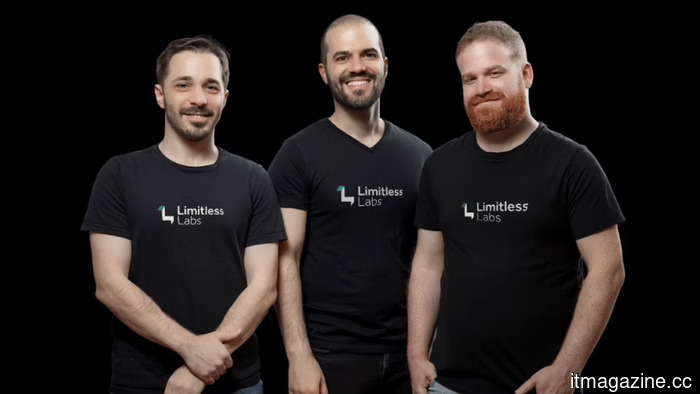 Limitless Labs secures $20 million to introduce AI to manufacturing facilities.
Israel's Limitless Labs secured $20 million in funding, co-led by Dell and Square Peg, for their 'Physical AI' technology in CNC manufacturing. They are already programming components for Blue Origin and Formula 1.
Limitless Labs secures $20 million to introduce AI to manufacturing facilities.
Israel's Limitless Labs secured $20 million in funding, co-led by Dell and Square Peg, for their 'Physical AI' technology in CNC manufacturing. They are already programming components for Blue Origin and Formula 1.
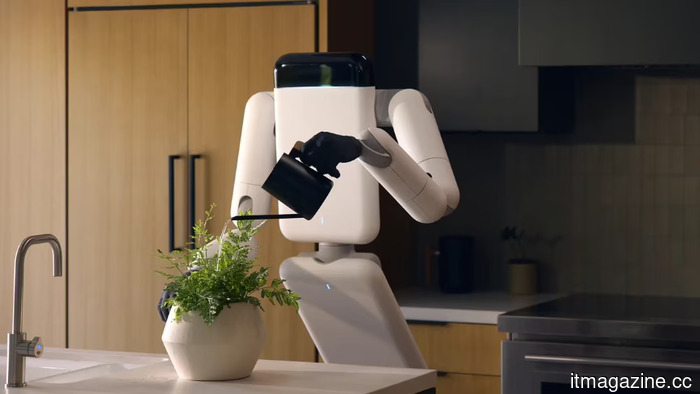 Genesis AI believes that wheels will outperform legs in the robot race.
Genesis AI introduced Eno, a wheeled robot developed using $300 sensor gloves, which contests the humanoid approach supported by $39 billion Figure AI and Boston Dynamics.
Genesis AI believes that wheels will outperform legs in the robot race.
Genesis AI introduced Eno, a wheeled robot developed using $300 sensor gloves, which contests the humanoid approach supported by $39 billion Figure AI and Boston Dynamics.
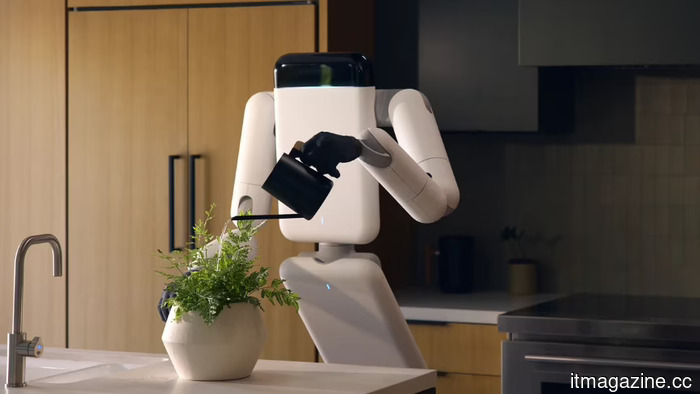 Genesis AI believes that wheels will outpace legs in the robot race.
Genesis AI introduced Eno, a wheeled robot developed using $300 sensor gloves, posing a challenge to the humanoid approach supported by $39 billion Figure AI and Boston Dynamics.
Genesis AI believes that wheels will outpace legs in the robot race.
Genesis AI introduced Eno, a wheeled robot developed using $300 sensor gloves, posing a challenge to the humanoid approach supported by $39 billion Figure AI and Boston Dynamics.
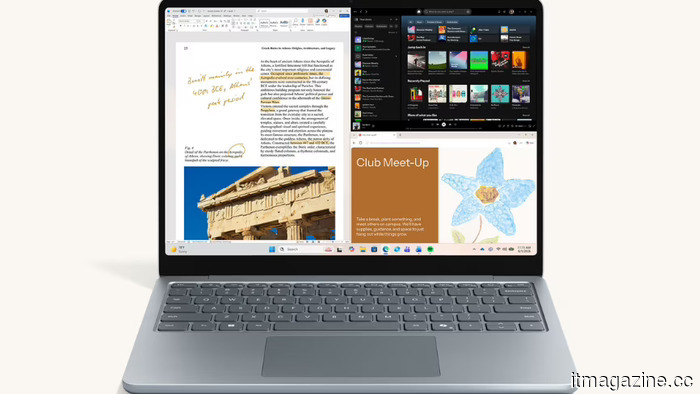 Microsoft's latest Surface Laptop features a trackpad that vibrates similar to a game controller.
The latest Surface Laptop and Surface Pro come equipped with haptic trackpads that provide vibrations when you snap windows or align items. They are ARM-only devices, with prices starting at $1,500, and there is no Intel version available.
Microsoft's latest Surface Laptop features a trackpad that vibrates similar to a game controller.
The latest Surface Laptop and Surface Pro come equipped with haptic trackpads that provide vibrations when you snap windows or align items. They are ARM-only devices, with prices starting at $1,500, and there is no Intel version available.
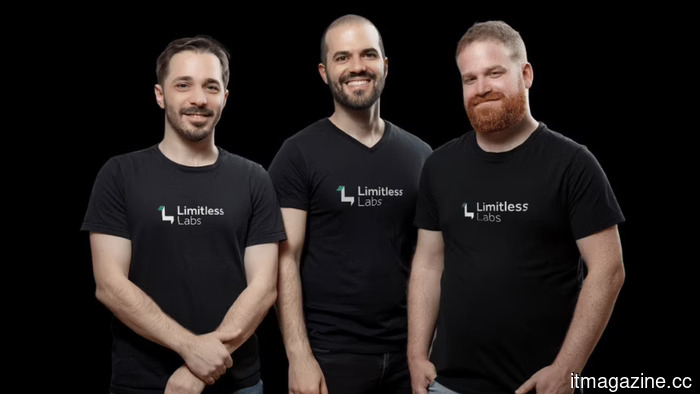 Limitless Labs secures $20 million to introduce AI technology to manufacturing environments.
Israel's Limitless Labs secured $20M in funding, co-led by Dell and Square Peg, to develop 'Physical AI' for CNC manufacturing. The company is already programming components for Blue Origin and Formula 1.
Limitless Labs secures $20 million to introduce AI technology to manufacturing environments.
Israel's Limitless Labs secured $20M in funding, co-led by Dell and Square Peg, to develop 'Physical AI' for CNC manufacturing. The company is already programming components for Blue Origin and Formula 1.
Mobileye plans to introduce its own robotaxi service in the United States in 2027.
Mobileye is set to introduce its own robotaxi service in a U.S. city by 2027, putting the self-driving technology provider in competition with the automakers that purchase Mobileye Drive from it.