
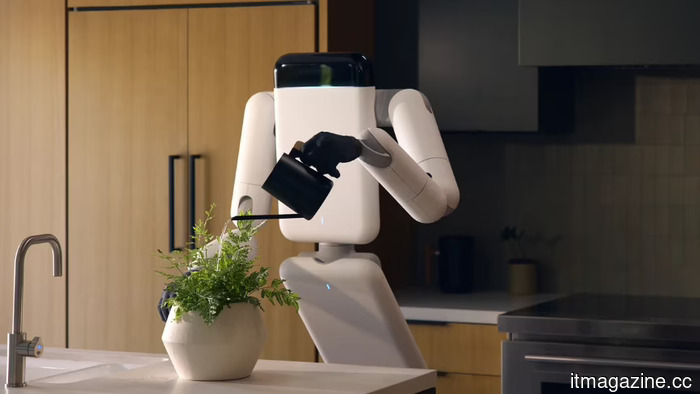
Genesis AI believes that wheels will outpace legs in the robot race.
**Summary:** Genesis AI introduced Eno, a wheeled robot equipped with versatile hands and an underlying model named GENE, aiming to offer a more cost-effective and practical alternative to humanoid robots. The French-American startup successfully secured $105 million in seed funding and intends to start customer deployments by late 2026.
On Tuesday, amidst the robotics industry's significant investments in human-like walking machines, Genesis AI presented a robot that consciously diverges from that trend. Eno features a wheeled design with a collapsible tower and dexterous hands, with its developers asserting that it achieves human-level manipulation.
This approach challenges the prevalent industry notion that effective robots must resemble and move like humans.
The stakes for Genesis are substantial. Figure AI, for example, boasts a private valuation of $39 billion and has begun utilizing its Figure 03 humanoid robot in a warehouse for Catalyst Brands, which manages logistics for JCPenney and Brooks Brothers. Hyundai and Boston Dynamics forecast producing 30,000 Atlas humanoids annually by 2028, intended for deployment in car factories in Georgia. Additionally, Norway's 1X Technologies quickly sold out its inaugural production run of 10,000 domestic robots within five days of starting preorders.
This trend is also visible in China, where over 150 companies are vying for a market that projected shipping approximately 14,000 units in 2025. However, only 23% of customers reported satisfaction, highlighting a disconnect between supply ambitions and demand realities that Genesis believes supports its strategy.
Zhou Xian, co-founder and CEO of Genesis AI, stated to Business Insider that the biggest challenge in robotics isn't movement, but manipulation—the capability to interact with objects as skillfully and flexibly as a human hand. Significant investments have flowed into addressing this challenge; for instance, the Chinese company Linkerbot is targeting a valuation of $6 billion based solely on its advanced grippers, producing over 1,000 units monthly.
Zhou, who earned his PhD from Carnegie Mellon, established Genesis alongside Théophile Gervet, a former researcher at Mistral. The company operates out of offices in Paris and San Francisco, employing about 60 people.
Eno’s wheeled design stems from this insight. Wheels are less expensive to produce, easier to stabilize, and safer to operate near humans compared to bipedal legs, which remain a major engineering hurdle at a commercial scale. While this means Eno cannot ascend stairs, Genesis argues that this limitation largely doesn't hinder its intended applications in logistics, manufacturing, hospitals, and hotels.
Unlike most robotics firms that utilize teleoperation—which can cost up to $6,000 per hour—Genesis has developed a sensor glove that establishes a direct link between a human hand, the glove, and the robot's hand. The gloves are priced around $300 per pair, roughly 100 times lower than traditional teleoperation systems, and can gather up to five times more usable training data per session.
This information supports the GENE-26.5 model, which Genesis showcased in May. In a demonstration, a single model, running on the same hardware, completed various tasks, including cooking, solving a Rubik’s cube, playing the piano, and assembling wire harnesses.
Genesis is not alone in questioning the humanoid standard. Sunday Robotics has raised $165 million in a Series B funding round, achieving a $1.15 billion valuation for Memo, a wheeled domestic robot trained using data from sensor gloves worn in over 500 real households. Meanwhile, the German startup Sereact is creating a "robot brain" that can integrate with existing industrial systems. Its Cortex model has been implemented in over 200 systems for clients like BMW, Daimler Truck, and PepsiCo, thus bypassing the debate about robot form altogether.
Agility Robotics' bipedal Digit has managed to be the first humanoid robot generating revenue from commercial clients, moving more than 100,000 totes in a GXO Logistics warehouse. The contrast between this achievement and the multi-billion-dollar valuations in the industry raises questions.
The logistics market that Genesis aims to penetrate is already competitive. Amazon has invested over €10 billion in its European fulfillment network and has recently rolled out Proteus, a warehouse robot that operates based on simple language commands.
Regarding funding, Genesis secured $105 million in seed financing, co-led by Eclipse Ventures and Khosla Ventures, with contributions from figures such as Eric Schmidt, Xavier Niel, MIT robotics professor Daniela Rus, and former head of Intel Labs, Vladlen Koltun. Eclipse partner Charly Mwangi noted, “Even in the most automated industries, the robot-to-human ratio rarely surpasses 1:30.”
Genesis plans to begin production and customer deployments by late 2026, initially focusing on logistics and manufacturing before branching into hospitality and healthcare. The outcome of the competition between the humanoid industry's major players and Genesis's unconventional approach will depend on the still-un
Other articles
 The Arch Linux AUR has been affected by malware aimed at obtaining developer credentials.
Attackers compromised more than 1,500 packages in the Arch Linux AUR to introduce a credential-stealing malware. While the official repositories remain secure, the trust model has been affected.
The Arch Linux AUR has been affected by malware aimed at obtaining developer credentials.
Attackers compromised more than 1,500 packages in the Arch Linux AUR to introduce a credential-stealing malware. While the official repositories remain secure, the trust model has been affected.
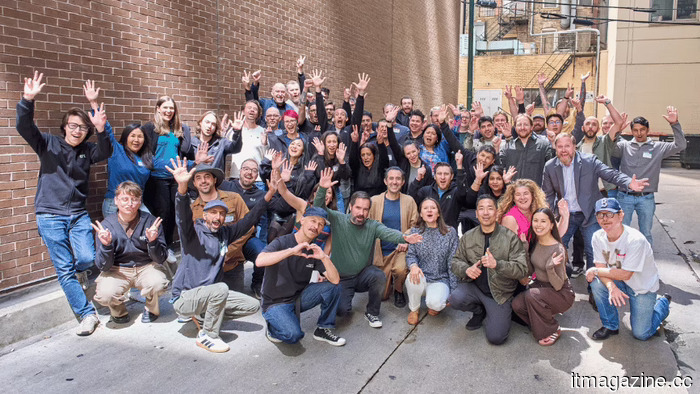 Ent Security secures $100 million to reinstate prevention in cybersecurity.
Ent Security, established by the RiskIQ team that developed Microsoft Security Copilot, has secured $100 million in seed funding to reintroduce AI-driven prevention at the endpoint.
Ent Security secures $100 million to reinstate prevention in cybersecurity.
Ent Security, established by the RiskIQ team that developed Microsoft Security Copilot, has secured $100 million in seed funding to reintroduce AI-driven prevention at the endpoint.
 CyCognito advances AI pentesting beyond mere vulnerability scans as enterprise attack surfaces develop.
CyCognito enhances its exposure management platform by introducing continuous AI pentesting, which mimics multi-step attack sequences throughout enterprise infrastructure, revealing contextual risks that traditional CVE-based scanners overlook.
CyCognito advances AI pentesting beyond mere vulnerability scans as enterprise attack surfaces develop.
CyCognito enhances its exposure management platform by introducing continuous AI pentesting, which mimics multi-step attack sequences throughout enterprise infrastructure, revealing contextual risks that traditional CVE-based scanners overlook.
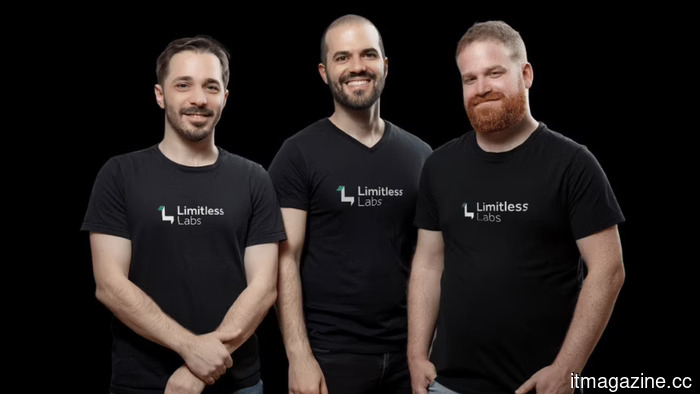 Limitless Labs secures $20 million to introduce AI technology to manufacturing environments.
Israel's Limitless Labs secured $20M in funding, co-led by Dell and Square Peg, to develop 'Physical AI' for CNC manufacturing. The company is already programming components for Blue Origin and Formula 1.
Limitless Labs secures $20 million to introduce AI technology to manufacturing environments.
Israel's Limitless Labs secured $20M in funding, co-led by Dell and Square Peg, to develop 'Physical AI' for CNC manufacturing. The company is already programming components for Blue Origin and Formula 1.
 Lightbringer secures $10 million to substitute patent firms with artificial intelligence.
Sweden's Lightbringer has secured $10 million to expand its 'AI-native patent firm' into the US, believing that agentic AI can not only support patent attorneys but also take their place.
Lightbringer secures $10 million to substitute patent firms with artificial intelligence.
Sweden's Lightbringer has secured $10 million to expand its 'AI-native patent firm' into the US, believing that agentic AI can not only support patent attorneys but also take their place.
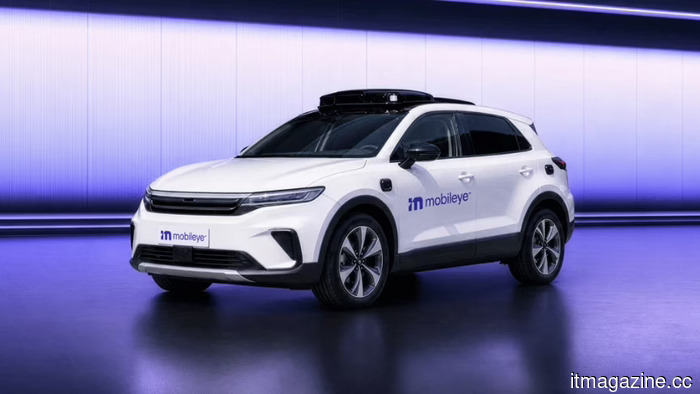 Mobileye is set to introduce its own robotaxi service in the US by 2027.
Mobileye is set to introduce its own robotaxi service in a US city in 2027, putting the self-driving technology provider in competition with the automakers to whom it supplies Mobileye Drive.
Mobileye is set to introduce its own robotaxi service in the US by 2027.
Mobileye is set to introduce its own robotaxi service in a US city in 2027, putting the self-driving technology provider in competition with the automakers to whom it supplies Mobileye Drive.
Genesis AI believes that wheels will outpace legs in the robot race.
Genesis AI introduced Eno, a wheeled robot developed using $300 sensor gloves, posing a challenge to the humanoid approach supported by $39 billion Figure AI and Boston Dynamics.