
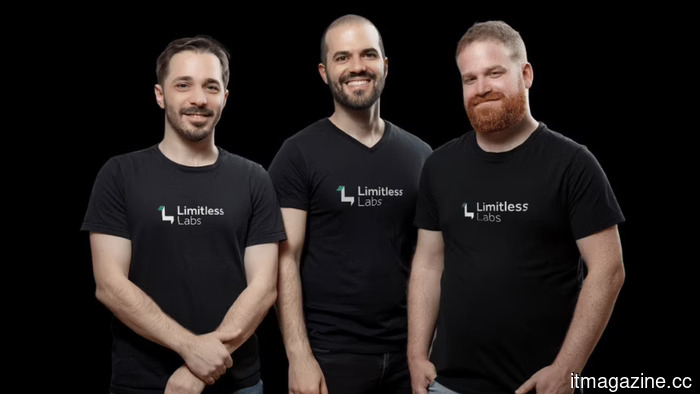
Limitless Labs secures $20 million to introduce AI technology to manufacturing environments.
The most exciting development in AI today isn't another chatbot; it's software capable of managing factory floor machinery. A two-year-old Israeli startup has recently secured $20 million by programming components for Jeff Bezos’s rockets.
Limitless Labs, which was previously known as LimitlessCNC, completed a $20 million Series A round co-led by Dell Technologies Capital and Square Peg, along with Grove Ventures, Meron Capital, and Kinetica. This brings their total funding to $27.3 million.
Based in Tel Aviv, the company has created an AI agent for CNC machining, the precise metal-cutting technology used in everything from rocket engines to medical implants. By supplying a 3D design file, it can select the cutting tools, organize the operations, and produce a machine program that is ready to execute, reducing programming time by as much as 50%.
The challenge they aim to solve is demographic. Nearly 25% of manufacturing workers in the US are aged 55 or older, leading to approximately 409,000 unfilled factory positions, with projections suggesting a shortfall of 1.9 million by 2033. Much of the expertise is held as ‘tribal knowledge’ by seasoned machinists, which departs the workforce upon their retirement. "The manufacturing industry needs an improved method to capture and scale the knowledge held by a relatively small number of skilled machinists," stated co-founder and CEO David Priev.
Unlike models trained on text, Limitless claims its ‘Physical AI’ is educated on the principles of metal cutting, machine capabilities, and CAD geometry, seamlessly integrating with existing software used by engineers, such as Siemens NX, Mastercam, and PTC Creo.
Their customer list stands out. Limitless is already operational with Blue Origin, Cadillac’s Formula One team, Sandvik, and tool manufacturer ISCAR, sectors where programming mistakes can result in severe consequences, and tolerances are incredibly precise. Their software is ITAR-compliant and operates on AWS GovCloud for defense applications.
Securing contracts with such prominent names during their Series A, while many competitors remain in the pilot phase, strongly indicates their approach is effective. The founders, two of whom have backgrounds in the IDF’s elite 81 tech unit, completed the funding round in just three weeks, with the US investor roadshow coinciding with the early days of the Iran war, while Priev’s family sheltered at home as he pitched internationally.
The landscape is competitive and financially robust. The term ‘Physical AI’ is becoming widespread, with Barcelona’s THEKER raising €73 million for factory robots and NEURA Robotics obtaining up to $1.4 billion, while established players like Fanuc, Google, and Accenture are all eager to implement AI in factory settings. In contrast, $20 million seems modest in this context.
A more challenging goal lies ahead. Limitless aims to move towards ‘closed-loop’ automation, but currently requires a human engineer to approve each program. Successfully encoding a master machinist’s instincts into a model that can be reliably trusted for rocket applications is the true challenge, and it is the focus of the funding received.
Other articles
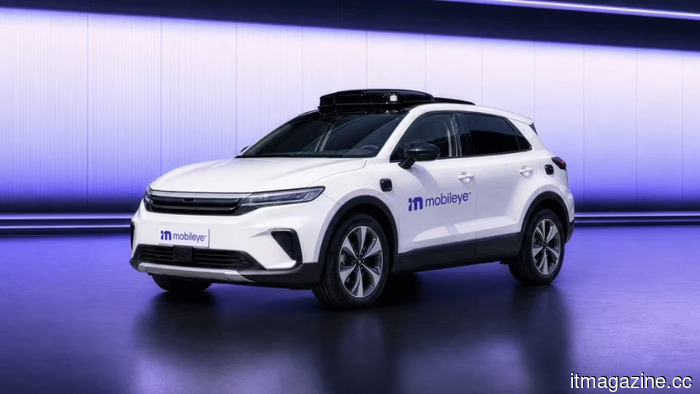 Mobileye plans to introduce its own robotaxi service in the US in 2027.
Mobileye is set to introduce its own robotaxi service in a U.S. city in 2027, positioning the self-driving technology provider in competition with the automakers to whom it supplies Mobileye Drive.
Mobileye plans to introduce its own robotaxi service in the US in 2027.
Mobileye is set to introduce its own robotaxi service in a U.S. city in 2027, positioning the self-driving technology provider in competition with the automakers to whom it supplies Mobileye Drive.
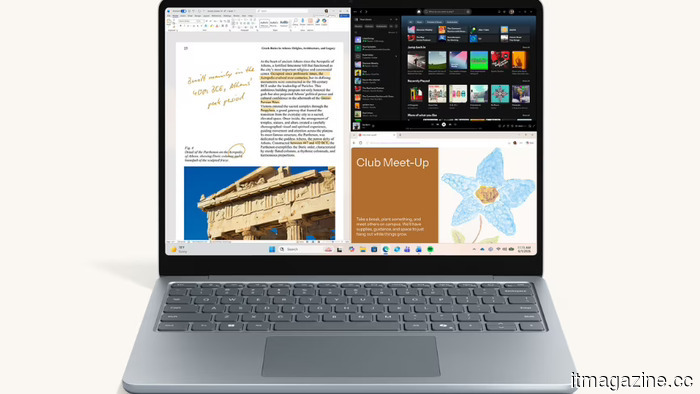 Microsoft's latest Surface Laptop features a trackpad that vibrates similar to a game controller.
The latest Surface Laptop and Surface Pro come with haptic trackpads that provide vibrations when you snap windows or arrange objects. They are ARM-only, with prices starting at $1,500, and there is no Intel version available.
Microsoft's latest Surface Laptop features a trackpad that vibrates similar to a game controller.
The latest Surface Laptop and Surface Pro come with haptic trackpads that provide vibrations when you snap windows or arrange objects. They are ARM-only, with prices starting at $1,500, and there is no Intel version available.
 The AI safety paradox of Anthropic: a timeline spanning six months.
Spanning a 19,000-word cautionary essay to a White House shutdown, Anthropic's last six months highlight the challenging circumstances faced by the AI industry's self-designated leader in safety.
The AI safety paradox of Anthropic: a timeline spanning six months.
Spanning a 19,000-word cautionary essay to a White House shutdown, Anthropic's last six months highlight the challenging circumstances faced by the AI industry's self-designated leader in safety.
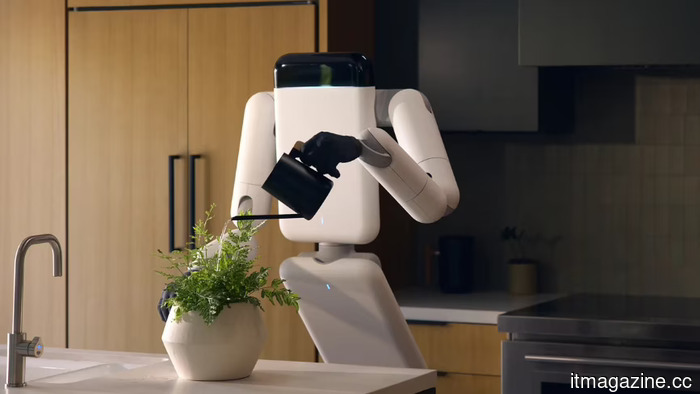 Genesis AI believes that wheels outperform legs in the robot race.
Genesis AI introduced Eno, a wheeled robot developed using $300 sensor gloves, challenging the humanoid approach supported by $39 billion firms Figure AI and Boston Dynamics.
Genesis AI believes that wheels outperform legs in the robot race.
Genesis AI introduced Eno, a wheeled robot developed using $300 sensor gloves, challenging the humanoid approach supported by $39 billion firms Figure AI and Boston Dynamics.
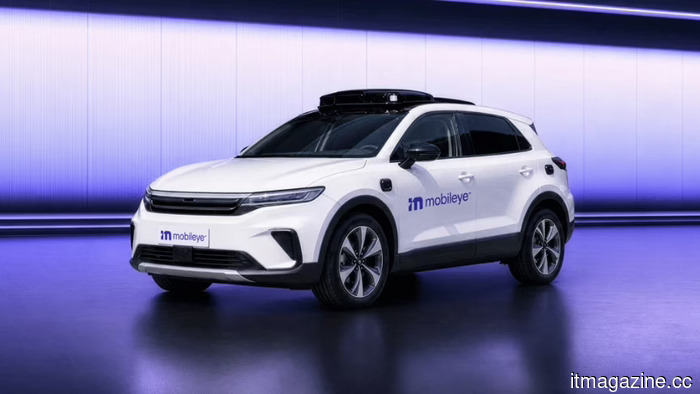 Mobileye is set to introduce its own robotaxi service in the US by 2027.
Mobileye is set to introduce its own robotaxi service in a US city in 2027, putting the self-driving technology provider in competition with the automakers to whom it supplies Mobileye Drive.
Mobileye is set to introduce its own robotaxi service in the US by 2027.
Mobileye is set to introduce its own robotaxi service in a US city in 2027, putting the self-driving technology provider in competition with the automakers to whom it supplies Mobileye Drive.
 Ent Security secures $100 million to reinstate prevention in cybersecurity.
Ent Security, established by the RiskIQ team that developed Microsoft Security Copilot, has secured $100 million in seed funding to reintroduce AI-driven prevention at the endpoint.
Ent Security secures $100 million to reinstate prevention in cybersecurity.
Ent Security, established by the RiskIQ team that developed Microsoft Security Copilot, has secured $100 million in seed funding to reintroduce AI-driven prevention at the endpoint.
Limitless Labs secures $20 million to introduce AI technology to manufacturing environments.
Israel's Limitless Labs secured $20M in funding, co-led by Dell and Square Peg, to develop 'Physical AI' for CNC manufacturing. The company is already programming components for Blue Origin and Formula 1.