
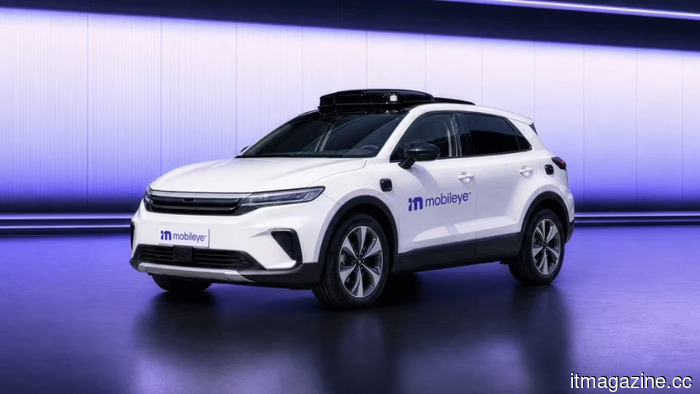
Mobileye plans to introduce its own robotaxi service in the US in 2027.
For the past 25 years, Mobileye has essentially been a supplier in the self-driving sector, providing cameras, chips, and software that are now integrated into over 230 million vehicles, while intentionally leaving the actual driving to others. On June 16, the company announced it would begin to take on the driving task itself.
The Jerusalem-based firm revealed its intention to introduce a robotaxi service in a U.S. city by 2027, transitioning from being a provider of autonomous driving technology to directly owning and operating an autonomous ride-hailing service. Investors responded positively, resulting in a roughly 6 percent increase in its stock.
Mobileye aims to start modestly, deploying around 100 vehicles in a major U.S. metropolitan area, with the rollout planned throughout 2027 and operating entirely without drivers. If successful, the company plans to expand its fleet to about 17,000 vehicles over the subsequent five years.
This change is significant considering Mobileye's longstanding role as a supplier. Its Mobileye Drive system is offered as an independent product that car manufacturers and mobility operators can integrate into their vehicles, allowing for a neutral supplier relationship that has made the company a partner to many.
However, entering the operational side of the business will break that neutrality, placing Mobileye in direct competition with some of its customers who license Mobileye Drive. The company seems aware of this potential conflict and describes the new venture as a “complementary path to market,” asserting that its dedication to serving partners remains unchanged.
To unify its offerings, Mobileye is relying on Moovit, the trip-planning app it owns, to handle user-facing aspects such as booking, multimodal routing, rider engagement, and fleet management. Moovit boasts 1.7 billion users across over 3,500 cities, providing a valuable demand base that a new operator would usually take years to establish.
Mobileye's CEO, Amnon Shashua, portrayed the launch as a necessary response to a market that has become more concentrated. He remarked that the industry has grown increasingly reliant on a limited number of technology providers and business models, implicitly referencing Waymo’s significant lead and Tesla’s advancements.
Nonetheless, 2027 feels like a late entry into this argument. Waymo is already conducting hundreds of thousands of paid rides weekly across many U.S. cities, while Mobileye's own supplier agreements have faced delays, including the robotaxi launch in Zagreb that shifted from Mobileye to Pony.ai before it went live.
The strategy of vertical integration seems reasonable and is gaining traction. XPeng is also placing its bets on the idea that controlling the chip, software, and operations will yield a superior robotaxi compared to piecing it together. Mobileye possesses more of that integration than many others.
However, the real challenge lies in the business aspect, rather than the driving technology. A chip-sales model yields high margins and requires less capital; in contrast, operating a fleet of robotaxis is capital-intensive and involves challenges related to vehicles, depots, maintenance, insurance, and teleoperators. Even companies like Waymo are still striving to achieve profitability, leading to its introduction of the more affordable, purpose-built Ojai vehicle.
Mobileye, which is primarily owned by Intel and has recently completed a roughly $900 million acquisition of humanoid-robot startup Mentee Robotics, is taking on this substantial undertaking as it ventures further into physical AI. The company has announced plans to provide details regarding commercialization and operations at a Capital Markets Day before the end of 2026.
The goals are ambitious, and whether Mobileye can successfully manage a robotaxi business alongside its development of the underlying technology remains to be seen.
Other articles
 The AI safety paradox of Anthropic: a timeline spanning six months.
Spanning a 19,000-word cautionary essay to a White House shutdown, Anthropic's last six months highlight the challenging circumstances faced by the AI industry's self-designated leader in safety.
The AI safety paradox of Anthropic: a timeline spanning six months.
Spanning a 19,000-word cautionary essay to a White House shutdown, Anthropic's last six months highlight the challenging circumstances faced by the AI industry's self-designated leader in safety.
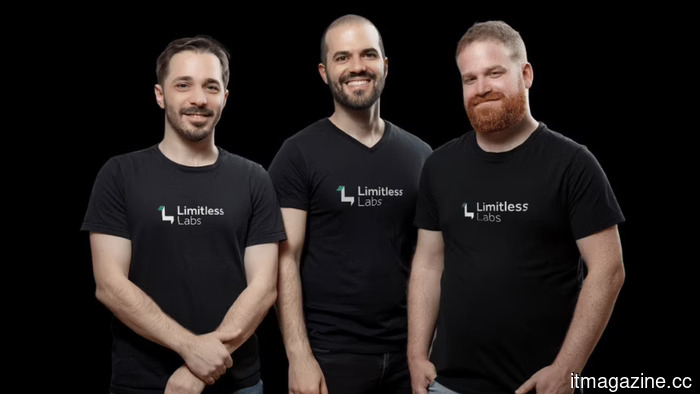 Limitless Labs secures $20 million to introduce AI technology to manufacturing environments.
Israel's Limitless Labs secured $20M in funding, co-led by Dell and Square Peg, to develop 'Physical AI' for CNC manufacturing. The company is already programming components for Blue Origin and Formula 1.
Limitless Labs secures $20 million to introduce AI technology to manufacturing environments.
Israel's Limitless Labs secured $20M in funding, co-led by Dell and Square Peg, to develop 'Physical AI' for CNC manufacturing. The company is already programming components for Blue Origin and Formula 1.
 Big Tech executives enlist in the Army Reserve amid rising worries about conflicts.
Cloudflare, Sutter Hill, and former Reddit executives are now part of the Pentagon's Detachment 201, joining the CTOs from Palantir and Meta. Ethical oversight groups are seeking clarification.
Big Tech executives enlist in the Army Reserve amid rising worries about conflicts.
Cloudflare, Sutter Hill, and former Reddit executives are now part of the Pentagon's Detachment 201, joining the CTOs from Palantir and Meta. Ethical oversight groups are seeking clarification.
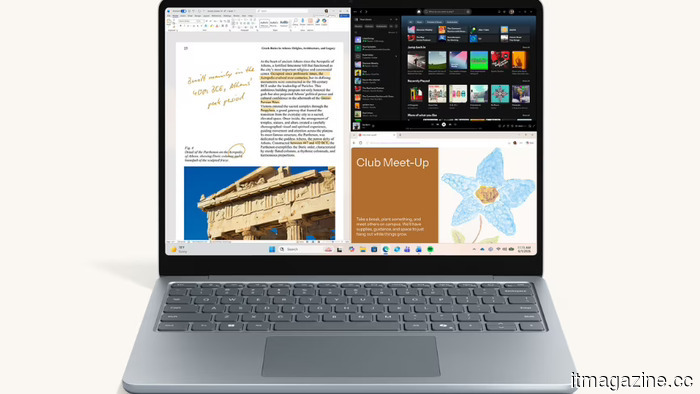 Microsoft's latest Surface Laptop features a trackpad that vibrates similar to a game controller.
The latest Surface Laptop and Surface Pro come with haptic trackpads that provide vibrations when you snap windows or arrange objects. They are ARM-only, with prices starting at $1,500, and there is no Intel version available.
Microsoft's latest Surface Laptop features a trackpad that vibrates similar to a game controller.
The latest Surface Laptop and Surface Pro come with haptic trackpads that provide vibrations when you snap windows or arrange objects. They are ARM-only, with prices starting at $1,500, and there is no Intel version available.
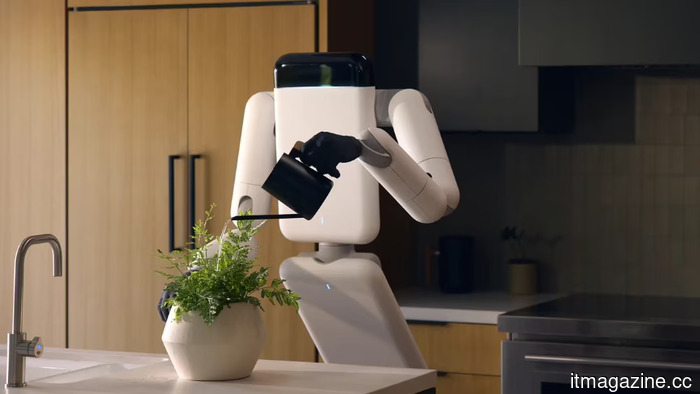 Genesis AI believes that wheels will outperform legs in the robot race.
Genesis AI introduced Eno, a wheeled robot developed using $300 sensor gloves, which contests the humanoid approach supported by $39 billion Figure AI and Boston Dynamics.
Genesis AI believes that wheels will outperform legs in the robot race.
Genesis AI introduced Eno, a wheeled robot developed using $300 sensor gloves, which contests the humanoid approach supported by $39 billion Figure AI and Boston Dynamics.
 CyCognito advances AI penetration testing beyond just vulnerability assessments as the attack surfaces of enterprises change.
CyCognito enhances its exposure management platform by introducing ongoing AI penetration testing that replicates multi-step attack sequences throughout enterprise infrastructure, revealing contextual risks overlooked by traditional CVE-based scanners.
CyCognito advances AI penetration testing beyond just vulnerability assessments as the attack surfaces of enterprises change.
CyCognito enhances its exposure management platform by introducing ongoing AI penetration testing that replicates multi-step attack sequences throughout enterprise infrastructure, revealing contextual risks overlooked by traditional CVE-based scanners.
Mobileye plans to introduce its own robotaxi service in the US in 2027.
Mobileye is set to introduce its own robotaxi service in a U.S. city in 2027, positioning the self-driving technology provider in competition with the automakers to whom it supplies Mobileye Drive.