
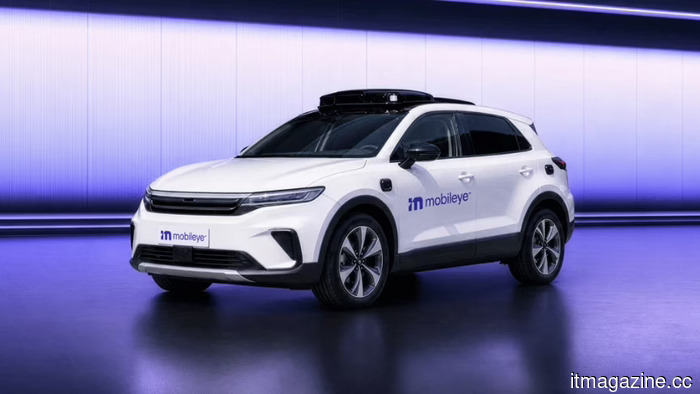
Mobileye is set to introduce its own robotaxi service in the US by 2027.
For 25 years, Mobileye has been the supplier of self-driving technology, providing cameras, chips, and software that are now present in over 230 million vehicles, while intentionally avoiding direct involvement in the driving sector. On June 16, it announced plans to begin driving itself.
The Jerusalem-based company revealed intentions to launch its own robotaxi service in a U.S. city by 2027, shifting from merely supplying autonomous-driving technology to operating its own autonomous ride-hailing service. Investors reacted positively, with shares increasing by approximately 6 percent.
Mobileye intends to start modestly, operating a fleet of around 100 vehicles in a prominent U.S. metropolitan area, gradually rolling out through 2027, and aiming for fully driverless operation. If successful, the goal is to expand to about 17,000 vehicles in the subsequent five years.
This transition is significant due to Mobileye's historical role. Its Mobileye Drive system has been marketed as an independent product for car manufacturers and mobility operators to integrate into their own vehicles, maintaining a neutral-supplier status and forming partnerships with nearly everyone.
Operating its own service challenges that neutrality. It places Mobileye in direct competition with some customers who license Mobileye Drive, a situation the company seems to acknowledge. It presents this move as a “complementary path to market” instead of a replacement and asserts that its commitment to partnering does not change.
To integrate its operations, Mobileye is relying on Moovit, the trip-planning application it owns, for the consumer-facing aspects such as booking, multimodal routing, rider engagement, and fleet management. Moovit claims to serve 1.7 billion users across over 3,500 cities, providing a level of user reach that would otherwise take a new operator years to establish.
CEO Amnon Shashua described the launch as a response to a market he believes has become limited. He mentioned that the industry is increasingly reliant on a small number of technology providers and business models, indirectly referencing Waymo's significant lead and Tesla’s advances.
However, 2027 may be too late to make this claim. Waymo is already conducting hundreds of thousands of paid rides weekly in an expanding number of U.S. cities, while Mobileye’s supplier agreements have encountered delays, including the shifting of the Verne robotaxi launch in Zagreb from Mobileye to Pony.ai before it became operational.
The idea of vertical integration is appealing and becoming more popular. XPeng is taking a similar approach, believing that owning the chip, software, and operations will yield a superior robotaxi compared to assembling the components separately. Mobileye owns more of this value chain than most companies.
The more challenging aspect lies in the business operations rather than the technology. The sale of chips is a high-margin, low-asset business, while managing a fleet of robotaxis requires significant capital and involves costs associated with vehicles, depots, maintenance, insurance, and teleoperation—challenges that even Waymo is striving to monetize with its more affordable, specialized Ojai vehicle.
Mobileye, which remains majority-owned by Intel and has recently completed a roughly $900 million acquisition of humanoid-robot startup Mentee Robotics, is taking on this challenge while also venturing into physical AI. It plans to share details about commercialization and operations at a Capital Markets Day before the end of 2026.
The objectives are ambitious; whether Mobileye can effectively operate a robotaxi business as competently as it develops the technology behind it is what those targets must demonstrate.
Other articles
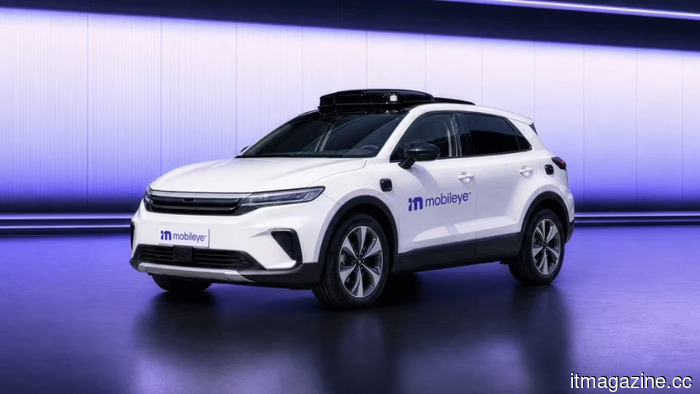 Mobileye plans to introduce its own robotaxi service in the US in 2027.
Mobileye is set to introduce its own robotaxi service in a U.S. city in 2027, positioning the self-driving technology provider in competition with the automakers to whom it supplies Mobileye Drive.
Mobileye plans to introduce its own robotaxi service in the US in 2027.
Mobileye is set to introduce its own robotaxi service in a U.S. city in 2027, positioning the self-driving technology provider in competition with the automakers to whom it supplies Mobileye Drive.
 CyCognito advances AI pentesting beyond mere vulnerability scans as enterprise attack surfaces develop.
CyCognito enhances its exposure management platform by introducing continuous AI pentesting, which mimics multi-step attack sequences throughout enterprise infrastructure, revealing contextual risks that traditional CVE-based scanners overlook.
CyCognito advances AI pentesting beyond mere vulnerability scans as enterprise attack surfaces develop.
CyCognito enhances its exposure management platform by introducing continuous AI pentesting, which mimics multi-step attack sequences throughout enterprise infrastructure, revealing contextual risks that traditional CVE-based scanners overlook.
 The Arch Linux AUR has been affected by malware aimed at obtaining developer credentials.
Attackers compromised more than 1,500 packages in the Arch Linux AUR to introduce a credential-stealing malware. While the official repositories remain secure, the trust model has been affected.
The Arch Linux AUR has been affected by malware aimed at obtaining developer credentials.
Attackers compromised more than 1,500 packages in the Arch Linux AUR to introduce a credential-stealing malware. While the official repositories remain secure, the trust model has been affected.
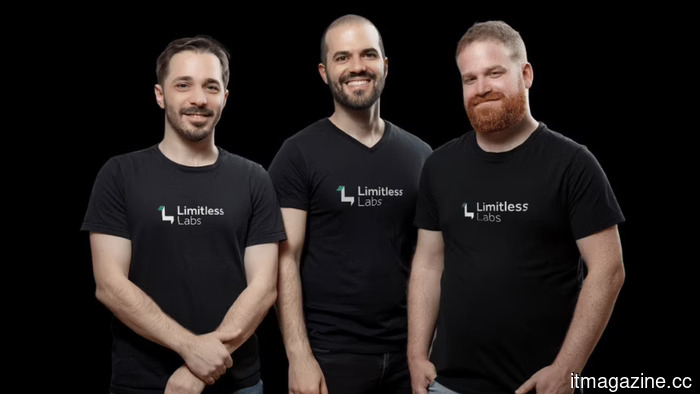 Limitless Labs secures $20 million to introduce AI technology to manufacturing environments.
Israel's Limitless Labs secured $20M in funding, co-led by Dell and Square Peg, to develop 'Physical AI' for CNC manufacturing. The company is already programming components for Blue Origin and Formula 1.
Limitless Labs secures $20 million to introduce AI technology to manufacturing environments.
Israel's Limitless Labs secured $20M in funding, co-led by Dell and Square Peg, to develop 'Physical AI' for CNC manufacturing. The company is already programming components for Blue Origin and Formula 1.
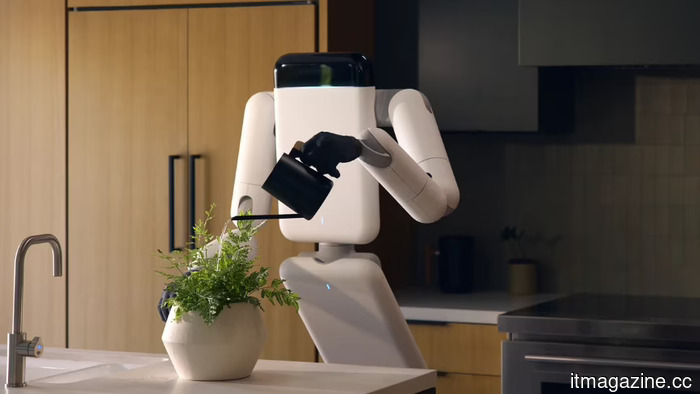 Genesis AI believes that wheels will outpace legs in the robot race.
Genesis AI introduced Eno, a wheeled robot developed using $300 sensor gloves, posing a challenge to the humanoid approach supported by $39 billion Figure AI and Boston Dynamics.
Genesis AI believes that wheels will outpace legs in the robot race.
Genesis AI introduced Eno, a wheeled robot developed using $300 sensor gloves, posing a challenge to the humanoid approach supported by $39 billion Figure AI and Boston Dynamics.
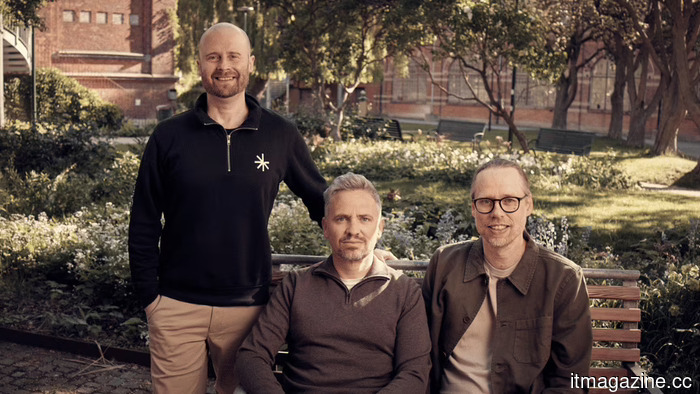 Lightbringer secures $10 million to substitute patent firms with artificial intelligence.
Sweden's Lightbringer has secured $10 million to expand its 'AI-native patent firm' into the US, believing that agentic AI can not only support patent attorneys but also take their place.
Lightbringer secures $10 million to substitute patent firms with artificial intelligence.
Sweden's Lightbringer has secured $10 million to expand its 'AI-native patent firm' into the US, believing that agentic AI can not only support patent attorneys but also take their place.
Mobileye is set to introduce its own robotaxi service in the US by 2027.
Mobileye is set to introduce its own robotaxi service in a US city in 2027, putting the self-driving technology provider in competition with the automakers to whom it supplies Mobileye Drive.