

Lightbringer secures $10 million to substitute patent firms with artificial intelligence.
A Swedish startup aims to do for patent attorneys what Harvey and Legora are doing for corporate lawyers, though its goal is not to provide better tools but rather to replace them altogether. Lightbringer has secured $10 million (€8.6 million) in a Series A funding round to expand its self-proclaimed "AI-native patent firm" into the United States, the largest and most fiercely guarded market for intellectual property.
This funding round was co-led by London’s 6 Degrees Capital and Amsterdam’s Newion, with participation from existing investors Luminar Ventures and Alliance VC. The company reports a 300 percent year-on-year revenue growth in the second quarter.
Replacing the firm rather than the lawyers' software
Most AI solutions in the patent sector have focused on enhancing lawyers' efficiency by reducing administrative tasks and billable hours. Lightbringer’s approach is more radical: it aims to completely replace patent firms, becoming part of a wave of startups that are pushing against the legal industry’s reluctance to evolve.
Its ‘Service as Software’ model integrates IP strategy, filing, and portfolio management into a single, fixed-price subscription. Founded in 2023, it combines agentic AI with human patent lawyers for supervision and claims to reduce typical filing times from two months to just a few days, at about half the usual cost.
The gap is significant. There is a shortage of patent attorneys with a deep understanding of areas like quantum sensing or novel materials, and Lightbringer contends that AI can rapidly develop that specialized expertise. Since 2024, it claims to have managed patents for over 200 deep-tech companies across 17 countries.
The challenge in the US
The United States represents the primary source of revenue in the IP legal-services market, valued at around €14.8 billion, and it presents significant barriers. The US patent bar is highly regulated, with strict rules governing who can practice before the patent office, which will test the limits of how far an "AI-native firm" can operate before requiring a human attorney's endorsement.
This market is also highly competitive and well-funded. AI-focused law firms are proliferating, and legal-AI platforms like Legora have secured hundreds of millions to pursue their own initiatives in the US, making Lightbringer’s $10 million funding seem modest, even with its targeted niche.
Moreover, speed does not necessarily equate to strength. A patent that is filed in a matter of days must still endure years of scrutiny and potential litigation, and AI is already pushing the boundaries of patent law. The true measure of success for Lightbringer isn't just how quickly it files patents, but how many of its patents ultimately stand the test of time.
Other articles
 CyCognito advances AI penetration testing beyond just vulnerability assessments as the attack surfaces of enterprises change.
CyCognito enhances its exposure management platform by introducing ongoing AI penetration testing that replicates multi-step attack sequences throughout enterprise infrastructure, revealing contextual risks overlooked by traditional CVE-based scanners.
CyCognito advances AI penetration testing beyond just vulnerability assessments as the attack surfaces of enterprises change.
CyCognito enhances its exposure management platform by introducing ongoing AI penetration testing that replicates multi-step attack sequences throughout enterprise infrastructure, revealing contextual risks overlooked by traditional CVE-based scanners.
 The AI safety paradox at Anthropic: a timeline of six months.
Over the past six months, Anthropic has revealed the untenable situation faced by the AI industry's self-designated safety frontrunner, ranging from a 19,000-word cautionary essay to a shutdown at the White House.
The AI safety paradox at Anthropic: a timeline of six months.
Over the past six months, Anthropic has revealed the untenable situation faced by the AI industry's self-designated safety frontrunner, ranging from a 19,000-word cautionary essay to a shutdown at the White House.
 Genesis AI believes that wheels will outpace legs in the robot race.
Genesis AI introduced Eno, a wheeled robot developed using $300 sensor gloves, posing a challenge to the humanoid approach supported by $39 billion Figure AI and Boston Dynamics.
Genesis AI believes that wheels will outpace legs in the robot race.
Genesis AI introduced Eno, a wheeled robot developed using $300 sensor gloves, posing a challenge to the humanoid approach supported by $39 billion Figure AI and Boston Dynamics.
 Genesis AI believes that wheels will outperform legs in the robot race.
Genesis AI introduced Eno, a wheeled robot developed using $300 sensor gloves, which contests the humanoid approach supported by $39 billion Figure AI and Boston Dynamics.
Genesis AI believes that wheels will outperform legs in the robot race.
Genesis AI introduced Eno, a wheeled robot developed using $300 sensor gloves, which contests the humanoid approach supported by $39 billion Figure AI and Boston Dynamics.
 Arch Linux AUR affected by malware aimed at developer credentials.
Attackers compromised more than 1,500 packages in the AUR of Arch Linux to implant a credential theft tool. The official repositories remain secure, but the trust model has been affected.
Arch Linux AUR affected by malware aimed at developer credentials.
Attackers compromised more than 1,500 packages in the AUR of Arch Linux to implant a credential theft tool. The official repositories remain secure, but the trust model has been affected.
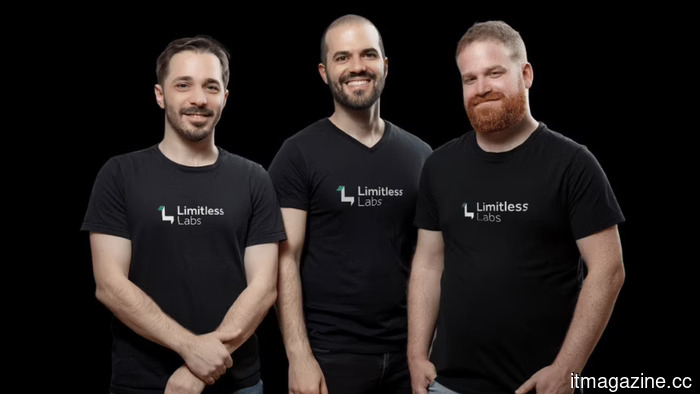 Limitless Labs secures $20 million to introduce AI technology to manufacturing environments.
Israel's Limitless Labs secured $20M in funding, co-led by Dell and Square Peg, to develop 'Physical AI' for CNC manufacturing. The company is already programming components for Blue Origin and Formula 1.
Limitless Labs secures $20 million to introduce AI technology to manufacturing environments.
Israel's Limitless Labs secured $20M in funding, co-led by Dell and Square Peg, to develop 'Physical AI' for CNC manufacturing. The company is already programming components for Blue Origin and Formula 1.
Lightbringer secures $10 million to substitute patent firms with artificial intelligence.
Sweden’s Lightbringer secured $10 million to expand its 'AI-native patent firm' into the US, believing that agentic AI can substitute for patent attorneys rather than merely support them.