
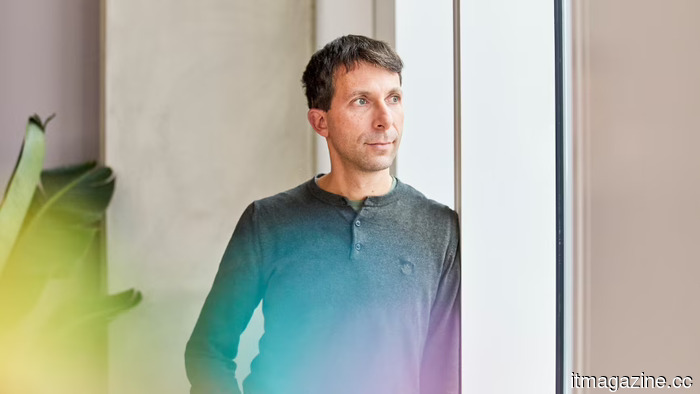
David Silver from AlphaGo places his superintelligence wager on Google Cloud.
Ineffable Intelligence, a London-based startup established by the DeepMind researcher behind AlphaGo, has selected Google Cloud as its infrastructure partner for a frontier AI lab. This agreement, revealed at Google Cloud’s London summit on June 16, provides a company with ambitious goals and no current product the computing power its founder believes is necessary for the task.
The significance of this announcement largely stems from its founder, David Silver, who led the research behind AlphaGo, the program that defeated the world champion in Go, and AlphaZero, which independently learned chess, shogi, and Go from just the rules.
After spending over ten years at DeepMind directing its reinforcement-learning group, Silver left to launch Ineffable. The new company represents a belief that the self-play concept behind AlphaZero can be applied more broadly.
This concept is termed a “superlearner.” Ineffable envisions a system capable of acquiring knowledge from its own experiences, ranging from basic motor functions to significant scientific discoveries, without relying on human-generated data.
While current large models train on static datasets pulled from the internet, a superlearner would generate, assess, and learn from experiences in real time. The company describes its ambition in grand terms, aiming for a “first contact” with superintelligence.
Regardless of perceptions of this framing, the computing demands are genuine and quite distinct. According to the company, learning from experience requires different hardware specifications compared to training on fixed datasets, necessitating closely integrated training and inference, high-performance networking, and massive scalability.
To fulfill these requirements, Ineffable plans to utilize one of the largest clusters of Google’s A5X instances, powered by the upcoming Nvidia Vera Rubin NVL72 GPUs.
The choice of Google Cloud as a partner is intentional. Silver noted that the lab evaluated the available options and chose Google Cloud for its integrated AI Hypercomputer architecture rather than opting for standard GPU rental services, which typically focus only on hardware.
“Training frontier models demands more than just sheer computing power,” he explained, emphasizing that the decision revolves around orchestration rather than merely horsepower.
For Google Cloud, acquiring such a notable client in a highly competitive market for AI workloads is a significant achievement. Thomas Kurian, the company’s CEO, stated that Ineffable is utilizing “our full-stack AI Hypercomputer, from Jupiter networking to our optimized storage,” presenting the partnership as a sign that frontier labs are selecting Google to accelerate their progress. Securing a lab with Ineffable’s profile is the type of reference client that cloud service providers strive to obtain.
This collaboration also strengthens the ongoing relationship between Google Cloud and Nvidia, whose Vera Rubin platform is central to the arrangement, at a time when both companies are pushing their hardware toward increasingly larger training clusters.
There is also a regional component that the companies were eager to highlight. By establishing the lab in London and utilizing Google’s infrastructure, Ineffable positions itself as a key player in Europe’s AI ambitions, aiming to attract engineering talent that might otherwise relocate to the United States.
For a continent concerned about its reliance on American AI, a homegrown frontier lab of this caliber serves as a project that policymakers are keen to highlight, even if the underlying computation is sourced from American suppliers.
The deal follows a startup origin narrative that is remarkable even by current standards. Ineffable secured a $1.1 billion seed round, touted as the largest in European history, and later attracted investments from Sequoia and Nvidia at a reported valuation of $5.1 billion, all for a venture devoid of product offerings, revenue, and a public roadmap. The market is valuing the founder’s proven track record and the feasibility of the concept, rather than any actual deliveries.
In simple terms, this represents the gamble: a researcher with a legitimate claim to have developed systems that could educate themselves, now equipped with a billion dollars and an extensive cluster, is attempting to replicate this feat on the scale of all human knowledge. While the infrastructure has been arranged, the actual arrival of the superlearner remains uncertain, something that no amount of computational power can ensure.
Other articles
 Ukraine obtains access to the EU's emergency cyber response system in light of significant attacks.
The EU Council has included Ukraine in the EU Cybersecurity Reserve, allowing it to request incident-response services from reliable private providers during significant attacks.
Ukraine obtains access to the EU's emergency cyber response system in light of significant attacks.
The EU Council has included Ukraine in the EU Cybersecurity Reserve, allowing it to request incident-response services from reliable private providers during significant attacks.
 Android 17: All the information we have up to now
From app bubbles to 3D emojis and Gemini Intelligence, Android 17 is full of features. Here’s a summary of everything that has been confirmed so far.
Android 17: All the information we have up to now
From app bubbles to 3D emojis and Gemini Intelligence, Android 17 is full of features. Here’s a summary of everything that has been confirmed so far.
 The MSI Claw 8 EX AI+ represents the next generation of gaming handhelds, but its price is quite painful.
The MSI Claw 8 EX AI+ has been reportedly priced at $1,699, positioning Intel's newest handheld among the priciest portable gaming PCs available.
The MSI Claw 8 EX AI+ represents the next generation of gaming handhelds, but its price is quite painful.
The MSI Claw 8 EX AI+ has been reportedly priced at $1,699, positioning Intel's newest handheld among the priciest portable gaming PCs available.
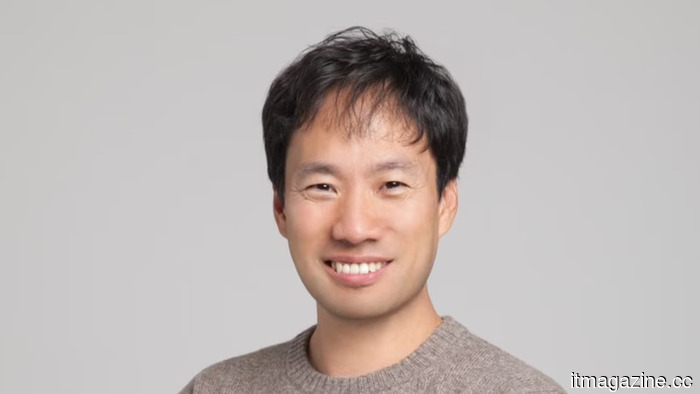 The head of Upstage claims that restrictions on anthropocentric AI support the argument for sovereign AI.
Upstage CEO Sung Kim states that the US order limiting Anthropic’s leading models demonstrates the necessity for South Korea to develop its own sovereign AI that cannot be isolated from.
The head of Upstage claims that restrictions on anthropocentric AI support the argument for sovereign AI.
Upstage CEO Sung Kim states that the US order limiting Anthropic’s leading models demonstrates the necessity for South Korea to develop its own sovereign AI that cannot be isolated from.
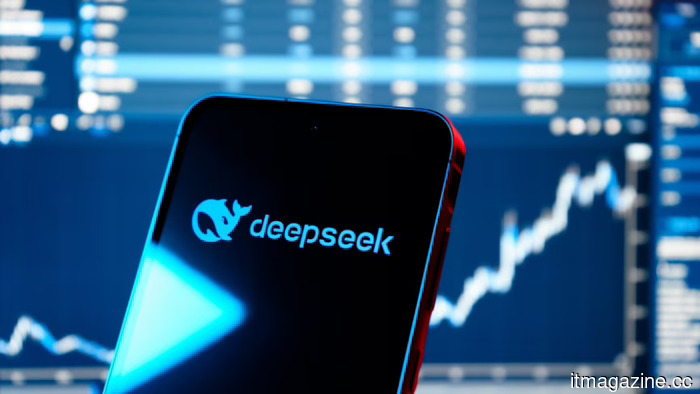 DeepSeek completes a funding round exceeding $7 billion with a unique structure.
DeepSeek has secured its initial external funding, exceeding $7 billion, with founder Liang Wenfeng contributing a controlling stake and Tencent and CATL being the primary investors.
DeepSeek completes a funding round exceeding $7 billion with a unique structure.
DeepSeek has secured its initial external funding, exceeding $7 billion, with founder Liang Wenfeng contributing a controlling stake and Tencent and CATL being the primary investors.
 Alibaba introduces AI models for robots as China's attention turns towards agents.
Alibaba has introduced its initial AI models for robots along with a new Qwen model designed for agents, as the technology sector in China shifts focus from chatbots to autonomous systems.
Alibaba introduces AI models for robots as China's attention turns towards agents.
Alibaba has introduced its initial AI models for robots along with a new Qwen model designed for agents, as the technology sector in China shifts focus from chatbots to autonomous systems.
David Silver from AlphaGo places his superintelligence wager on Google Cloud.
David Silver’s Ineffable Intelligence has designated Google Cloud as its infrastructure partner, utilizing Nvidia Vera Rubin GPUs to develop a self-learning AI.