
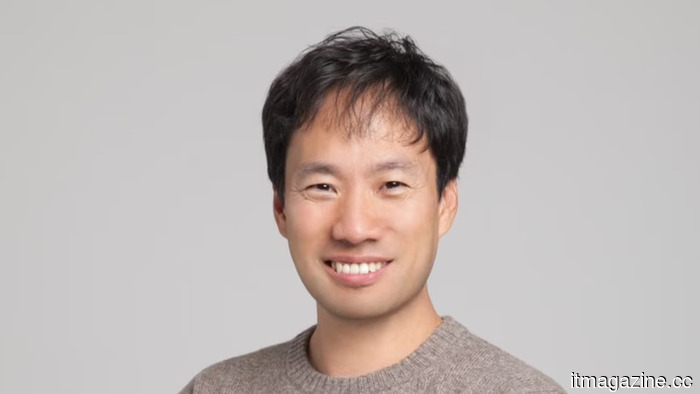
The head of Upstage claims that restrictions on anthropocentric AI support the argument for sovereign AI.
When the U.S. government instructed Anthropic to restrict foreign access to its advanced models, the company chose to switch them off globally instead of selectively complying, thus providing a clear example for proponents of domestically-developed AI. Sung Kim, the CEO of the South Korean startup Upstage, highlighted this during a briefing in Seoul on Tuesday. According to Bloomberg, Kim stated, “AI is no longer merely a service or a tool we utilize; it has evolved into a strategic national asset.” He contended that the nations controlling foundational technology, namely the U.S. and China, can revoke access at their discretion.
His conclusion aligns with the mission of his company: “We must accelerate the development of our own technology and strive for maximum self-sufficiency.” These comments come in response to a significant event. Earlier this month, Anthropic disabled its Fable 5 and Mythos 5 models for all users after a U.S. directive prohibited foreign nationals from accessing them, marking the first instance of export controls targeting specific AI models rather than chips. For users outside the United States, the message was clear: a tool they had relied on could be revoked by a decision made in another country's capital.
Kim's perspective is self-serving, and he does not hide this fact. Upstage stands to benefit if South Korea pursues AI powered by models it controls, and the argument for sovereign AI serves as a business case for him. However, this does not invalidate the core point, which is worth considering in light of the speaker's interests.
This argument is gaining traction. Since the Anthropic shutdown, similar sentiments have emerged globally: discussions in India about a national AI fund, a European initiative centered on Mistral with support from the banking sector, and a British coalition working to develop a “sovereign” model to reduce dependency on U.S. technology. Korea's version of this discourse now has a notable advocate.
Upstage is actively involved in the policy debate. The company has been linked to South Korea’s national initiative to create domestic foundation models, a program aimed at supporting local labs against the dominance of American and Chinese technologies. Its Solar model line is among the most recognized Korean alternatives, and the company has positioned itself as a key player in establishing the type of sovereign capability Kim envisions. When he asserts that the country requires its own technology, he is also promoting a role that his company is well-suited to fulfill.
Determining what sovereignty entails in practical terms is more complex, and Kim acknowledges that the journey will be long. Developing and maintaining cutting-edge models domestically is highly costly, and few countries can match the computing power and financial resources available to American and Chinese labs. His argument posits that the alternative—relying on infrastructure that another government can disable—represents a greater risk. Whether Seoul is willing to invest in this initiative remains an open question.
Other articles
 Samsung introduces the Galaxy Book6 Edge featuring the Snapdragon X2 Elite and enhancements from Galaxy AI.
Samsung has introduced the Galaxy Book6 Edge, featuring Qualcomm's Snapdragon X2 Elite chip, Galaxy AI capabilities, and a slim design aimed at enhancing Copilot+ experiences.
Samsung introduces the Galaxy Book6 Edge featuring the Snapdragon X2 Elite and enhancements from Galaxy AI.
Samsung has introduced the Galaxy Book6 Edge, featuring Qualcomm's Snapdragon X2 Elite chip, Galaxy AI capabilities, and a slim design aimed at enhancing Copilot+ experiences.
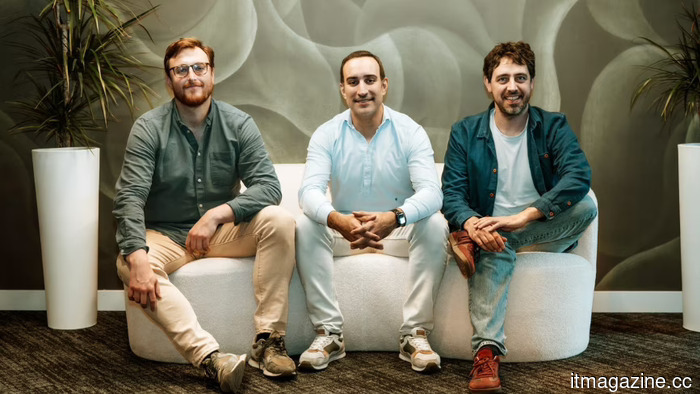 Exclusive: Optiak secures €4 million to develop an orchestration layer for enterprise AI.
Optiak, established by former members of DeepMind, Amazon, and Stripe, has secured €4 million in pre-seed funding, with Market One Capital leading the round. The company aims to bridge the gap between enterprise AI applications and the models that support them.
Exclusive: Optiak secures €4 million to develop an orchestration layer for enterprise AI.
Optiak, established by former members of DeepMind, Amazon, and Stripe, has secured €4 million in pre-seed funding, with Market One Capital leading the round. The company aims to bridge the gap between enterprise AI applications and the models that support them.
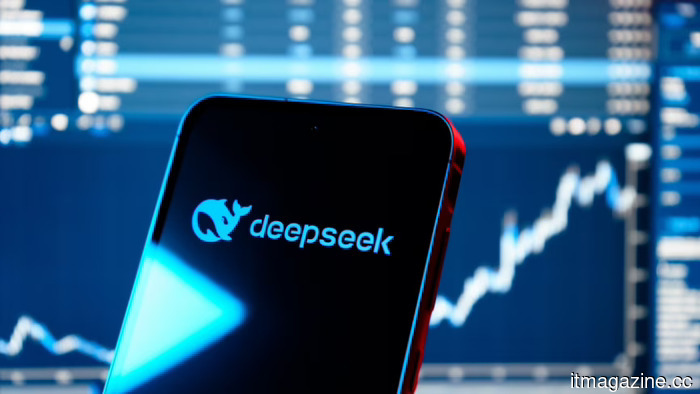 DeepSeek concludes a funding round exceeding $7 billion with a unique structure.
DeepSeek has secured its initial external funding, exceeding $7 billion, with founder Liang Wenfeng holding a controlling stake and Tencent along with CATL as key investors.
Florida initiates legal action against TikTok regarding its law on social media for children.
Florida's attorney general has taken legal action against TikTok, claiming that the platform violated the state's law regarding social media for those under 16 and deceived parents. This marks the first significant enforcement measure under HB 3.
DeepSeek concludes a funding round exceeding $7 billion with a unique structure.
DeepSeek has secured its initial external funding, exceeding $7 billion, with founder Liang Wenfeng holding a controlling stake and Tencent along with CATL as key investors.
Florida initiates legal action against TikTok regarding its law on social media for children.
Florida's attorney general has taken legal action against TikTok, claiming that the platform violated the state's law regarding social media for those under 16 and deceived parents. This marks the first significant enforcement measure under HB 3.
 Sagabox: Shaping the Future of Digital Narrative
How a mobile-responsive platform is catering to the worldwide appetite for serialized romance and fantasy literature. Over the past few decades, the way people engage with reading has transformed significantly. Nowadays, many readers seek their next enjoyable diversion through their smartphones, whether it be via social media or gaming. Sagabox has embraced this mobile-focused method of storytelling, establishing a platform for […]
Florida takes legal action against TikTok concerning its law on social media for children.
The attorney general of Florida filed a lawsuit against TikTok, claiming the platform violated the state's social media law for individuals under 16 and deceived parents, marking the initial significant enforcement action under HB 3.
Sagabox: Shaping the Future of Digital Narrative
How a mobile-responsive platform is catering to the worldwide appetite for serialized romance and fantasy literature. Over the past few decades, the way people engage with reading has transformed significantly. Nowadays, many readers seek their next enjoyable diversion through their smartphones, whether it be via social media or gaming. Sagabox has embraced this mobile-focused method of storytelling, establishing a platform for […]
Florida takes legal action against TikTok concerning its law on social media for children.
The attorney general of Florida filed a lawsuit against TikTok, claiming the platform violated the state's social media law for individuals under 16 and deceived parents, marking the initial significant enforcement action under HB 3.
The head of Upstage claims that restrictions on anthropocentric AI support the argument for sovereign AI.
Upstage CEO Sung Kim states that the US order limiting Anthropic’s leading models demonstrates the necessity for South Korea to develop its own sovereign AI that cannot be isolated from.