
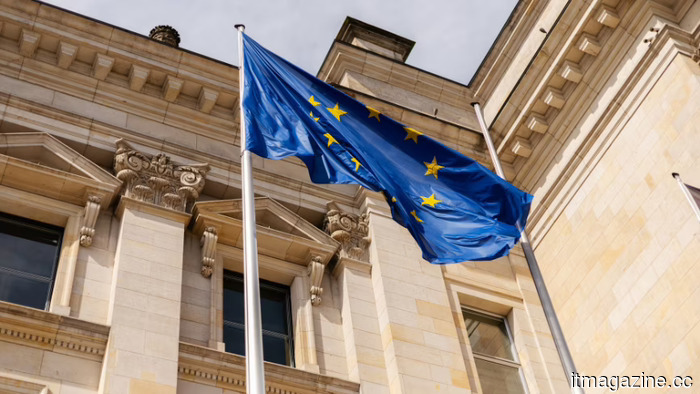
Ukraine obtains access to the EU's emergency cyber response system in light of significant attacks.
Ukraine can now rely on emergency cyber support from the European Union to address large-scale incidents, following the Council of the EU's approval for its inclusion in the EU Cybersecurity Reserve on June 15. This decision expands a defensive mechanism designed for member states to a nation whose networks have faced continuous attacks since Russia’s full-scale invasion.
The Reserve represents the operational aspect. Managed by ENISA, the EU’s cybersecurity agency, it consolidates incident-response services from vetted private providers that can be deployed to assist a country experiencing a significant or large-scale cyberattack. By joining the Reserve, Ukraine can call upon this assistance instead of depending solely on its own responders when a situation exceeds their capacity. The messaging from Brussels has been more collaborative than alarming.
The European Commission portrayed this move as a testament to the strong cooperation between the EU and Ukraine and as part of the bloc’s strategic digital partnership with Kyiv. This language situates the decision within a broader context of integrating Ukraine into EU structures ahead of any formal membership.
The backdrop involves a war waged not only on the battlefield but also in cyberspace. Since 2022, Ukraine has encountered repeated and serious cyberattacks on government systems and essential infrastructure, leading its defenders to become some of the most experienced in Europe. Access to the Reserve provides an additional layer of capacity for those moments when an attack is so substantial that external assistance is necessary.
This inclusion also serves the EU’s own interests. The same threat actors targeting Ukrainian infrastructure are also probing networks throughout the EU, and supporting Ukraine’s defense simultaneously enhances the bloc’s intelligence and strengthens its resilience.
In this sense, entry into the Reserve is more about mutual defense than charity; it acknowledges that Ukrainian and European cybersecurity challenges are increasingly interconnected. “By welcoming Ukraine into the EU Cybersecurity Reserve, we strengthen our collective defenses and reaffirm the principle of solidarity that is fundamental to Europe’s digital future. At a time when cyberattacks are a constant threat, our unity is our greatest asset,” stated Henna Virkkunen, Executive Vice-President for Tech Sovereignty, Security, and Democracy.
This decision further deepens a relationship that has developed throughout the war. Since 2022, the EU has been providing support for Ukrainian cybersecurity needs through funding and equipment, while Ukrainian agencies have shared threat intelligence that has aided European defenders in anticipating tactics used against the bloc.
The formal inclusion in the Reserve transforms a temporary partnership into a permanent arrangement, creating an institutional connection that is likely to endure beyond the immediate crisis that led to it.
However, the decision does not specify a monetary amount; the support is presented as access to incident-response services rather than direct financial assistance. The mechanism is now established. For Ukraine, this development offers reassurance that, in the event of a significant attack that overwhelms its own responders, help can be drawn from a broader pool rather than being hastily organized amidst the crisis. The true test, as in all cyber defense, will be whether this assistance can be activated swiftly when a major attack occurs.
Other articles
 DeepSeek completes a funding round exceeding $7 billion with a unique structure.
DeepSeek has secured its initial external funding, exceeding $7 billion, with founder Liang Wenfeng contributing a controlling stake and Tencent and CATL being the primary investors.
DeepSeek completes a funding round exceeding $7 billion with a unique structure.
DeepSeek has secured its initial external funding, exceeding $7 billion, with founder Liang Wenfeng contributing a controlling stake and Tencent and CATL being the primary investors.
 The MSI Claw 8 EX AI+ represents the future of portable gaming devices, yet its cost is quite painful.
The MSI Claw 8 EX AI+ has been reported to be priced at $1,699, positioning Intel's newest handheld as one of the priciest portable gaming PCs available.
The MSI Claw 8 EX AI+ represents the future of portable gaming devices, yet its cost is quite painful.
The MSI Claw 8 EX AI+ has been reported to be priced at $1,699, positioning Intel's newest handheld as one of the priciest portable gaming PCs available.
 David Silver from AlphaGo places his superintelligence wager on Google Cloud.
David Silver’s Ineffable Intelligence has designated Google Cloud as its infrastructure partner, utilizing Nvidia Vera Rubin GPUs to develop a self-learning AI.
David Silver from AlphaGo places his superintelligence wager on Google Cloud.
David Silver’s Ineffable Intelligence has designated Google Cloud as its infrastructure partner, utilizing Nvidia Vera Rubin GPUs to develop a self-learning AI.
 India has banned Telegram until June 22 due to ongoing medical exam cheating schemes.
India has placed a temporary ban on Telegram until 22 June, referring to channels that are marketing unauthorized access to a NEET-UG re-examination. Additionally, there is a separate directive to turn off the message editing feature.
Florida takes legal action against TikTok concerning its law on social media for children.
The attorney general of Florida filed a lawsuit against TikTok, claiming the platform violated the state's social media law for individuals under 16 and deceived parents, marking the initial significant enforcement action under HB 3.
India has banned Telegram until June 22 due to ongoing medical exam cheating schemes.
India has placed a temporary ban on Telegram until 22 June, referring to channels that are marketing unauthorized access to a NEET-UG re-examination. Additionally, there is a separate directive to turn off the message editing feature.
Florida takes legal action against TikTok concerning its law on social media for children.
The attorney general of Florida filed a lawsuit against TikTok, claiming the platform violated the state's social media law for individuals under 16 and deceived parents, marking the initial significant enforcement action under HB 3.
 Samsung unveils the Galaxy Book6 Edge, equipped with Snapdragon X2 Elite and enhanced Galaxy AI features.
Samsung has introduced the Galaxy Book6 Edge featuring Qualcomm's Snapdragon X2 Elite chip, Galaxy AI capabilities, and a slender design optimized for Copilot+ experiences.
Samsung unveils the Galaxy Book6 Edge, equipped with Snapdragon X2 Elite and enhanced Galaxy AI features.
Samsung has introduced the Galaxy Book6 Edge featuring Qualcomm's Snapdragon X2 Elite chip, Galaxy AI capabilities, and a slender design optimized for Copilot+ experiences.
Ukraine obtains access to the EU's emergency cyber response system in light of significant attacks.
The EU Council has included Ukraine in the EU Cybersecurity Reserve, allowing it to request incident-response services from reliable private providers during significant attacks.