
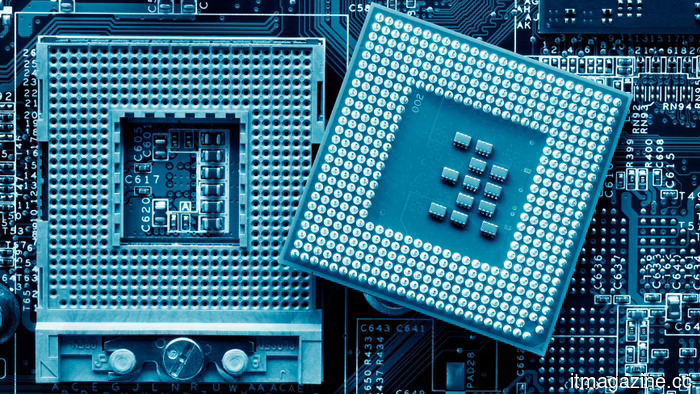
Asian technology stocks experienced a significant increase following the Iran-US agreement, with AI chip manufacturers seeing the largest gains.
TL;DR: Asian tech stocks soared following the Iran-US agreement, with SoftBank rising by 10%, SK Hynix by 6.4%, and Samsung by 4.5%, propelling the Nikkei past 69,000.
On Monday, Asian technology shares experienced a significant surge after the United States and Iran announced a peace agreement, with AI and semiconductor firms leading the charge. SoftBank's stock saw a 10% increase, SK Hynix climbed by 6.42%, and Samsung Electronics rose by 4.5%. Japan’s Nikkei 225 index reached a historic high, exceeding 69,000 for the first time.
The rally was widespread but particularly focused on firms associated with AI infrastructure. Tokyo Electron, known for its chip fabrication equipment, gained 7%, while Advantest, the largest global manufacturer of semiconductor testing equipment, rose by 7.67%. Both companies benefit from significant revenues generated by the expansion of AI data centers that have driven increased chip demand in recent years.
In South Korea, the market reaction was even more pronounced. The Kospi index surged by 5.2% to 8,545.98, activating circuit breakers that temporarily halted trading. Just weeks after reaching a $1 trillion market capitalization, SK Hynix added another $64 billion in a single day.
Samsung Electronics, which also achieved a $1 trillion valuation on May 6, further extended its gains. Both companies produce the high-bandwidth memory chips that Nvidia utilizes in its AI accelerators, and their stock prices had been previously impacted by geopolitical risks that disappeared quickly.
Taiwan’s TSMC, recognized as the most advanced chip manufacturer globally, saw its stock rise by 2.81%. Foxconn, which assembles servers for Nvidia and Apple products, increased by 2.69%. The lower gains for Taiwanese firms can be attributed to their lesser direct exposure to risks associated with Middle Eastern oil disruptions compared to Japan and South Korea, which rely heavily on energy imports.
The agreement that sparked the stock market surge was finalized over the weekend. Prime Minister of Pakistan, Shehbaz Sharif, declared an “immediate and permanent termination of military operations on all fronts.” Donald Trump shared on Truth Social that “the deal with the Islamic Republic of Iran is now complete,” with a formal signing set for June 19 in Switzerland.
The communication from both parties suggests a long-term resolution; however, the actual agreement is more limited. It establishes a 60-day interim plan aimed at reopening the Strait of Hormuz, a critical passage for approximately 20% of the world’s oil supply. The closure of this strait during the conflict had driven Brent crude prices above $90 per barrel and led to increased shipping insurance costs affecting Asian supply chains.
Markets are anticipating durability in this arrangement. The rapid and substantial increase in prices indicates that investors expect the agreement to last beyond its initial 60-day period. If not, the stocks that surged could experience a significant decline.
SoftBank emerged as the biggest victor, evolving from a telecommunications conglomerate to an AI investment powerhouse. In early June, it surpassed Toyota to become Japan’s most valuable listed company, thanks to its investments in Arm Holdings, a planned $100 billion AI data center joint venture with OpenAI, and a $7.5 billion stake in Nvidia’s GB200 NVL72 servers. A 10% gain in a single day triggered by geopolitical factors, rather than traditional earnings reports or product launches, highlights how closely linked AI firms are to macroeconomic risks.
The trend across all three markets was consistent: companies central to the AI supply chain experienced the most substantial gains. Memory chip producers, equipment manufacturers, and AI infrastructure investors outperformed broader indices significantly. The conflict in Iran had created a risk premium particularly affecting companies with intricate Asian supply chains and high energy dependency.
This risk premium has now dissipated, at least for the next 60 days. The pressing question remains whether a two-month plan to reopen a shipping lane can account for the hundreds of billions of dollars in market capitalization that emerged on Monday. The Nikkei's closing at 69,317.45, an increase of 4.99%, indicates a belief that the geopolitical landscape for Asian tech has undergone a fundamental change.
For AI chip manufacturers, the rally adds to already historic gains. Samsung and SK Hynix both reached a $1 trillion valuation for the first time in May, fueled by relentless demand for high-bandwidth memory from data center operators. The Iran deal has alleviated the last significant pressure on their stocks. If the 60-day agreement falls apart, these trillion-dollar valuations will face their first significant challenge.
Other articles
 According to reports, Meta is experimenting with facial recognition technology for smart glasses, which is also utilized by law enforcement and military agencies.
An investigative report has uncovered that Meta obtained face recognition technology from Rank One, a contractor for the Pentagon, and integrated a system named NameTag into an app on 50 million devices before removing it.
According to reports, Meta is experimenting with facial recognition technology for smart glasses, which is also utilized by law enforcement and military agencies.
An investigative report has uncovered that Meta obtained face recognition technology from Rank One, a contractor for the Pentagon, and integrated a system named NameTag into an app on 50 million devices before removing it.
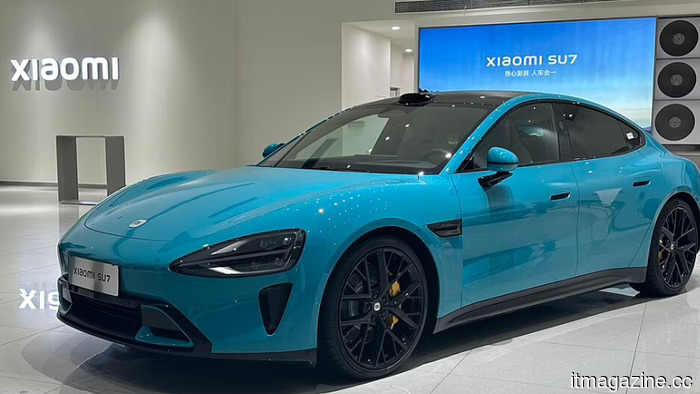 Xiaomi has developed a robotic arm that connects to your electric vehicle at home, fulfilling a commitment that Tesla made in 2014 but never followed through on.
Xiaomi introduced a robotic charging arm for its electric vehicles that autonomously plugs in and unplugs without requiring any input from the owner. The retail release is aimed for the fourth quarter of 2026 in China.
Xiaomi has developed a robotic arm that connects to your electric vehicle at home, fulfilling a commitment that Tesla made in 2014 but never followed through on.
Xiaomi introduced a robotic charging arm for its electric vehicles that autonomously plugs in and unplugs without requiring any input from the owner. The retail release is aimed for the fourth quarter of 2026 in China.
 The Bathroom Is Evolving into a More Intelligent, Personalized Area
For many years, the bathroom had a straightforward role. It was a secluded, practical area designed to meet essential necessities. However, this perception is gradually evolving. In numerous households, innovative technology is transforming people's views on cleanliness, comfort, and everyday habits. The modern bathroom is starting to embody the same standards found in other areas of the smart home. [...]
The Bathroom Is Evolving into a More Intelligent, Personalized Area
For many years, the bathroom had a straightforward role. It was a secluded, practical area designed to meet essential necessities. However, this perception is gradually evolving. In numerous households, innovative technology is transforming people's views on cleanliness, comfort, and everyday habits. The modern bathroom is starting to embody the same standards found in other areas of the smart home. [...]
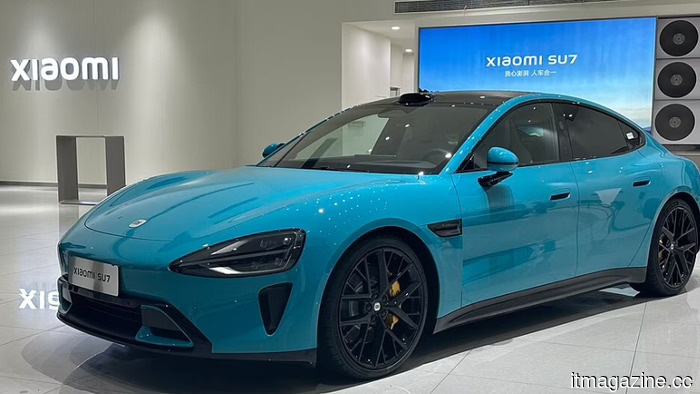 Xiaomi has developed a robotic arm that connects to your electric vehicle at home, fulfilling a commitment that Tesla made in 2014 but never followed through on.
Xiaomi has introduced a robotic charging arm for its electric vehicles that automatically connects and disconnects without any input from the owner. The retail release is aimed for the fourth quarter of 2026 in China.
Xiaomi has developed a robotic arm that connects to your electric vehicle at home, fulfilling a commitment that Tesla made in 2014 but never followed through on.
Xiaomi has introduced a robotic charging arm for its electric vehicles that automatically connects and disconnects without any input from the owner. The retail release is aimed for the fourth quarter of 2026 in China.
 The bathroom is evolving into a more intelligent and customized environment.
For many years, the bathroom had a straightforward function. It was a personal, practical area designed around essential requirements. However, this concept is beginning to evolve. In numerous households, emerging technology is transforming how individuals perceive cleanliness, comfort, and everyday habits. The modern bathroom is starting to embody the same standards observed in other areas of the smart home. [...]
The bathroom is evolving into a more intelligent and customized environment.
For many years, the bathroom had a straightforward function. It was a personal, practical area designed around essential requirements. However, this concept is beginning to evolve. In numerous households, emerging technology is transforming how individuals perceive cleanliness, comfort, and everyday habits. The modern bathroom is starting to embody the same standards observed in other areas of the smart home. [...]
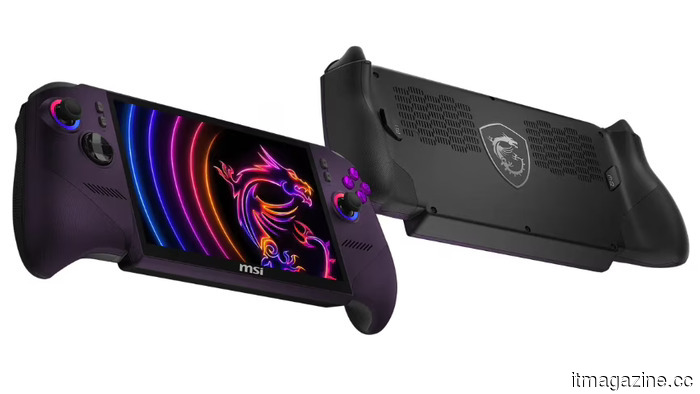 The MSI Claw 8 EX AI+ is priced at $1,699, which is quite a sum for a handheld device typically associated with gaming laptop expenses.
MSI's Claw 8 EX AI+ is set to launch on June 23, featuring Intel's Arc G3 Extreme, 32GB of RAM, and an 80Wh battery, but its $1,699 price tag surpasses that of all competing handheld devices.
The MSI Claw 8 EX AI+ is priced at $1,699, which is quite a sum for a handheld device typically associated with gaming laptop expenses.
MSI's Claw 8 EX AI+ is set to launch on June 23, featuring Intel's Arc G3 Extreme, 32GB of RAM, and an 80Wh battery, but its $1,699 price tag surpasses that of all competing handheld devices.
Asian technology stocks experienced a significant increase following the Iran-US agreement, with AI chip manufacturers seeing the largest gains.
SoftBank surged by 10%, SK Hynix increased by 6.4%, and Samsung rose by 4.5% as Asian markets rallied following the Iran-US peace agreement, with the Nikkei surpassing 69,000.