

According to reports, Meta is experimenting with facial recognition technology for smart glasses, which is also utilized by law enforcement and military agencies.
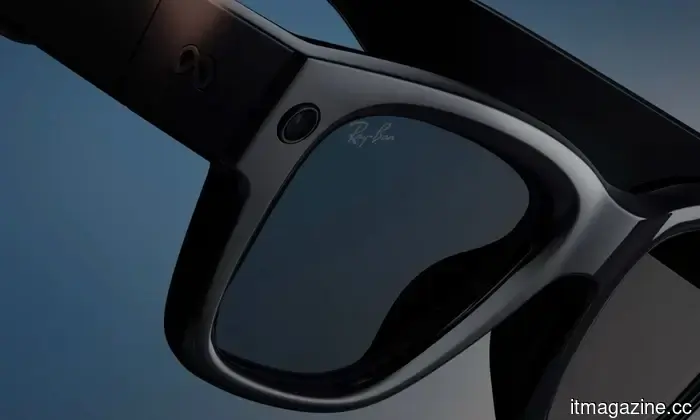
Meta has been discreetly testing military-grade facial recognition software for its Ray-Ban and Oakley smart glasses. A recent investigation by WIRED has uncovered that the company sourced this technology from Rank One Computing, a Denver-based firm that generates about 80% of its income from government contracts, including those from the US military and law enforcement agencies across the country.
This marks the first documented instance of a business partnership between Meta and Rank One, raising significant concerns about the boundary between consumer technology and surveillance systems.
So, who is Rank One Computing?
Rank One is not an ordinary technology company. It provides facial recognition services to organizations such as the US Marshals Service, the Naval Criminal Investigative Service, and the US Special Operations Command, which funded research capable of identifying a face from distances of up to one kilometer.
The CEO previously managed the FBI’s biometric database division, and the board includes ex-officials from the CIA, FBI, and Pentagon. The company went public on the Nasdaq in February 2026.
What was Meta actually developing in its smart glasses app?
The licensing agreement Meta acquired included Rank One’s facial recognition software along with a liveness detection feature, which verifies whether a camera is focused on a real person rather than a photograph. It had the capacity to support up to 10 million facial templates.
WIRED discovered remnants of Rank One’s code that remained inactive within a version of Meta’s AI app, which was distributed to over 50 million devices this month. Additionally, Meta incorporated its own internal facial recognition system, named NameTag, within the same app. However, neither of these systems was ever activated for users.
Following the revelation, Meta removed both systems the next day and refuted any claims of utilizing facial scanning. The company also chose not to clarify the reasons behind licensing the software or whether the arrangement is still active. Currently, there are minimal federal regulations in the US around facial recognition, casting uncertainty on the legality of what Meta was experimenting with.
Manisha Priyadarshini is a technology and entertainment writer with over nine years of editorial experience.
Samsung’s upcoming Ultra watch may benefit from a significant battery enhancement
A 35% larger battery and a new chip might provide the Galaxy Watch Ultra 2 with a remarkable boost in endurance.
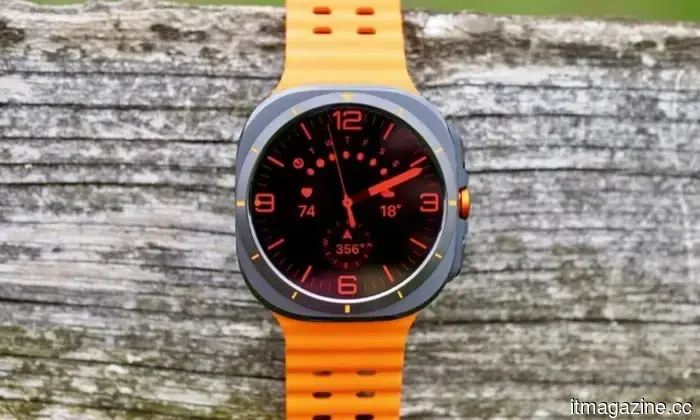
The next Galaxy Watch Ultra from Samsung could offer the battery upgrade that many users have been anticipating. The Galaxy Watch Ultra 2 is expected to launch soon, and a recent report implies it may feature a substantially larger battery than the models from 2024 and 2025.
As per SamMobile, the Galaxy Watch Ultra 2 will include a battery rated at 784mAh. Samsung might market this as an 800mAh typical capacity, which would make it roughly 35% bigger than the 590mAh battery currently in use in the Galaxy Watch Ultra models.
Wear OS 7 appears to be on the verge of launching for Pixel Watch users
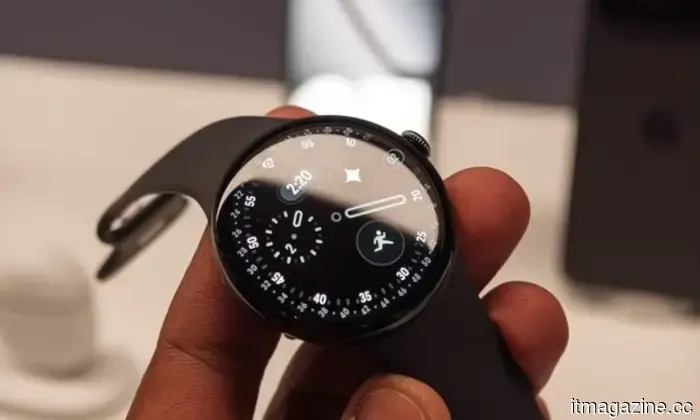
Google seems poised to release Wear OS 7 to Pixel Watch users sooner than anticipated. Verizon’s official support pages for the Pixel Watch 2, Pixel Watch 3, and Pixel Watch 4 have been updated to include mentions of the upcoming major Wear OS update, indicating that the rollout might be imminent.
The pages, first identified by Droid-Life, list Wear OS 7 alongside the June 2026 security update and the software version CP2A.260603.001. Verizon’s changelog also notes improvements in performance and stability, which is standard terminology for this type of carrier support documentation.
Meta's unsettling smart glasses have just discovered their most relevant use case
For several months, discussions surrounding Meta’s Ray-Ban smart glasses have fluctuated between intrigue and skepticism. Are they a groundbreaking advancement in wearable technology, or merely another device that raises disturbing privacy concerns? This week, the glasses became the focal point of an entirely different narrative.
A significant upgrade has been introduced for Meta's smart glasses.



Other articles
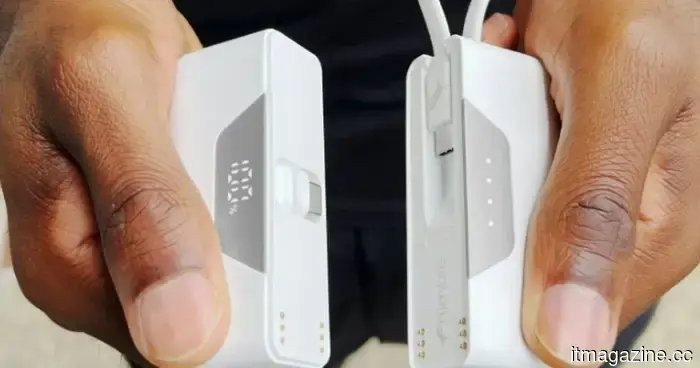 Nimble's SharePower splits in two, and it's the most impressive power bank concept I've ever encountered.
Nimble's newest portable charger features a unique capability that most power banks lack: it separates into two standalone batteries. This innovative design allows you to share power with a friend while still retaining your own backup charge.
Nimble's SharePower splits in two, and it's the most impressive power bank concept I've ever encountered.
Nimble's newest portable charger features a unique capability that most power banks lack: it separates into two standalone batteries. This innovative design allows you to share power with a friend while still retaining your own backup charge.
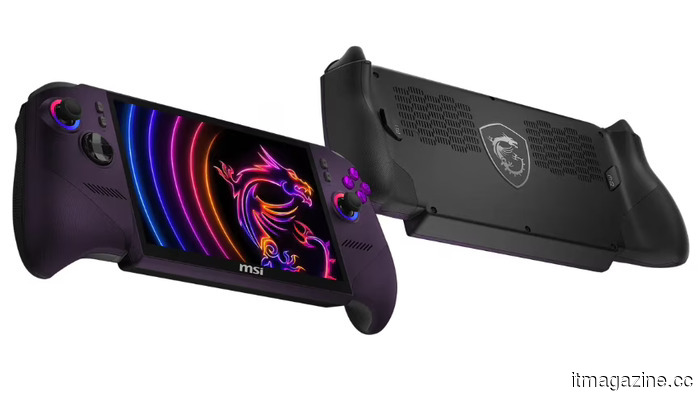 The MSI Claw 8 EX AI+ is priced at $1,699, which is quite a significant amount for a handheld device, comparable to the cost of a gaming laptop.
The MSI Claw 8 EX AI+ is set to launch on June 23, featuring Intel's Arc G3 Extreme, 32GB of RAM, and an 80Wh battery; however, its price of $1,699 exceeds that of all competing handhelds.
The MSI Claw 8 EX AI+ is priced at $1,699, which is quite a significant amount for a handheld device, comparable to the cost of a gaming laptop.
The MSI Claw 8 EX AI+ is set to launch on June 23, featuring Intel's Arc G3 Extreme, 32GB of RAM, and an 80Wh battery; however, its price of $1,699 exceeds that of all competing handhelds.
 Japan's largest taxi application secured $553 million in the country's biggest initial public offering this year.
Go Inc. begins trading on the Tokyo Stock Exchange after securing ¥88.6 billion in Japan's largest IPO of 2026, supported by Goldman Sachs and BlackRock.
Japan's largest taxi application secured $553 million in the country's biggest initial public offering this year.
Go Inc. begins trading on the Tokyo Stock Exchange after securing ¥88.6 billion in Japan's largest IPO of 2026, supported by Goldman Sachs and BlackRock.
 Japan's largest taxi app secured $553 million in the biggest IPO in the country this year.
Go Inc. begins trading on the Tokyo Stock Exchange following the successful raising of ¥88.6 billion in Japan's largest IPO of 2026, supported by Goldman Sachs and BlackRock.
Japan's largest taxi app secured $553 million in the biggest IPO in the country this year.
Go Inc. begins trading on the Tokyo Stock Exchange following the successful raising of ¥88.6 billion in Japan's largest IPO of 2026, supported by Goldman Sachs and BlackRock.
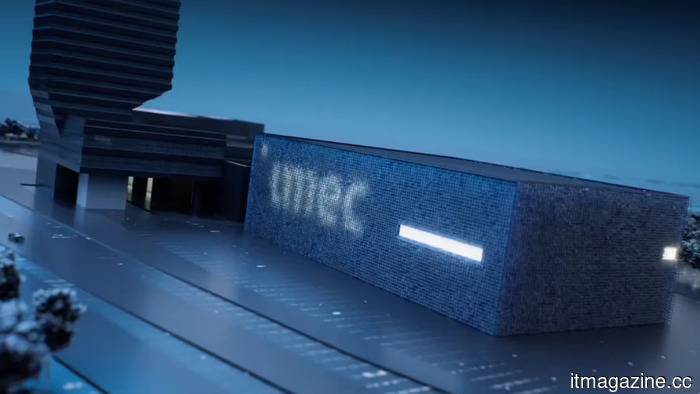 IMEC has developed a chip platform that operates at frequencies of up to 325GHz, potentially making 6G hardware affordable enough for practical deployment.
IMEC's 300mm RF silicon interposer platform reaches unprecedented low signal loss at frequencies as high as 325GHz, marking progress toward cost-effective 6G chiplet production.
IMEC has developed a chip platform that operates at frequencies of up to 325GHz, potentially making 6G hardware affordable enough for practical deployment.
IMEC's 300mm RF silicon interposer platform reaches unprecedented low signal loss at frequencies as high as 325GHz, marking progress toward cost-effective 6G chiplet production.
 A built-in feature of Google Workspace has emerged as a preferred exfiltration tool for a Chinese espionage group.
A group connected to China compromised REDCap servers at medical and military research institutions in the US and Canada, subsequently utilizing Google Workspace to extract emails.
A built-in feature of Google Workspace has emerged as a preferred exfiltration tool for a Chinese espionage group.
A group connected to China compromised REDCap servers at medical and military research institutions in the US and Canada, subsequently utilizing Google Workspace to extract emails.
According to reports, Meta is experimenting with facial recognition technology for smart glasses, which is also utilized by law enforcement and military agencies.
An investigative report has uncovered that Meta obtained face recognition technology from Rank One, a contractor for the Pentagon, and integrated a system named NameTag into an app on 50 million devices before removing it.